7 Min Read
Having a newborn baby in the family is one of the best things that can happen, but it involves new learning. The first few weeks after birth are important because a baby's immune system, sleep patterns, and feeding habits are still developing. During this time, newborn baby care at home is crucial to the baby’s health, comfort, and safety. Parents often have questions about feeding and bathing schedules, sleep patterns, and hygiene.
Establishing a consistent newborn baby daily routine can ensure the baby's well-being while also making caregiving easier for parents. At the same time, understanding newborn baby safety tips reduces risks of infections, accidents, and other preventable health concerns. Parents can ensure safety for their baby if they have the right information and plan ahead.
This blog provides useful tips for caring for a newborn baby, covering safety, feeding, and hygiene, based on advice from the best paediatric and child care experts in Doddaballapur, Bangalore.
Synopsis
Understanding Newborn Baby Care at Home
The first few weeks of life require careful attention to feeding, hygiene, sleep, and emotional bonding. Caring for a newborn at home focuses on meeting the baby's basic needs and maintaining a safe environment. A newborn usually feeds every two to three hours, sleeps for long periods of time during the day, and may wake up many times at night. It is important to keep the room at a comfortable temperature and dress the baby adequately because newborns can't control their body temperature very well.
Another important part of caring for a newborn baby is keeping a close eye on the baby’s feeding habits, urine output, bowel movements, and overall activity level. These signs help make sure that the baby is getting enough food and adjusting well to life outside the womb.
Establishing a Newborn Baby's Daily Routine
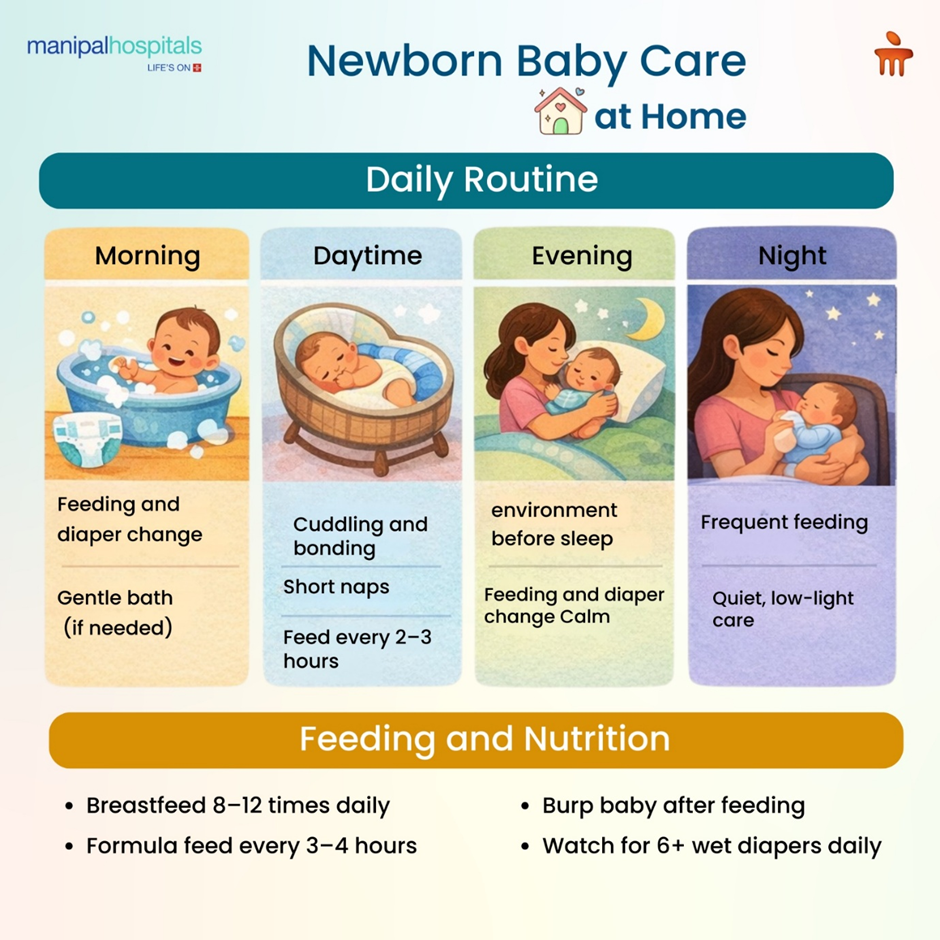
Although newborns do not follow a strict schedule, a flexible newborn baby daily routine can be a great help for parents. A typical routine includes feeding, diaper changes, sleep periods, and brief awake times for bonding and stimulation.
-
Morning: The day usually begins with feeding and diaper changing. Many parents prefer morning baths because babies are usually alert and calm. Gentle bathing is a key part of newborn hygiene and care.
-
Daytime: During the day, newborns usually feed every two to three hours. Between feeds, they may stay awake briefly for cuddling, gentle talking, or skin-to-skin contact. They also take short naps that support a healthy newborn sleep routine.
-
Evening: Evenings often include another feeding, a diaper change, and quiet interaction. Lowering the noise and softening the light can make the baby feel it's time for bed. Keeping things the same over time helps create a predictable newborn baby daily routine.
-
Night: Newborns wake frequently during the night for feeding. Parents should keep nighttime interactions calm and quiet to reinforce the difference between day and night.
Feeding and Nutrition for Newborns
Proper feeding is one of the most important aspects of newborn baby care at home. Whether breastfeeding or formula feeding, babies require regular nutrition for growth and development. Breastmilk provides ideal nutrition and contains several antibodies that protect infants from infections. Most newborns feed eight to twelve times per day.
Signs that the baby is feeding well include:
-
Regular swallowing during feeding
-
Steady weight gain
-
Six or more wet diapers per day
Formula Feeding
Formula-fed babies need to be fed every three to four hours. However, it is important to follow preparation instructions carefully and maintain strict newborn hygiene and care when sterilising bottles and nipples. Burping the baby after each feeding is also important, as it helps release swallowed air and prevents discomfort.
Newborn Hygiene and Care
Maintaining cleanliness is essential for preventing infections. Proper newborn hygiene and care include bathing, diaper changing, and umbilical cord care.
-
Bathing: Newborns do not require daily baths. Two or three baths per week are usually sufficient. Lukewarm water and mild baby soap should be used while giving a bath to the baby. Moreover, the room should be warm, and the baby should never be left unattended.
-
Diaper Care: Frequent diaper changes help prevent rashes. Clean the area gently with baby wipes or warm water and allow the skin to dry before putting on a new diaper.
-
Umbilical Cord Care: It usually takes one to two weeks for the umbilical cord stump to fall off. Keep the area clean and dry, and don't cover it up with tight clothes or nappies. Proper newborn hygiene and care also include washing hands before handling the baby to reduce the risk of infection.
Creating a Healthy Newborn Sleep Routine
Sleep is important for a baby’s growth and brain development. A healthy newborn sleep routine helps both the baby and parents rest better. Newborns usually sleep for about 14 to 17 hours a day, but in short periods. Following safe sleep practices helps reduce the risk of conditions such as sudden infant death syndrome (SIDS). Recommended sleep guidelines include:
-
Placing the baby on their back to sleep
-
Using a firm mattress without pillows or toys
-
Sharing the room but not the bed
Maintaining a quiet and comfortable environment supports the baby’s newborn sleep routine and gradually helps regulate sleep cycles.
Essential Newborn Baby Safety Tips
Safety is a critical component of newborn baby care at home. Taking the following basic precautions can significantly reduce potential risks:
-
Safe Sleeping: Always place the baby on their back in a crib with a firm mattress. Avoid loose blankets, stuffed toys, or soft bedding.
-
Safe Handling: Support the baby’s head and neck whenever lifting or holding them. Avoid shaking the baby, even during play.
-
Temperature Safety: Keep the baby comfortably warm but avoid overheating. Dress the baby in one more layer than an adult would wear in the same environment.
-
Hygiene and Infection Prevention: Wash your hands before holding the baby. Limiting exposure to crowded places during the first few weeks can reduce the risk of infection.
-
Car Safety: Use a rear-facing car seat designed for newborns whenever travelling.
These newborn baby safety tips help ensure that the baby remains safe while adapting to their new surroundings.
Bonding and Emotional Development
Beyond feeding and hygiene, emotional connection plays an important role in caring for a newborn baby. Close interaction builds trust and supports early brain development. Skin-to-skin contact, gentle talking, and eye contact strengthen the parent-child bond. Babies recognise familiar voices and feel comforted by their parents' presence.
Signs That Require Medical Attention
Although most newborn adjustments are normal, certain symptoms may require medical evaluation.
Seek medical advice if the baby shows:
-
Persistent fever
-
Difficulty feeding
-
Unusual lethargy
-
Breathing difficulties
-
Yellowing of skin or eyes beyond the first few days
Monitoring these signs is an important part of responsible newborn baby care at home.
FAQ's
Newborns usually feed every two to three hours. Breastfed babies may feed more frequently than formula-fed babies.
Most babies sleep between 14 and 17 hours daily. However, sleep occurs in short periods throughout the day and night.
A sponge bath can be given until the umbilical cord stump falls off. After that, regular baths two or three times per week are usually sufficient.
Healthy newborns feed regularly, have several wet diapers each day, gain weight steadily, and stay alert during brief awake periods.
Parents should wash their hands before handling the baby, clean feeding equipment properly, change diapers frequently, and keep the baby’s skin clean and dry.
Share this article on: