8 Min Read
Many people experience stomach discomfort after drinking milk or eating dairy products. While these symptoms are sometimes ignored, repeated digestive problems after consuming dairy may indicate lactose intolerance. Understanding the symptoms, causes, and diagnostic methods, such as a lactose intolerance test, can help in managing the condition effectively. With appropriate treatment for lactose intolerance and a well-planned lactose intolerance diet, most people can manage symptoms without major dietary restrictions.
This blog explains lactose intolerance causes, the signs to watch for, how it is diagnosed, and effective lactose intolerance treatment, with clinical insights from the top Gastroenterologists in Doddaballapur, Bangalore, helping you better understand and manage the condition.
Synopsis
What Is Lactose Intolerance?
Lactose intolerance is a digestive condition that occurs when the body cannot properly digest lactose, the natural sugar found in milk and dairy products. This happens because the small intestine produces insufficient lactase enzyme, preventing the proper breakdown of lactose.
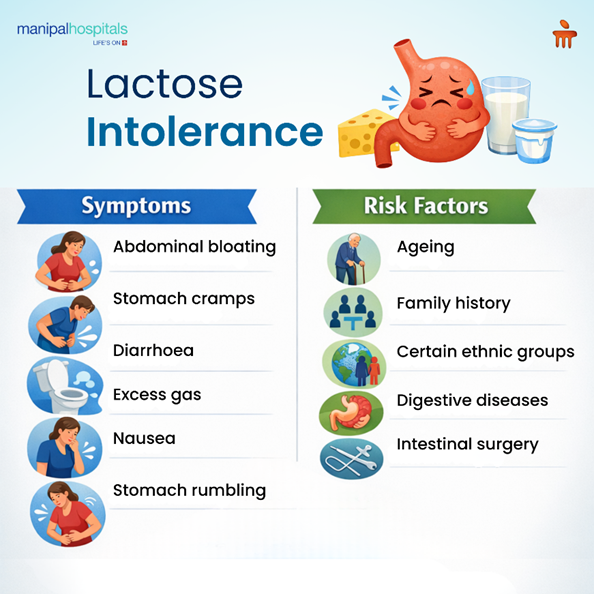
Lactose Intolerance Symptoms
The symptoms of lactose intolerance usually appear within 30 minutes to two hours after consuming dairy products. The severity of lactose intolerance symptoms depends on how much lactose is consumed and how much lactase the body produces. Lactase, an enzyme that is produced in the small intestine, helps break down lactose (the sugar in milk) into glucose and galactose so the body can absorb them easily.
Common symptoms include:
-
Abdominal bloating
-
Stomach cramps
-
Excessive gas
-
Rumblings or gurgling sounds in the stomach
These lactose intolerance symptoms occur because undigested lactose is fermented in the colon, producing gases such as hydrogen and methane. In some individuals, symptoms may be mild and occasional, while others experience severe digestive discomfort even after consuming small quantities of dairy. Recognising persistent lactose intolerance symptoms is the first step towards proper diagnosis and lactose intolerance treatment.
Lactose Intolerance Causes
There are many factors that can contribute to lactose intolerance. Knowing the causes of lactose intolerance helps you understand why some people get it later in life, and others get it when they are young. Some of the causes are:
-
Primary Lactase Deficiency: This is the most common reason why people can't consume lactose. In this condition, the intestine slowly decreases, producing lactase after childhood. As people get older, their bodies become less able to break down lactose, which can cause lactose intolerance symptoms.
-
Secondary Lactase Deficiency: Certain medical conditions can damage the lining of the small intestine, reducing lactase production and causing lactose intolerance symptoms. These include:
-
Gastrointestinal infections
-
Coeliac disease
-
Crohn’s disease
-
Intestinal inflammation
-
Post-surgical complications
-
Such conditions, temporarily or permanently, can lead to lactose intolerance.
-
Congenital Lactase Deficiency: This is a rare genetic disorder where infants are born with very little or no lactase enzyme. Babies with this condition cannot digest breast milk or standard infant formula containing lactose.
-
Premature Birth: Premature infants may exhibit lactose intolerance symptoms owing to the insufficient maturation of their digestive systems, which affects lactase production.
Understanding these various causes of lactose intolerance helps healthcare providers determine the most appropriate lactose intolerance treatment.
Risk Factors for Lactose Intolerance
Anyone can become lactose intolerant, but some factors may pose a higher risk for intolerance:
-
Getting older
-
A family history of being lactose intolerant
-
Some ethnic groups
-
Diseases of the digestive system
-
Surgeries on the intestines
Individuals with these risk factors may have ongoing lactose intolerance symptoms. They should think about getting a medical evaluation with a lactose intolerance test.
How Lactose Intolerance Is Diagnosed
If digestive symptoms persist after consuming dairy products, doctors may recommend a lactose intolerance test to determine the condition. Accurate diagnosis helps guide the most suitable lactose intolerance treatment and dietary adjustments.
-
Hydrogen Breath Test: This is the most common lactose intolerance test. After drinking a lactose-containing liquid, breath samples are analysed at regular intervals for hydrogen levels. Elevated hydrogen levels indicate that lactose is not being properly digested.
-
Lactose Tolerance Blood Test: In this lactose intolerance test, blood sugar is checked after a person consumes lactose. If the level does not rise much, it may mean the body is not digesting lactose properly.
-
Stool Acidity Test: This test is usually performed in infants and young children. Undigested lactose creates lactic acid in the stool, which indicates lactose intolerance.
-
Elimination Diet: Sometimes doctors recommend removing dairy products from the diet temporarily. If symptoms improve and return after reintroducing dairy, lactose intolerance is likely present. This is an easy and simple way to detect lactose intolerance.
A confirmed lactose intolerance test result allows doctors to recommend a personalised lactose intolerance diet and appropriate treatment plan.
Lactose Intolerance Treatment Options
There is no permanent treatment for lactose intolerance, but dietary changes and other therapies can help with the symptoms. The right way for lactose intolerance treatment is to make the person less uncomfortable while still getting enough nutrients.
-
Limiting Dairy Consumption: Many people with lactose intolerance can tolerate small amounts of dairy without severe symptoms. Gradually identifying personal tolerance levels is an important part of lactose intolerance treatment.
-
Lactase Enzyme Supplements: Taking over-the-counter lactase tablets or drops before eating dairy products can help your body break down lactose. These supplements are commonly used as part of lactose intolerance treatment.
-
Lactose-free Products: Consuming lactose-free products, such as cheese, yoghurt, and milk, can be an effective option. Lactase has been added to these food products to make them easier to digest.
-
Treating Underlying Conditions: If lactose intolerance is caused by digestive diseases like coeliac disease or infections, treating the underlying disease that is causing it will help people tolerate lactose better.
People can control their lactose intolerance symptoms without giving up important nutrients if they follow the right lactose intolerance treatment plan.
Lactose Intolerance Diet: What to Eat and Avoid
A well-planned lactose intolerance diet can help with symptoms and make sure you get enough calcium and vitamin D, which are important nutrients.
Foods to Avoid or Limit
People with lactose intolerance should limit:
-
Milk
-
Ice cream
-
Cream-based sauces
-
Soft cheeses
-
Milk-based desserts
-
Condensed milk
These foods contain high amounts of lactose and often trigger lactose intolerance symptoms.
Foods That May Be Tolerated
Some dairy products have lower amounts of lactose and may be better tolerated:
-
Curd
-
Hard cheeses
-
Greek yoghurt
-
Butter in small amounts
These options can sometimes be included in a moderate lactose intolerance diet.
Lactose-Free Alternatives
Non-dairy substitutes are widely available and suitable for people with lactose intolerance:
-
Almond milk
-
Soy milk
-
Oat milk
-
Coconut milk
-
Lactose-free dairy products
These alternatives help maintain balanced nutrition while following a lactose intolerance diet.
Nutritional Considerations
Since dairy products are major sources of calcium and vitamin D, people with lactose intolerance should obtain these nutrients from alternative food products:
-
Leafy green vegetables
-
Fortified plant-based milk
-
Tofu
-
Almonds
-
Sardines
-
Calcium supplements, if advised
Maintaining proper nutrition is an essential part of long-term lactose intolerance treatment.
When to Seek Medical Advice
Occasional digestive discomfort after consuming dairy may not always indicate lactose intolerance. However, medical evaluation may be necessary if symptoms occur frequently or interfere with daily life. You should consider consulting a doctor if:
-
Digestive symptoms appear regularly after consuming dairy products.
-
Symptoms such as diarrhoea, bloating, or abdominal pain are severe.
-
You experience unexplained weight loss or persistent fatigue.
-
Symptoms continue even after reducing lactose intake.
-
Digestive problems occur in infants or young children.
A healthcare provider may suggest a lactose intolerance test to confirm the diagnosis and also investigate for other digestive conditions, if required. Early diagnosis helps determine the right treatment for lactose intolerance and any necessary dietary changes.
Conclusion
Lactose intolerance is a fairly common digestive condition that occurs when the body cannot properly digest lactose due to insufficient lactase enzyme production. Although lactose intolerance cannot be cured permanently, effective lactose intolerance treatment and a well-balanced lactose intolerance diet can ease symptoms and improve quality of life. Making informed dietary choices and seeking medical guidance ensures proper digestive health and nutritional balance. If you experience persistent digestive discomfort after consuming dairy products, consult the Gastroenterology specialists at Manipal Hospital Doddaballapur for an accurate diagnosis and personalised treatment options.
FAQ's
Early symptoms of lactose intolerance can include bloating, stomach cramps, gas, and diarrhoea after consuming milk or other dairy products.
Doctors usually recommend a lactose intolerance test, such as a hydrogen breath test, a lactose tolerance blood test, or a stool acidity test, to make sure the diagnosis is correct.
Yes. Many people develop lactose intolerance in adulthood because lactase production naturally decreases with age.
There is no permanent lactose intolerance treatment, but taking enzyme supplements and a lactose intolerance diet, and making changes to the diet can help with the issues.
Some people with lactose intolerance may tolerate small amounts of low-lactose dairy products such as yoghurt or hard cheese, depending on how much lactase their body produces.
Share this article on: