7 Min Read
For people struggling with severe obesity, lifestyle modifications alone may not always lead to sustained weight loss. In these cases, medical help can be a good way to deal with the problem. Gastric sleeve surgery is a commonly performed bariatric surgery for weight loss worldwide. The sleeve gastrectomy procedure reduces the size of the stomach, helping people consume smaller portions and feel full sooner, thus helping people lose significant weight and improve obesity-related health problems. Many patients consider obesity treatment surgery when diet and exercise have not resulted in lasting weight loss.
This blog features clinical insights from top bariatric surgeons in Doddaballapur, Bangalore, explaining the complete process of gastric sleeve surgery, including how the surgery is performed, its medical advantages, potential risks, and what patients can expect during recovery after gastric sleeve surgery.
Synopsis
What Is Gastric Sleeve Surgery
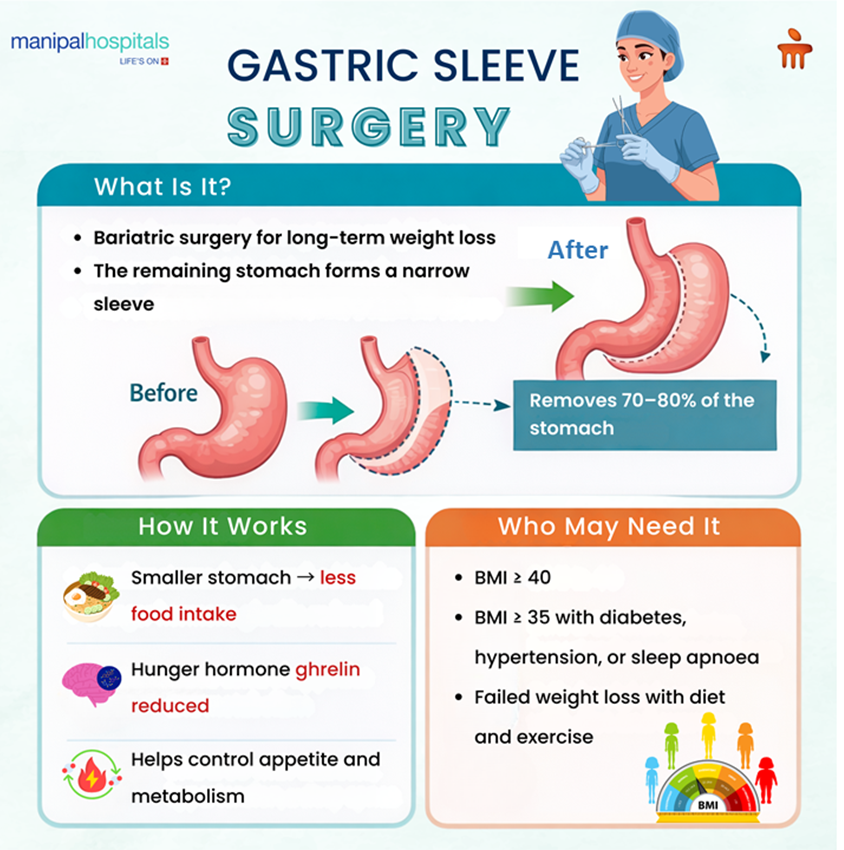
Gastric sleeve surgery is designed to help individuals with obesity reduce excess body weight safely and sustainably. In medical terms, the procedure is called a sleeve gastrectomy. During the surgery, doctors remove about 70–80% of the stomach, leaving behind a thin tube-shaped stomach that looks like a sleeve.
This procedure works through two main mechanisms:
-
Reduced stomach capacity: Smaller meals are sufficient to create a feeling of fullness.
-
Hormonal changes: Removal of part of the stomach reduces the production of ghrelin, the hormone responsible for hunger.
Because of these two effective mechanisms, gastric sleeve surgery is thought to be a good way to help people who are having a hard time losing body weight. This procedure also influences appetite regulation and metabolic responses; therefore, it is a popular choice for weight loss.
Who Can Have Gastric Sleeve Surgery?
Not everyone who desires to lose weight can have gastric sleeve surgery. If you meet certain medical criteria, doctors recommend this surgery.
Typical candidates include:
-
Individuals with a BMI of 40 or higher
-
People with a BMI of 35 or above, along with obesity-related conditions such as diabetes, hypertension, or sleep apnoea
-
Patients who have not achieved sustained weight loss through lifestyle changes
This obesity treatment surgery is suggested to patients after proper evaluation through medical tests, nutritional assessments, and psychological screening.
The purpose of this bariatric surgery for weight loss is to improve your quality of life and health as a whole. Choosing the right patients ensures that the gastric sleeve benefits are greater than the risks that come with it.
How the Sleeve Gastrectomy Procedure Works
Understanding the sleeve gastrectomy procedure helps patients prepare for surgery and know what to expect.
Pre-operative Preparation
Before surgery, patients usually undergo several assessments, including:
-
Blood tests and imaging studies
-
Nutritional counselling
-
Evaluation of existing medical conditions
-
Guidance on diet changes before surgery
These steps ensure that the patient is physically prepared for gastric sleeve surgery and help improve surgical outcomes.
The Surgical Process
The sleeve gastrectomy procedure is usually done using laparoscopic (minimally invasive) methods. A few small incisions are made in the abdomen so that surgical tools and a camera can get inside.
During the operation :
-
The surgeon removes approximately three-quarters of the stomach.
-
The remaining portion is reshaped into a narrow tube.
-
The new stomach structure restricts food intake.
The entire gastric sleeve surgery typically takes about one to two hours. As it is minimally invasive, most patients spend less time in the hospital than they would after traditional open surgery. This form of bariatric surgery for weight loss does not involve redirecting the intestines, which lowers the complexity compared with some other procedures used for obesity treatment surgery.
Gastric Sleeve Benefits
The gastric sleeve benefits go beyond just losing weight. Gastric sleeve surgery helps people in many ways:
-
Significant and Sustained Weight Loss: Most patients lose 50–70% of their excess body weight within the first 12–18 months after the sleeve gastrectomy procedure. This makes it a reliable bariatric surgery for weight loss for individuals struggling with obesity.
-
Improvement in Obesity-Related Conditions: Weight reduction after this surgery often leads to improvement or remission of several medical conditions, such as:
-
Type 2 diabetes
-
Sleep apnoea
-
High cholesterol
-
-
Reduced Hunger Hormones: Since the portion of the stomach producing ghrelin is removed, many patients report reduced appetite after the sleeve gastrectomy procedure. This hormonal change contributes to long-term weight management.
-
Improved Quality of Life: The overall gastric sleeve benefits include better mobility, increased energy levels, and enhanced confidence. Many individuals also find it easier to maintain healthier eating patterns following bariatric surgery for weight loss.
Risks and Possible Complications
Although gastric sleeve surgery is generally safe, it carries some risks like any surgical procedure. Patients should be aware of these risks before deciding on the treatment.
Short-Term Risks
Possible complications immediately after the sleeve gastrectomy procedure may include:
-
Bleeding
-
Infection
-
Leakage from the staple line
-
Blood clots
These complications are uncommon but require prompt medical attention.
Long-Term Risks
Over time, some patients may experience:
-
Nutritional deficiencies
-
Acid reflux
-
Narrowing of the stomach sleeve
-
Weight regain
Therefore, proper follow-up care is important after bariatric surgery for weight loss. As it is a major surgery, doctors provide extensive guidance on diet, supplements, and lifestyle habits to curb risks post-surgery. Following medical advice is essential to maximise gastric sleeve benefits and maintain long-term health.
Recovery After Gastric Sleeve Surgery
Patients can expect recovery after gastric sleeve surgery by knowing how long it will take to heal.
-
Hospital Stay: Most people stay in the hospital for one to three days after having the sleeve gastrectomy procedure. Doctors check vital signs, control pain, and make sure everything is going well during this time.
-
Diet Progression: Diet changes play a major role in recovery after gastric sleeve surgery. Patients typically follow a staged diet plan:
-
Liquid diet: Clear liquids during the first few days
-
Pureed foods: Soft blended foods for the next few weeks
-
Soft foods: Gradual introduction of soft meals
-
Regular healthy diet: After several weeks
-
-
Activity and Lifestyle Changes: Light walking is encouraged after the surgery to support recovery. Most patients return to normal activities within two to four weeks. Maintaining healthy habits such as a balanced diet, regular physical activity, and follow-up visits with the healthcare team is important after bariatric surgery.
-
Long-Term Monitoring: Doctors often recommend vitamin supplements and periodic health check-ups as part of recovery. These measures prevent deficiencies and help maintain the positive gastric sleeve benefits achieved through surgery.
Conclusion
For individuals with severe obesity, gastric sleeve surgery may be considered when traditional weight-loss methods have not produced lasting results. By reducing stomach size and influencing hunger hormones, the sleeve gastrectomy procedure can support weight loss and help improve obesity-related health conditions. However, achieving gastric sleeve benefits in the long run depends on maintaining healthy lifestyle habits and following medical guidance during recovery.
If you are planning bariatric surgery for weight loss or exploring surgery options, consult our bariatric surgery specialists at Manipal Hospital Doddaballapur to receive expert guidance, personalised treatment plans, and comprehensive care throughout your weight-loss journey.
FAQ's
Most patients lose around 50–70% of their excess body weight within one to two years after gastric sleeve surgery, depending on diet, physical activity, and adherence to medical advice.
Yes, the procedure is permanent because a large portion of the stomach is removed during surgery and cannot be restored.
Initial recovery after surgery usually takes two to four weeks, although complete internal healing and lifestyle adjustments may take several months.
Many doctors see this bariatric surgery as relatively safe when compared to other types of bariatric surgery because it does not involve rerouting the intestines.
Yes. After the surgery, patients follow a structured diet plan. This plan gradually transitions from a liquid to a solid food diet and focuses on meals that are high in nutrients.
Share this article on: