8 Min Read
Knee injuries are among the most common problems faced by athletes. One of the most serious injuries affecting performance and long-term joint health is an anterior cruciate ligament (ACL) injury. The ACL is a strong ligament that keeps the knee joint stable and stops the tibia from moving too far forward compared to the femur. When this ligament is stretched or torn, it can make it hard to move around and play sports. Recognising the ACL injury symptoms early is important because delaying treatment can make the injury worse and slow down recovery. Athletes often ignore mild discomfort or swelling, assuming it will resolve with rest. However, these early warnings could indicate damage to the ligament.
If athletes are aware of the early ACL injury signs, they can get medical help immediately and avoid problems like long-term knee instability or damage to the cartilage. Through this blog, we bring you clinical insights from highly experienced orthopaedic experts in Doddaballapur, Bangalore, about the signs of ACL tear, what causes them, and when athletes should see a doctor.
Synopsis
What Is an ACL Injury?
Four major ligaments in the knee help maintain joint stability during movement. One of these is the anterior cruciate ligament (ACL), which plays a key role in controlling rotational movement and preventing the knee from giving way during sudden stops or changes in direction.
An ACL injury in athletes often occurs during activities that involve rapid pivoting, jumping, or awkward landings. Sports such as football, basketball, badminton, and skiing commonly place significant stress on the knee ligaments. When the ACL is damaged, athletes may experience various ACL tear symptoms, ranging from mild discomfort to severe pain and instability.
Injuries are usually categorised into three grades:
-
Grade 1: Slight stretching of the ligament without major instability
-
Grade 2: Partial tear of the ligament
-
Grade 3: Complete tear causing knee instability
Early identification of ACL injury symptoms lets you manage them properly and prevents long-term damage to the joint.
Common Causes of ACL Injury in Athletes
Athletes often hurt their ACLs when they make quick and strong movements. The most common reasons are:
-
Sudden Direction Changes: Quickly turning or cutting puts too much stress on the knee joint, which makes it more likely that the ligaments will get hurt.
-
Landing Wrong After a Jump: Landing with your knees out of alignment can put stress on the ACL and cause an injury.
-
Direct Collision: Hitting another player or something else during a sport can make the knee twist suddenly.
-
Stopping Suddenly While Moving: If you stop suddenly while running, the ligament may get hurt.
-
Weak Supporting Muscles: If the quadriceps, hamstrings, or hip muscles aren't strong enough, athletes are more likely to hurt their ACL.
These factors contribute to ligament strain, making early recognition of ACL injury symptoms extremely important for athletes.
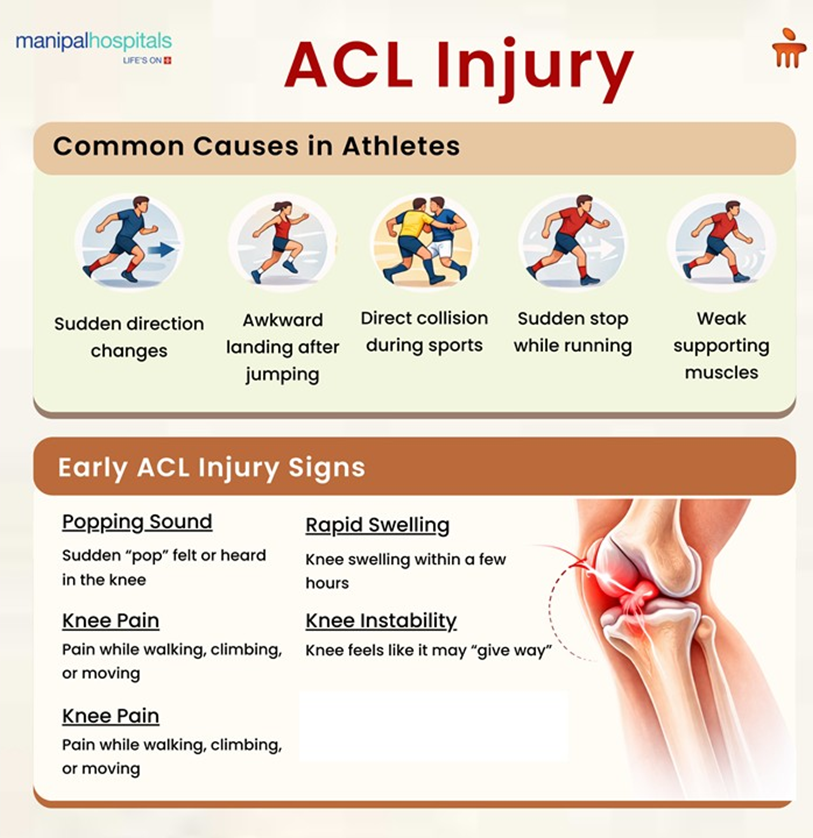
Early ACL Injury Signs Athletes Should Watch For
Recognising early ACL injury signs can prevent worsening of the injury. Athletes should never ignore the following symptoms.
A Sudden "Pop" Sound in the Knee
Hearing or feeling a pop at the time of injury is one of the most common signs of an ACL tear. A lot of athletes say they hear this sound right after they bend their knees while playing.
This popping feeling usually means that a ligament has torn, and it is often followed by pain and swelling. It is important to stop playing right away and get checked out by a doctor when this happens.
Rapid Knee Swelling
Swelling is one of the first ACL tear symptoms. It usually happens a few hours after the injury because blood leaks into the joint. Athletes may notice that the knee becomes stiff and difficult to bend. One of the most obvious knee ligament injury symptoms is inflammation, and you should pay attention to it, especially if it happened while you were playing a sport.
Persistent Knee Pain
Another common ACL injury symptom is pain around the knee joint. The severity can change depending on how much of the ligament is torn. Athletes may feel pain when:
-
Walking or climbing stairs
-
Putting weight on the injured leg
-
Attempting to return to sports activity
Persistent discomfort is often one of the signs of an injury that suggests the need for medical attention.
Knee Instability or “Giving Way”
One of the most worrisome signs of an ACL tear is the feeling that the knee can't hold up the weight of the body. While walking, running, or turning, athletes may feel like their knee is "giving way." The joint becomes unstable because the damaged ligament can no longer keep it stable. If you feel such serious ACL injury symptoms, you should get them checked by an orthopaedic doctor.
Reduced Range of Motion
Difficulty bending or straightening the knee can occur after an ACL injury. Swelling and inflammation may make knee movement limited or uncomfortable. During activity, the knee may feel stiff or difficult to move. Limited motion is a common knee ligament injury symptom and may suggest possible ligament damage.
Difficulty Returning to Sports Activity
Athletes recovering from an injury sometimes notice that the knee does not feel stable enough to resume training. Even after resting, the knee may still feel weak or painful during running or jumping. Persistent ACL tear symptoms may indicate incomplete healing. Ignoring these early ACL injury signs can increase the risk of further joint damage.
How ACL Injuries Are Diagnosed
When athletes experience signs of an ACL tear, doctors perform several evaluations to confirm the injury.
-
Physical Examination: Orthopaedic doctors check how stable the knee is by doing tests like the Lachman test and the pivot shift test.
-
Magnetic Tests: MRI scans show clear pictures of the ligament and help figure out how bad the damage is.
-
X-rays: Although X-rays cannot show ligament injuries directly, they help rule out fractures.
Accurate diagnosis ensures appropriate treatment for ACL injury in athletes.
Treatment Options for ACL Injuries
The severity of the injury and the athlete's level of activity help doctors to suggest the right treatment. Proper treatment reduces long-term complications associated with ACL tear symptoms. Some of the treatment options are:
-
Conservative Management: Mild injuries can be treated with rest, ice, compression, elevation (RICE), and physical therapy.
-
Physical Rehabilitation: Structured rehabilitation programmes help the knee get back to normal function and stability.
-
Surgical Reconstruction: ACL reconstruction surgery is often needed to restore the joint stability after a severe or complete tear.
Preventing ACL Injuries in Athletes
Although not all injuries can be prevented, athletes can lower the chance of ACL injury in athletes through the following measures:
-
Strength Training: Your knees will be more stable if you strengthen your hamstrings and quadriceps.
-
Proper Landing Techniques: If you learn how to jump and land correctly, your ligaments won't have to work as hard.
-
Warm-Up Exercises: Dynamic stretching gets your muscles and joints ready to move by warming them up.
-
Balance and Stability Training: Neuromuscular exercises help you move better and lower your risk of getting hurt.
Preventive training programmes are highly beneficial in sports medicine to mitigate knee ligament injury symptoms.
Conclusion
Ignoring ACL injury symptoms can lead to serious long-term consequences for athletes. It's very important to spot the early ACL tear symptoms, like knee swelling, instability, constant pain, or a popping feeling, so that the knee joint doesn't get worse. Early diagnosis and proper treatment can help athletes heal safely and get back to sports with stronger joints.
If you experience persistent ACL tear symptoms or suspect a ligament injury, consulting orthopaedic specialists is essential for accurate diagnosis and treatment. For expert evaluation, advanced orthopaedic care, and personalised treatment for ACL injury in athletes, consider seeking guidance from the orthopaedic specialists at Manipal Hospital Doddaballapur.
FAQ's
The earliest ACL injury symptoms often include a popping sound in the knee, swelling within a few hours, pain, and difficulty bearing weight on the affected leg.
It is not a good idea to keep playing sports after you notice early ACL injury signs. If you play with a torn ligament, the injury could get worse, and the risk of more knee damage could go up.
Recovery time depends on the severity of the ACL injury in athletes. Mild ACL injuries may improve within a few weeks with rehabilitation. However, recovery after surgery for a complete tear often requires about six to nine months.
Partial tears or mild knee ligament injury symptoms may heal with physiotherapy and rehabilitation. However, complete tears often require surgical reconstruction to restore knee stability.
Strength training, warming up correctly, doing balance exercises, and learning how to move safely can all help lower the risk of getting signs of an ACL tear.
Share this article on: