7 Min Read
Acute Kidney Injury (AKI), often referred to as ‘sudden kidney failure’, is a critical medical condition demanding immediate medical attention. Unlike chronic kidney disease (CKD), which develops slowly over time, AKI occurs rapidly- sometimes within hours or days- causing your kidneys to lose their ability to filter waste products from your blood in an abrupt manner. This sudden decline can have severe consequences if not treated promptly, making swift action crucial to preventing long-term damage and ensuring kidney recovery. This blog guides you with the essential guidelines.
Synopsis
What is Acute Kidney Injury (AKI)?
Acute Kidney Injury is characterised by a rapid decrease in kidney function, leading to a build-up of waste products like creatinine and urea in the blood. This condition can range from a mild, temporary impairment to complete kidney failure. Understanding the distinction between acute kidney injury vs chronic kidney disease is vital: AKI is sudden and potentially reversible, while CKD is a progressive, irreversible condition. While AKI, if not managed effectively, can sometimes lead to CKD, early and aggressive treatment significantly improves the chances of kidney recovery.
Why do kidneys fail suddenly?
The AKI causes in adults are diverse. These causes of sudden kidney failure can be broadly categorised into three main types:
-
Pre-renal AKI- This is the most common type, occurring when there is not enough blood flowing to the kidneys. This deprives them of oxygen and nutrients. Examples include severe dehydration (from vomiting, diarrhoea), significant blood loss, or heart failure
-
Intra-renal AKI- This type involves direct damage to the kidney tissue itself. Common causes include severe infections (sepsis), certain medications (like some antibiotics, pain killers, NSAIDs), or inflammation of the kidney filters known as ‘glomerulus’ (glomerulonephritis).Snake bites can cause injury to glomerulus or tubules.
-
Post-renal AKI- This occurs when there is an obstruction that prevents urine from draining out of the kidneys. Causes can include kidney stones blocking the ureters, an enlarged prostate in men, or tumours.
What are the symptoms of Acute Kidney Injury?
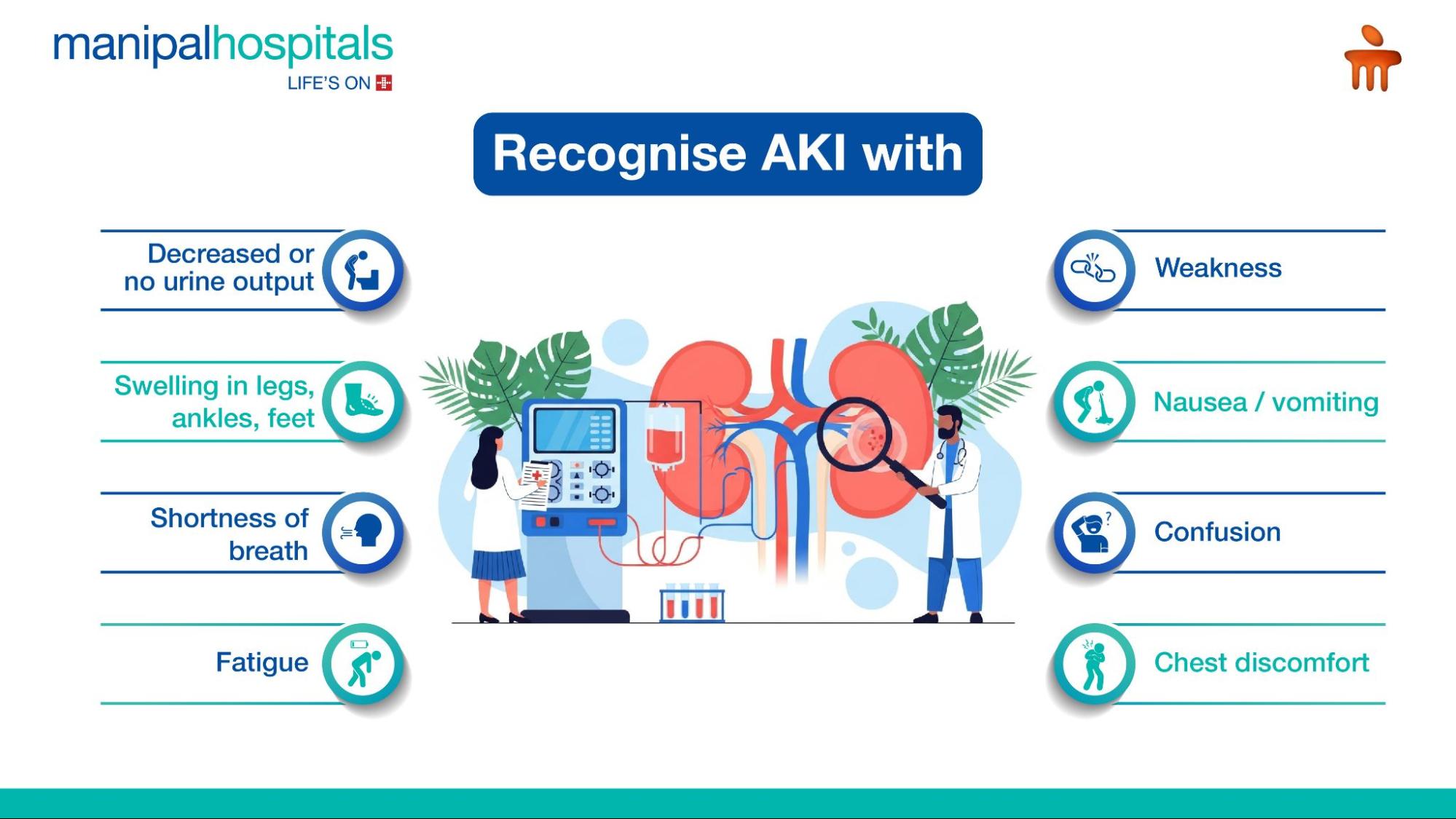
Identifying acute kidney injury symptoms early is paramount. While some individuals might not experience noticeable symptoms in the initial stages, others may present with one or more of the following crucial signs, like:
-
Decreased urine output- Minimal urine output or not urinating at all is a primary indicator of kidney dysfunction.
-
Swelling (edema)- Swelling in the legs, ankles, or feet may happen due to the body retaining excess fluid.
-
Shortness of breath- This results from fluid accumulating in the lungs.
-
Fatigue and weakness- A general feeling of tiredness and lack of energy can be seen.
-
Confusion or altered mental status- Psychological effects are common due to the build-up of toxins in the blood affecting the brain.
-
Nausea and vomiting- These are the common gastrointestinal complaints associated with AKI.
-
Chest pain or pressure- Chest discomfort can occur if fluid builds up around the heart.
How is AKI diagnosed and treated?
Prompt diagnosis is crucial for effective AKI management. Doctors typically diagnose AKI through:
-
Blood tests (measuring levels of creatinine and blood urea nitrogen to assess kidney function)
-
Urine tests (analysing for abnormalities)
-
Imaging tests like ultrasounds or CT scans (to check for blockages or structural problems).
Primary emphasis must be given to prevention of AKI- by timely rehydration, treatment of infection, stopping of nephrotoxic drugs. Once acute tubular necrosis sets in AKI, treatment becomes supportive.
Treatment for AKI focuses on addressing the underlying cause and supporting kidney function. With timely and appropriate treatment, a significant number of patients, up to 70-85% in some cases, can experience full or partial recovery of kidney function. This might involve:
-
Restoring blood flow (e.g., with fluids or medications)
-
Treating infections
-
Stopping medications that are harming the kidneys
-
Relieving blockages in the urinary tract
-
In severe cases, temporary dialysis may be required to filter the blood while the kidneys recover.
Conclusion
Acute Kidney Injury (AKI) requires prompt recognition and timely prevention and treatment to prevent serious complications and promote better outcomes. At Manipal Hospitals Dhakuria, our expert nephrology team is committed to delivering rapid diagnosis, advanced treatment, and compassionate care tailored to each patient’s needs. Since early intervention can significantly improve chances of recovery, it is important not to ignore symptoms such as reduced urine output, swelling, fatigue, or sudden changes in kidney function. Consult a reputed nephrologist in Dhakuria Kolkata, for comprehensive kidney care and expert guidance at Manipal Hospitals.
FAQ's
AKI (Acute Kidney Injury) is a sudden, rapid decline in kidney function that can be reversible, while CKD (Chronic Kidney Disease) is a gradual, long-term loss of kidney function that is usually irreversible and progressive.
While many cases of AKI are reversible with prompt and appropriate treatment, the outcome depends on the underlying cause, severity, and the patient's overall health. Early intervention significantly increases the chances of recovery.
Symptoms of Acute Kidney Injury can develop rapidly within a few hours or days, but in some cases, they may begin subtly and go unnoticed initially, making early diagnosis difficult and increasing the risk of serious health complications if left untreated.
While not all causes are preventable, maintaining good hydration, managing chronic conditions like diabetes and hypertension, and avoiding self-medication with kidney-damaging drugs like pain killers can significantly reduce your risk.
Yes, Acute Kidney Injury can occur in individuals of all age groups, including children. However, the underlying causes in children may differ from those seen in adults, often requiring specialised evaluation and age-appropriate treatment for effective management and recovery.
Share this article on:


--Mental-Health--The-Hidden-Connection.webp "Chronic kidney disease impact on mental well being")