6 Min Read
Sleep paralysis is a frightening yet medically recognised sleep disorder that affects people of all ages. Individuals experiencing sleep paralysis symptoms often report being awake but unable to move, speak, or react, sometimes accompanied by vivid fear. These episodes can be alarming, leading many to question why sleep paralysis happens and whether it signals an underlying brain or mental health condition. Early recognition of sleep paralysis symptoms and timely evaluation, often with guidance from specialists such as our neurologists in Delhi-NCR, can help rule out serious causes and reduce recurrence. This in-depth guide explores sleep paralysis causes, symptoms, risks, and effective prevention strategies.
Synopsis
- What Is Sleep Paralysis?
- Common Sleep Paralysis Symptoms
- Sleep Paralysis Causes: Brain or Stress?
- Why Sleep Paralysis Happens During Certain Times
- Sleep Paralysis Hallucinations Explained
- Is Sleep Paralysis Dangerous?
- Is Sleep Paralysis Scary?
- How to Stop Sleep Paralysis in the Moment
- How to Avoid Sleep Paralysis Long-Term
- When to See a Doctor
- Treatment Options for Sleep Paralysis
- Key Takeaway
What Is Sleep Paralysis?
Sleep paralysis is a temporary inability to move or speak that occurs when falling asleep or waking up. During an episode, the brain is conscious, but the body remains in a state of muscle atonia normally seen during rapid eye movement (REM) sleep. Sleep paralysis symptoms may last a few seconds to a couple of minutes and resolve on their own.
While the experience can be distressing, sleep paralysis is not uncommon. Many people experience at least one episode in their lifetime, though recurrent episodes may require medical attention.
Common Sleep Paralysis Symptoms
Understanding sleep paralysis symptoms is essential for distinguishing it from other neurological or psychiatric conditions.
Physical Sleep Paralysis Symptoms
-
Inability to move arms, legs, or body
-
Difficulty speaking or calling out
-
Pressure or heaviness in the chest
-
Shallow or restricted breathing sensation
Psychological and Sensory Symptoms
-
Intense fear or panic
-
Sleep paralysis hallucinations (visual, auditory, or tactile)
-
Sensing a presence, often described as a Sleep paralysis demon
-
Feeling watched or threatened
These sleep paralysis symptoms can feel extremely real, which is why many people ask, Is sleep paralysis scary? For most, the answer is yes, but it is not usually dangerous.
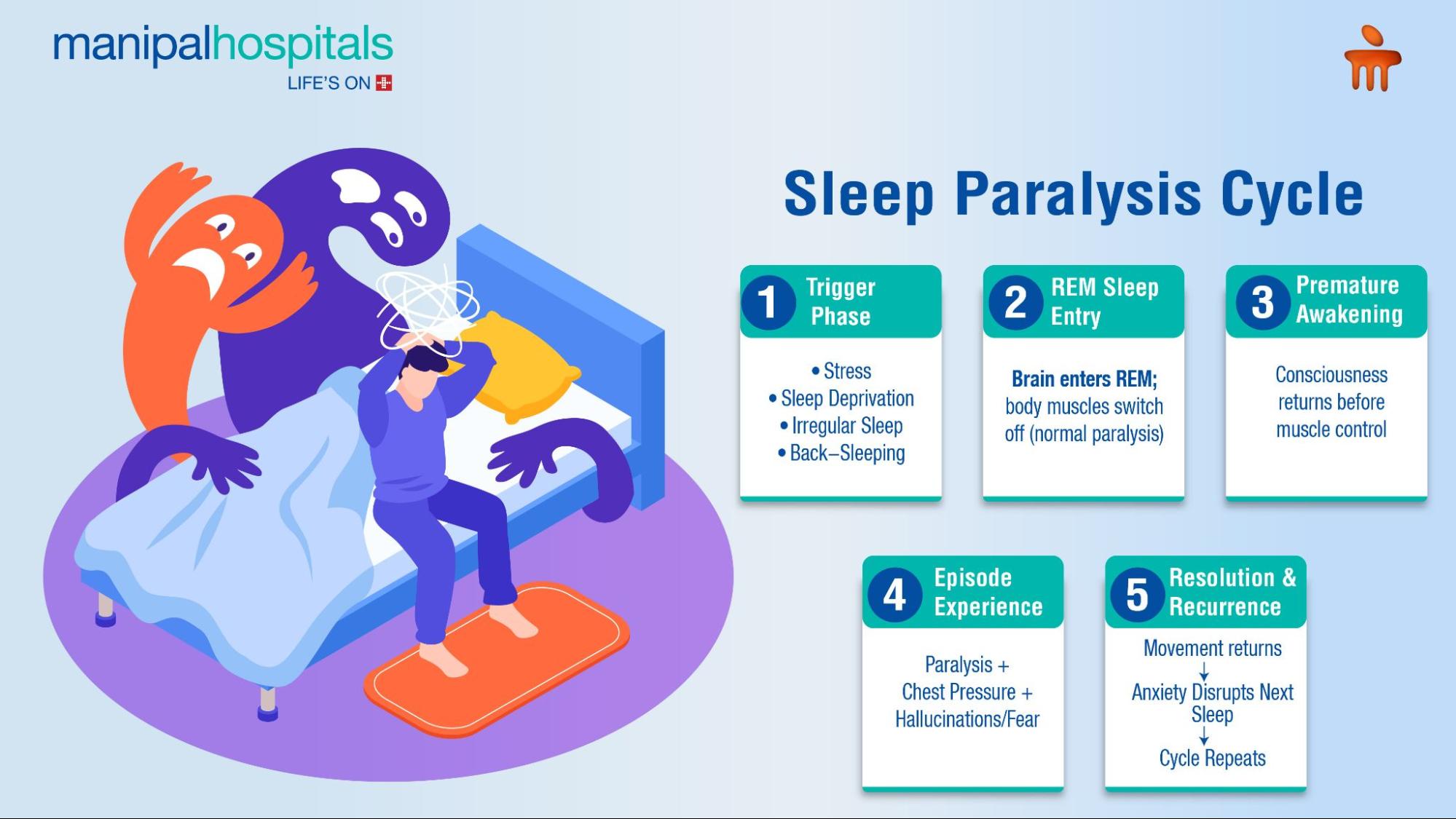
Sleep Paralysis Causes: Brain or Stress?
Sleep paralysis causes are multifactorial and often involve both neurological and psychological factors.
Brain-Related Sleep Paralysis Causes
Sleep paralysis occurs due to a disconnect between the brain and body during REM sleep. Normally, REM-related muscle paralysis prevents acting out dreams. When consciousness returns before muscle control, sleep paralysis symptoms appear.
Neurological sleep paralysis causes may include:
-
Disrupted REM sleep cycles
-
Irregular sleep–wake patterns
-
Genetic predisposition
-
Coexisting sleep disorders such as narcolepsy
Evaluation by our neurologists in Delhi-NCR may be recommended when sleep paralysis symptoms are frequent or associated with excessive daytime sleepiness.
Stress-Induced Sleep Paralysis Causes
Psychological stress is one of the most common sleep paralysis causes. High stress levels can fragment sleep architecture, increasing the likelihood of REM intrusion into wakefulness.
Stress-related factors include:
-
Anxiety and depression
-
Chronic work or emotional stress
-
Sleep deprivation
-
Post-traumatic stress disorder
This explains why many people wonder why sleep paralysis happens during periods of emotional overload.
Why Sleep Paralysis Happens During Certain Times
Sleep paralysis symptoms are more likely to occur:
-
When sleeping on the back
-
During irregular sleep schedules
-
After sleep deprivation
-
During jet lag or shift work
Alcohol and stimulant use before bedtime can also increase the risk of sleep paralysis caused by disrupting REM sleep.
Sleep Paralysis Hallucinations Explained
Sleep paralysis hallucinations are a hallmark feature of this condition. These hallucinations occur because dreaming mechanisms remain active while the individual is awake.
Types of sleep paralysis hallucinations include:
-
Visual: shadowy figures or shapes
-
Auditory: whispers, footsteps, or voices
-
Tactile: feeling touched or pressed down
The culturally described Sleep paralysis demon is a common interpretation of these hallucinations. While terrifying, these experiences are not signs of psychosis or supernatural events.
Is Sleep Paralysis Dangerous?
A frequent concern is: Is sleep paralysis dangerous? Medically, sleep paralysis itself is not life-threatening. It does not cause brain damage, stroke, or respiratory failure. However, recurrent sleep paralysis symptoms can affect mental health, sleep quality, and overall wellbeing.
Chronic anxiety about sleep paralysis may lead to insomnia or fear of sleeping, which further worsens the condition. In such cases, professional evaluation is beneficial.
Is Sleep Paralysis Scary?
Yes, sleep paralysis is scary for most individuals, especially during first-time episodes. The combination of immobility, fear, and sleep paralysis hallucinations creates an intense experience. Understanding the condition medically often reduces fear and improves coping.
Education provided by specialists, including our neurologists in Delhi-NCR, can reassure patients and prevent unnecessary panic.
How to Stop Sleep Paralysis in the Moment
Many people ask: How to stop sleep paralysis in the moment? While movement is temporarily impossible, certain techniques may help shorten episodes:
-
Focus on slow, controlled breathing
-
Try moving a finger or toe first
-
Concentrate on blinking or eye movement
-
Remind yourself that the episode will pass
Mental reassurance reduces panic and helps regain muscle control more quickly.
How to Avoid Sleep Paralysis Long-Term
Learning how to avoid sleep paralysis involves addressing the underlying sleep paralysis causes.
Effective prevention strategies include:
-
Maintaining a regular sleep schedule
-
Ensuring adequate sleep duration
-
Reducing stress through relaxation techniques
-
Avoid sleeping on your back
-
Limiting alcohol and caffeine
For recurrent or severe sleep paralysis symptoms, medical assessment is advised.
When to See a Doctor
Occasional sleep paralysis symptoms are usually harmless. However, medical consultation is recommended if:
-
Episodes occur frequently
-
Sleep paralysis causes significant anxiety
-
There is excessive daytime sleepiness
-
Symptoms suggest narcolepsy or other sleep disorders
Specialist evaluation, such as with our neurologists in Delhi-NCR, helps exclude neurological conditions and guide treatment.
Treatment Options for Sleep Paralysis
There is no single medication specifically for sleep paralysis, but treatment focuses on managing sleep paralysis causes.
Options may include:
-
Improving sleep hygiene
-
Cognitive behavioural therapy for anxiety
-
Treating underlying sleep disorders
-
Medications that regulate REM sleep in select cases
Addressing stress and sleep quality often reduces sleep paralysis symptoms significantly.
Key Takeaway
Sleep paralysis is a complex interaction between brain activity and sleep regulation, often influenced by stress and lifestyle factors. While sleep paralysis symptoms can be frightening, they are usually harmless and manageable with proper understanding and care. Recognising sleep paralysis causes, knowing how to stop sleep paralysis in the moment, and learning how to avoid sleep paralysis long-term can restore confidence in sleep. With awareness and, when needed, expert guidance, most people can regain restful, uninterrupted sleep.
FAQ's
Sleep paralysis symptoms include temporary inability to move, chest pressure, fear, and sleep paralysis hallucinations.
Recurrent episodes are often linked to stress, sleep deprivation, irregular sleep patterns, or underlying sleep disorders.
No, sleep paralysis is not dangerous and does not cause brain damage, though it can be emotionally distressing.
Focus on breathing, attempt small movements, and remind yourself that the episode will pass.
Maintaining good sleep hygiene, reducing stress, and addressing sleep paralysis causes can significantly lower recurrence.
Share this article on: