7 Min Read
Chronic Migraine is more than just a severe headache it is a long-term neurological condition that can significantly affect daily functioning, productivity, and overall well-being. Many people mistake it for an ordinary migraine, but the frequency, intensity, and impact of Chronic Migraine Symptoms distinguish it as a separate condition that deserves timely evaluation. Understanding what chronic migraine is and identifying early warning signs can help individuals seek appropriate guidance from specialists.
At Manipal Hospitals, our neurologist in Delhi-NCR emphasises that Chronic Migraine can be effectively managed with the right approach, lifestyle adjustments, and long-term medical supervision. With awareness and early recognition, individuals can better navigate their symptoms and improve their quality of life.
Synopsis
- What Is a Chronic Migraine?
- Understanding Chronic Migraine Symptoms
- How Chronic Migraine Develops: Key Neurological Insights
- Triggers That Can Intensify Chronic Migraine Symptoms
- Risk Factors Associated With Chronic Migraine
- Chronic Migraine vs. Episodic Migraine
- Chronic Migraine Diagnosis at Manipal Hospitals
- Chronic Migraine Treatment Options (General Overview)
- When to Consult Our Neurologists in Delhi-NCR
- Conclusion
What Is a Chronic Migraine?
Chronic Migraine is a neurologically driven condition defined by headaches occurring 15 or more days per month for at least three consecutive months, with at least eight days showing migraine features. This persistent pattern often interferes with work, sleep, mood balance, and sensory tolerance.
People experiencing Chronic Migraine often describe the condition as a cycle involving throbbing pain, nausea, heightened light sensitivity, and cognitive fatigue. Our neurologists in Delhi-NCR provide comprehensive assessments to help individuals understand their symptoms and identify whether their headache patterns fit the criteria for Chronic Migraine.
Understanding Chronic Migraine Symptoms
Identifying Chronic Migraine Symptoms early allows for timely guidance and structured management. These symptoms can vary from person to person but often follow distinctive patterns.
Common Chronic Migraine Symptoms
-
Persistent throbbing or pulsating head pain
-
Sensitivity to light, sound, or certain odours
-
Visual disturbances (spots, flashes, blurriness)
-
Difficulty concentrating
-
Irritability or mood changes
These Chronic Migraine Symptoms can appear frequently throughout the month, making daily routines challenging. Our neurologists in Delhi-NCR help patients recognise patterns and explore evidence-based options for management.
How Chronic Migraine Develops: Key Neurological Insights
Although research continues to evolve, several neurological processes may contribute to Chronic Migraine.
Neurological Factors Potentially Involved
-
Altered neurotransmitter activity
-
Changes in brainstem pain pathways
-
Hypersensitivity of nerve fibres
-
Blood vessel dilation patterns
-
Genetic predispositions
These underlying mechanisms do not provide a direct diagnosis, but help specialists understand the complexity of Chronic Migraine Symptoms. Our neurologists in Delhi-NCR use a combination of patient history, symptom tracking, and clinical reasoning to guide individuals.
Triggers That Can Intensify Chronic Migraine Symptoms
Triggers differ among individuals, but certain patterns commonly influence Chronic Migraine Symptoms.
Table: Common Triggers Related to Chronic Migraine
|
Trigger Type |
Examples |
|
Dietary |
Caffeine, aged cheese, processed foods |
|
Hormonal |
Menstrual cycle variations |
|
Environmental |
Bright lights, weather changes |
|
Lifestyle |
Irregular sleep, stress, and dehydration |
|
Sensory |
Loud sounds, strong odours |
Recognising these triggers helps individuals track episodes more effectively. At Manipal Hospitals, our neurologists in Delhi-NCR guide patients on how to identify and manage personal triggers safely.
Risk Factors Associated With Chronic Migraine
Certain factors may increase the likelihood of developing Chronic Migraine.
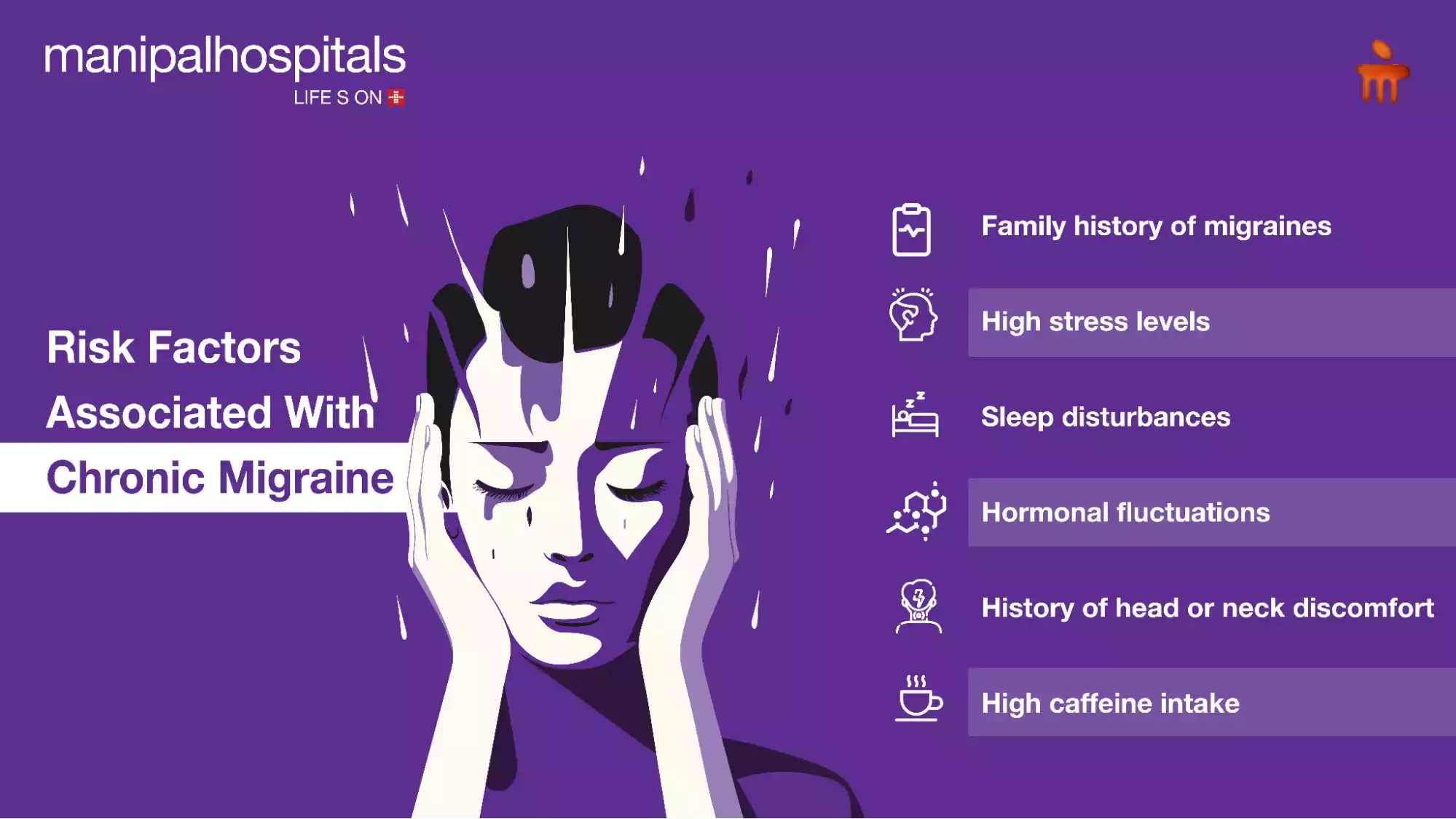
Risk Factors
-
Family history of migraines
-
High stress levels
-
Sleep disturbances
-
Hormonal fluctuations
-
History of head or neck discomfort
-
High caffeine intake
While having risk factors does not confirm a diagnosis, it may help individuals become more aware of potential Chronic Migraine Symptoms. Patients often consult our neurologists in Delhi-NCR when symptoms begin to impact daily life.
Chronic Migraine vs. Episodic Migraine
Understanding the difference between these two conditions can help individuals evaluate their headache patterns.
Table: Chronic Migraine vs. Episodic Migraine
|
Feature |
Chronic Migraine |
Episodic Migraine |
|
Frequency |
≥15 headache days/month |
<15 headache days/month |
|
Symptom Intensity |
Often higher and more persistent |
Intermittent |
|
Daily Impact |
Significant |
Moderate |
People with Chronic Migraine often notice escalating Chronic Migraine Symptoms, which may require evaluation by our neurologists in Delhi-NCR.
Chronic Migraine Diagnosis at Manipal Hospitals
Diagnosis does not rely on scans alone. Instead, clinicians examine symptom patterns and frequency.
General Evaluation Steps
-
Symptom history review
-
Frequency tracking
-
Family history assessment
-
Neurological examination
-
Imaging (if clinically indicated)
This structured evaluation does not diagnose on its own but helps clinicians determine whether an individual may benefit from further guidance. Manipal Hospitals ensures access to experienced specialists, including our neurologists in Delhi-NCR.
Chronic Migraine Treatment Options (General Overview)
While treatment varies by individual, the overall goal of chronic migraine treatment is to reduce frequency, ease symptom intensity, and improve daily functioning.
Common Approaches (Non-Prescriptive Overview)
-
Lifestyle modifications
-
Identification of personal triggers
-
Stress management techniques
-
Sleep cycle regulation
-
Clinician-guided interventions as recommended
Individuals often seek chronic migraine treatment with our neurologists in Delhi-NCR at Manipal Hospitals, where a multidisciplinary framework supports long-term management strategies.
When to Consult Our Neurologists in Delhi-NCR
You may consider seeking expert guidance if:
-
Headache days steadily increase each month
-
Lights and sounds become unusually bothersome
-
Persistent nausea accompanies headache
-
You suspect escalating Chronic Migraine Symptoms
-
Daily functioning is affected
Manipal Hospitals encourages individuals experiencing recurring migraines to consult our neurologists in Delhi-NCR for evaluation.
Conclusion
Understanding what chronic migraine is, identifying early Chronic Migraine Symptoms, and recognising when symptoms begin to intensify can help individuals seek timely attention. Chronic Migraine can significantly disrupt personal, professional, and social life, but awareness empowers individuals to pursue structured evaluation and supportive care.
Our neurologists in Delhi-NCR offer comprehensive assessments to help individuals navigate their migraine patterns and explore suitable approaches for chronic migraine treatment based on clinical evaluation. Visit the neurology department at Manipal Hospitals Delhi NCR today.
FAQ's
Chronic Migraine refers to headaches occurring frequently throughout the month, often involving persistent neurological symptoms such as sensitivity, nausea, or pulsating pain.
Early symptoms often include recurring head pain, sensitivity to light, frequent fatigue, nausea, and difficulty concentrating during episodes.
Clinicians typically examine headache frequency, symptom patterns, lifestyle factors, and medical history to understand whether the condition fits Chronic Migraine patterns.
No. Treatment varies based on individual triggers, frequency, lifestyle, and overall health. Approaches focus on managing symptoms and improving quality of life.
Share this article on: