




 7 Min Read
Chest pain is one of the most alarming symptoms a person can experience. It often triggers immediate concern about heart disease, yet chest pain does not always originate from the heart. While some cases of chest pain are medical emergencies, many are linked to non-cardiac conditions that are less dangerous but still require evaluation. Understanding whether chest pain is cardiac or non-cardiac is critical for timely and appropriate treatment. For accurate diagnosis and timely care, evaluation by our cardiologists in Delhi-NCR plays an important role.
This blog explores the causes of chest pain, explains cardiac chest pain, discusses non-cardiac chest pain, highlights cardiac chest pain symptoms, and clearly outlines the difference between cardiac and non-cardiac chest pain.
Synopsis
- What Is Chest Pain?
- Understanding Cardiac Chest Pain
- Cardiac Chest Pain Symptoms
- What Is Non-Cardiac Chest Pain?
- Cardiac vs Non-Cardiac Chest Pain: Key Differences
- Difference Between Cardiac and Non-Cardiac Chest Pain Explained Further
- When Chest Pain Is Likely Cardiac
- When Chest Pain Is Likely Non-Cardiac
- Diagnostic Approach to Chest Pain
- Why You Should Never Ignore Chest Pain
- The Golden Period in Cardiac Chest Pain
- Conclusion
What Is Chest Pain?
Chest Pain refers to discomfort, pressure, tightness, or pain felt anywhere in the chest area. Chest pain may be sharp, dull, burning, or squeezing and can radiate to the arms, neck, jaw, or back. The intensity and pattern of chest pain often provide clues about its origin.
Not all chest pain indicates heart disease, but every episode of unexplained chest pain should be medically assessed to rule out serious conditions.
Understanding Cardiac Chest Pain
Cardiac chest pain occurs when the heart muscle does not receive enough oxygen-rich blood. This type of chest pain is usually caused by coronary artery disease or heart-related conditions.
Common Causes of Cardiac Chest Pain
-
Blocked coronary arteries (also called angina)
-
Heart attack (myocardial infarction)
-
Coronary artery spasm
-
Pulmonary embolism
-
Aortic dissection
Angina, heart attack, aortic dissection, and pulmonary embolism are the most dangerous and urgent, requiring immediate emergency care.
Cardiac chest pain is often described as pressure or heaviness rather than sharp pain. Clinical assessment by our cardiologists in Delhi-NCR helps distinguish cardiac causes early and accurately.
Cardiac Chest Pain Symptoms
Recognising cardiac chest pain symptoms can be life-saving. These symptoms often develop during exertion or emotional stress.
Common Cardiac Chest Pain Symptoms
-
Central or left-sided chest pain - This pain is typically felt behind the breastbone or slightly to the left side of the chest. It is often described as deep-seated discomfort rather than surface-level pain and may gradually intensify over time.
-
Tightness or a squeezing sensation - Many patients report a sensation of pressure, heaviness, or tightness in the chest, often compared to a weight pressing down. This symptom usually worsens during physical exertion or emotional stress and improves with rest.
-
Pain radiating to the arm, jaw, or back - Cardiac chest pain frequently spreads beyond the chest, commonly affecting the left arm, shoulder, neck, jaw, or upper back. This radiation occurs due to shared nerve pathways between the heart and these areas.
-
Shortness of breath - Difficulty breathing may occur alongside chest discomfort or even independently. It often becomes noticeable during exertion and may indicate reduced oxygen supply to the heart muscle.
-
Sweating, nausea, or dizziness - Excessive sweating, a feeling of nausea, lightheadedness, or dizziness often accompany cardiac chest pain and may signal a serious reduction in blood flow to the heart.
Cardiac chest pain symptoms typically worsen with activity and improve with rest or medication.
What Is Non-Cardiac Chest Pain?
Non-cardiac chest pain refers to chest pain that does not originate from the heart. Despite being non-cardiac, non-cardiac chest pain can be severe and distressing.
Common Causes of Non-Cardiac Chest Pain
-
Acid reflux (GERD)
-
Muscle strain
-
Pain in the ribs due to vitamin D and calcium deficiency
-
Anxiety or panic attacks
-
Lung conditions (COPD, Ruptured bullae, pain due to pneumonia)
-
Multiple Myeloma
-
Costochondritis
Although non-cardiac chest pain is not heart-related, proper diagnosis is essential.
Cardiac vs Non-Cardiac Chest Pain: Key Differences
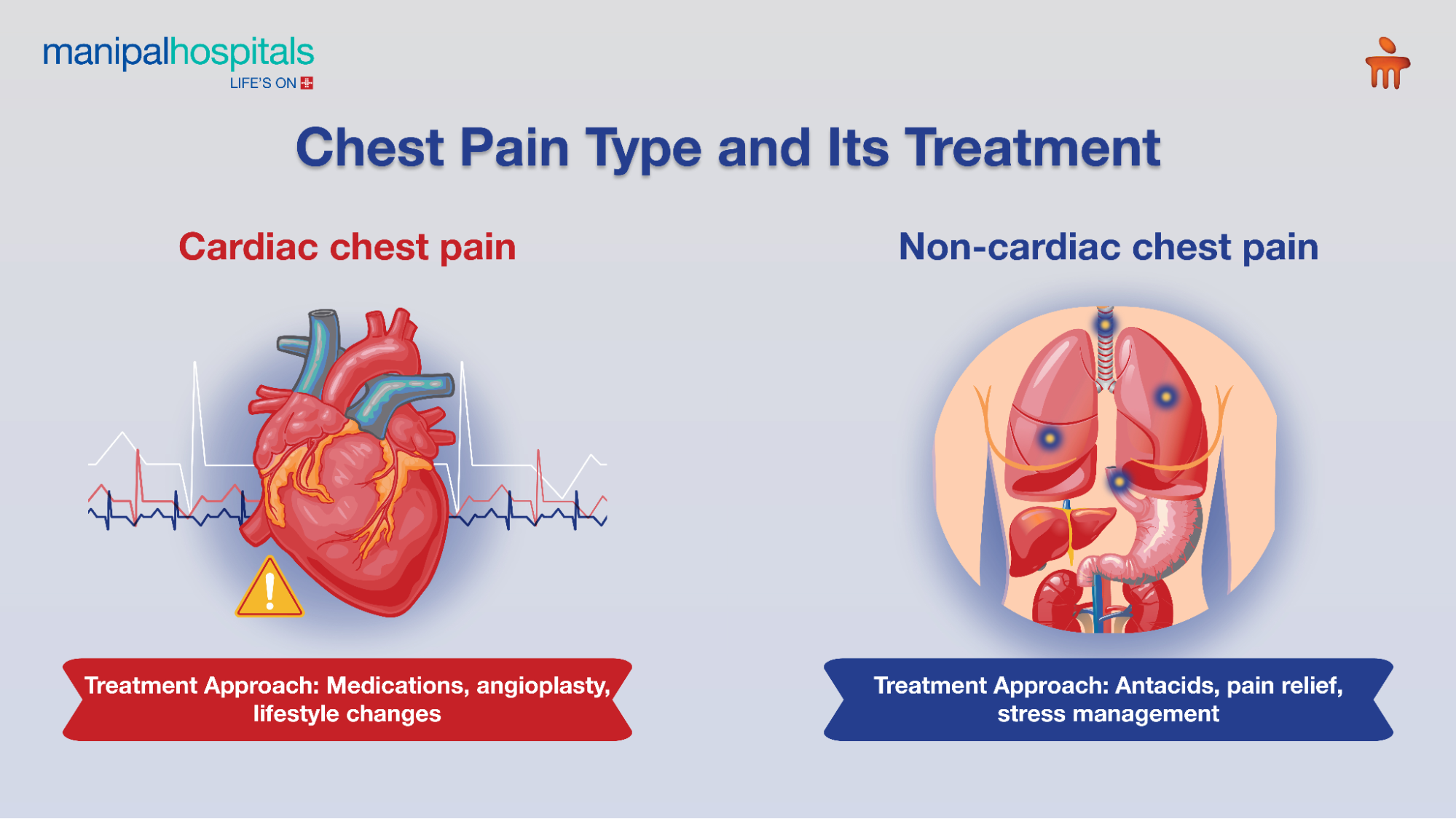
Understanding cardiac vs non-cardiac chest pain helps reduce unnecessary panic while ensuring serious conditions are not ignored.
|
Feature |
Cardiac Chest Pain |
Non-Cardiac Chest Pain |
|
Cause |
Reduced blood flow to the heart |
Digestive, muscular, lung, or psychological |
|
Nature of pain |
Pressure or squeezing |
Sharp, burning, or stabbing |
|
Trigger |
Physical exertion or stress |
Movement, eating, anxiety |
|
Duration |
Minutes to hours |
Seconds to hours |
|
Relief |
Rest or heart medications |
Antacids or position change |
This table clearly highlights the difference between cardiac and non-cardiac chest pain.
Difference Between Cardiac and Non-Cardiac Chest Pain Explained Further
The difference between cardiac and non-cardiac chest pain lies in origin, pattern, and associated symptoms. Cardiac chest pain is usually predictable, recurring with exertion. In contrast, non-cardiac chest pain may vary widely in intensity and timing.
How Doctors Identify the Difference
-
ECG and blood tests
-
Imaging studies
-
Response to medications
-
Patient history
Identifying the difference between cardiac and non-cardiac chest pain is crucial for accurate treatment.
Experienced evaluation by our cardiologists in Delhi-NCR ensures appropriate investigations are prioritised.
When Chest Pain Is Likely Cardiac
Chest Pain should be considered cardiac until proven otherwise if it:
-
Occurs during physical activity
-
Is associated with sweating or breathlessness
-
Radiates to the arm or jaw
In such cases, cardiac chest pain must be ruled out urgently.
When Chest Pain Is Likely Non-Cardiac
Non-cardiac chest pain is more likely when:
-
Pain worsens with movement
-
Pain occurs after eating or swallowing
-
Pain improves with antacids
-
Pain occurs during anxiety episodes
However, even non-cardiac chest pain requires medical evaluation.
Diagnostic Approach to Chest Pain
Doctors use a structured approach to evaluate chest pain:
-
Tests Used
-
ECG (If the first ECG is normal, then repeat after 1 hour)
-
Echocardiography
-
Blood markers
-
Chest X-ray
-
Stress testing (If ECG is normal and other markers are also normal, including electrocardiography)
This helps determine whether chest pain is cardiac or non-cardiac.
Why You Should Never Ignore Chest Pain
Ignoring chest pain can delay life-saving care. Even non-cardiac chest pain can mimic serious conditions. Prompt evaluation ensures safety and peace of mind.
Timely consultation with our cardiologists in Delhi-NCR can be life-saving in high-risk cases.
Importance of Timely Intervention in Chest Pain
Timely intervention plays a critical role in saving lives and preventing permanent heart damage in patients presenting with chest pain. One of the most common and dangerous mistakes people make is misinterpreting chest pain as gas, acidity, or a stomach-related issue, leading to fatal delays in seeking medical care. Unfortunately, a significant number of lives are lost due to this misinterpretation.
An ECG is mandatory in the evaluation of any chest pain. Even when symptoms appear mild or atypical, an ECG helps identify life-threatening cardiac conditions early. Delaying or skipping this test can result in missed diagnoses and catastrophic outcomes.
It is important to understand that discomfort in the upper abdomen should never be ignored. The heart and upper abdominal organs are in proximity, and cardiac chest pain can often present as upper abdominal discomfort, indigestion, or heaviness rather than classic chest pain.
The Golden Period in Cardiac Chest Pain
Early medical intervention within the first 2 hours of symptom onset—known as the golden period—can significantly salvage heart muscle and improve survival outcomes. During this window, prompt treatment can restore blood flow and limit irreversible damage.
Every minute of delay causes irreversible damage to the heart muscle. The longer the heart remains deprived of oxygen, the greater the loss of functioning cardiac tissue, increasing the risk of heart failure, arrhythmias, and death.
Recognising symptoms early, performing an ECG promptly, and seeking immediate medical attention during the golden period are the most effective ways to reduce mortality associated with cardiac chest pain.
Conclusion
Chest Pain is a symptom that should never be ignored, but it is not always heart-related. Understanding cardiac chest pain, recognising cardiac chest pain symptoms, and knowing the difference between cardiac and non-cardiac chest pain can help individuals seek timely and appropriate care. Whether it is cardiac vs non-cardiac chest pain, early evaluation remains the key to safety, reassurance, and effective treatment.
FAQ's
No, chest pain is not always cardiac. Many cases are due to non-cardiac chest pain, but evaluation is essential.
Typical cardiac chest pain symptoms include pressure-like pain, breathlessness, sweating, and pain radiating to the arm or jaw.
The difference between cardiac and non-cardiac chest pain lies in triggers, pain quality, and associated symptoms, but only tests can confirm it.
Yes, anxiety and panic attacks commonly cause non-cardiac chest pain that can feel similar to heart-related pain.
Seek immediate care if chest pain is severe, persistent, or accompanied by cardiac chest pain symptoms.
Share this article on:





