7 Min Read
Have your periods started to feel harder to manage than before, with heavier flow, longer days, or more disruption to your routine? Heavier-than-usual menstrual bleeding is common, and for many people it signals a treatable condition, yet it also carries risks such as iron deficiency and missed work or school, so understanding what counts as heavy menstrual bleeding, knowing typical heavy menstrual bleeding causes, and being aware of reliable heavy menstrual bleeding treatment options lets you make informed decisions and seek timely help. This blog explains more about heavy menstrual bleeding, its causes, diagnostic steps, and evidence-based heavy menstrual bleeding treatment options.
Synopsis
- What is Heavy Menstrual Bleeding?
- Common Heavy Menstrual Bleeding Causes
- Heavy Menstrual Bleeding Patterns
- When to Seek Medical Care for Heavy Periods?
- Diagnostic Approach
- Causes, Tests, and Treatment Options
- Medical Treatment Options
- Minimally Invasive and Surgical Options
- Managing Anaemia
- Practical Lifestyle Measures
- How to Discuss This with Your Clinician
- Conclusion
What is Heavy Menstrual Bleeding?
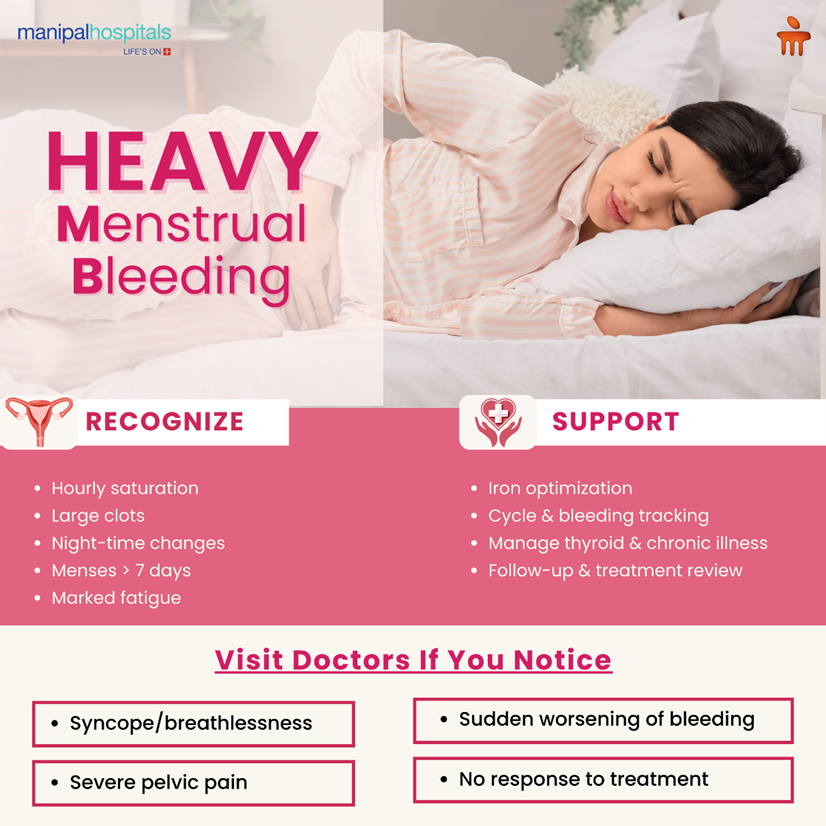
Heavy menstrual bleeding means menstrual blood loss that interferes with a person’s physical, social, or emotional quality of life. Clinically, it is often judged by the need to change pads or tampons every hour for several hours, passing large clots, or bleeding that requires changing protection at night. Another important sign is feeling very tired during or after a period, which may indicate significant blood loss. Occasional variations in menstrual bleeding are normal. Persistent or worsening heaviness should be checked.
Common Heavy Menstrual Bleeding Causes
Understanding heavy menstrual bleeding causes helps guide tests and treatment. Often, more than one factor contributes to heavy bleeding.
Common causes include:
-
Structural uterine problems such as fibroids and polyps.
-
Hormone problems, such as ovulatory dysfunction, can produce irregular and heavy flow.
-
Endometrial causes include hyperplasia or, less commonly, malignancy.
-
Bleeding disorders and the use of anticoagulant medication can increase blood loss.
-
Intrauterine devices, particularly copper IUDs, may increase bleeding in some users.
-
Thyroid disease, liver disorders, and certain medications also affect bleeding.
Heavy Menstrual Bleeding Patterns
Typical patterns of menstrual bleeding that suggest heavy loss include soaking through protection within an hour for several hours, passing clots larger than a coin, needing to change protection at night, and bleeding that limits daily activity.
Other symptoms include sudden worsening, severe pain, fainting, or breathlessness. These signs may require urgent evaluation by an OBG specialist and appropriate care.
When to Seek Medical Care for Heavy Periods?
Persistent heavy bleeding can lead to iron deficiency and anaemia. Anaemia reduces energy and exercise tolerance and can affect concentration at work or school. Heavy bleeding may signal an underlying health problem and also increases the chance of emergency hospital admission. Seek specialist evaluation if bleeding soaks through sanitary products hourly, causes dizziness or fainting, results in severe pain, or persists despite initial treatment.
You should also visit your doctor if you want fertility preservation or tests suggest the presence of fibroids, polyps, or endometrial hyperplasia. A gynaecologist will review diagnostics and discuss the full range of heavy menstrual bleeding treatment options.
Diagnostic Approach
A structured assessment identifies the cause and severity before offering heavy menstrual bleeding treatment. The initial workup usually includes a focused history and pelvic examination. Tests often include a full blood count to check for anaemia, a pregnancy test if relevant, and thyroid function tests when indicated.
Imaging typically begins with a transvaginal or pelvic ultrasound to look for fibroids, polyps, or uterine anomalies. When ultrasound or symptoms raise concern about the lining of the uterus, endometrial sampling or hysteroscopy may be performed. If a bleeding disorder is suspected, clotting studies or referral to haematology is appropriate. Diagnosis guides safe and effective treatment.
Causes, Tests, and Treatment Options
Let’s understand the common reasons, diagnostic tests, and available treatments.
|
Cause |
Usual Diagnostic Tests |
Typical Treatment Options |
|
Uterine fibroids |
Pelvic ultrasound, MRI if complex |
Medical therapy, LNG-IUS, myomectomy, uterine artery embolisation, hysterectomy |
|
Endometrial polyps |
Ultrasound, hysteroscopy |
Hysteroscopic polypectomy |
|
Anovulatory bleeding |
History, hormone tests |
Combined hormonal contraception, progestin therapy, LNG-IUS |
|
Endometrial hyperplasia |
Endometrial sampling |
Progestin therapy or surgical management if high risk |
|
Bleeding disorders |
Coagulation profile, specialist tests |
Haematology-guided management, tranexamic acid |
|
IUD-related bleeding |
Device check, ultrasound |
Change or remove the device; consider LNG-IUS |
|
Infection/inflammation |
Swabs, clinical exam |
Targeted antibiotics and follow-up |
Medical Treatment Options
Medical therapy is usually the first step unless immediate surgery is required. Options include:
-
Tranexamic acid during periods reduces bleeding. It stabilises clots and is effective for many people.
-
Nonsteroidal anti-inflammatory drugs (NSAIDs) reduce flow and relieve pain. They are taken during the period.
-
Combined hormonal contraceptives regulate cycles and reduce menstrual loss. They suit many people seeking contraception.
-
Progestin therapy given cyclically or continuously reduces endometrial growth and bleeding.
-
The levonorgestrel intrauterine system (LNG-IUS) delivers local progestin and is one of the most effective long-term heavy menstrual bleeding treatments. options while preserving fertility.
Choice of therapy depends on cause, fertility plans, and side effect profiles.
Minimally Invasive and Surgical Options
When medical measures fail or when structural problems exist, minimally invasive or surgical options are considered. These include:
-
A hysteroscopic polypectomy is performed to remove any polyps.
-
Endometrial ablation is performed to destroy the lining in individuals who have completed childbearing.
-
Uterine artery embolisation for fibroid-related bleeding in selected patients.
-
Myomectomy to remove fibroids while preserving the uterus for future pregnancy.
-
Hysterectomy is a definitive solution when other treatments fail or are unsuitable.
-
Discuss risks, recovery, and the effect on fertility with your clinician before deciding.
Managing Anaemia
Treating anaemia is integral to care. Oral iron supplements are commonly prescribed and are effective for mild to moderate deficiency. Intravenous iron is used when oral iron is not tolerated or when rapid replenishment is required before surgery. Correcting iron deficiency improves energy and recovery. Your clinician will measure haemoglobin and iron stores and recommend the appropriate regimen.
Practical Lifestyle Measures
Certain practical steps support medical care and can reduce bleeding severity. Maintain a balanced diet with iron-rich foods such as lean meat, legumes, and green leafy vegetables. Avoid excessive intake of substances that may increase bleeding risk unless advised otherwise by your doctor. Track your bleeding pattern and symptoms in a diary or app to provide clear information at follow-up. Weight management and control of medical conditions such as thyroid disease and diabetes can improve menstrual patterns.
If you are perimenopausal, heavy bleeding may signal a hormonal transition and needs tailored management. In adolescents with heavy periods since menarche, evaluate for bleeding disorders and early hormonal management. If you use anticoagulant therapy or have a significant medical condition, coordinate care with specialists to balance bleeding control and other health priorities.
How to Discuss This with Your Clinician
Prepare by noting the duration and pattern of bleeding, the number and type of products used, the presence of clots, associated symptoms such as fatigue or pain, and any relevant medications. Share your reproductive plans and concerns about procedures. Clear information helps the clinician select the most appropriate tests and treatments.
Conclusion
Heavy menstrual bleeding is a common and treatable problem. Identifying the heavy menstrual bleeding causes allows targeted therapy and improves outcomes. Options range from medical measures such as tranexamic acid and LNG-IUS to minimally invasive procedures and surgery when needed. Managing anaemia and addressing coexisting health issues are essential parts of care. If you experience disruptive or severe menstrual bleeding, seek evaluation so that a personalised heavy menstrual bleeding treatment plan can be made.
Book an appointment with the gynecology specialists at Manipal Hospital Bhubaneswar for an assessment and a personalised heavy menstrual bleeding treatment plan.
FAQ's
If you saturate a pad or tampon within an hour for several hours, pass large clots, change protection at night, or feel unusually tired during or after your period, seek medical assessment. These signs suggest clinically relevant menstrual bleeding.
Yes, many people achieve excellent control with medical heavy menstrual bleeding treatment. Options include tranexamic acid, NSAIDs, combined hormonal contraceptives, and the levonorgestrel intrauterine system. Surgery is reserved for refractory or structural cases.
Fertility typically returns quickly after removal. The levonorgestrel IUS controls menstrual bleeding while it is in place, and it is a suitable long-term option for many who want to preserve fertility.
If heavy periods began at menarche, if there is easy bruising or a family history of bleeding disorders, or if bleeding is unusually severe, discuss clotting tests and haematology referral with your clinician.
With regular oral iron supplements and control of bleeding, haemoglobin usually begins to rise within two to four weeks, but full recovery of iron stores may take several months; intravenous iron offers faster correction when needed.
Share this article on: