8 Min Read
The New Year often brings with it a surge of enthusiasm, with millions flocking to gyms, determined to make good on their resolutions. Hitting the gym or starting a new workout routine is a commendable step towards better health. However, for many, the initial excitement can quickly turn into confusion or even disappointment when they step on the scale after a few weeks, only to find they've actually gained weight instead! This can be incredibly frustrating, leaving you wondering, "Why have I started working out and gained weight?" or "Is this weight gain after starting exercise normal?"
This is a common phenomenon, as multiple studies indicate that up to 40% of new exercisers might see an initial bump on the scale. Read on as we explore the science behind it and demystify why it can be a positive sign in your fitness journey.
Synopsis
Decoding the Scale: Why You May Gain Weight After Starting Exercise
When you first begin a new exercise regimen, your body undergoes a series of complex adaptations. These changes, while beneficial for your overall health and fitness, can temporarily reflect as an increase in total body weight. Understanding these physiological shifts is important as it will help you stay motivated and informed on your fitness journey.
Muscle Hypertrophy - The Good Kind of Gain
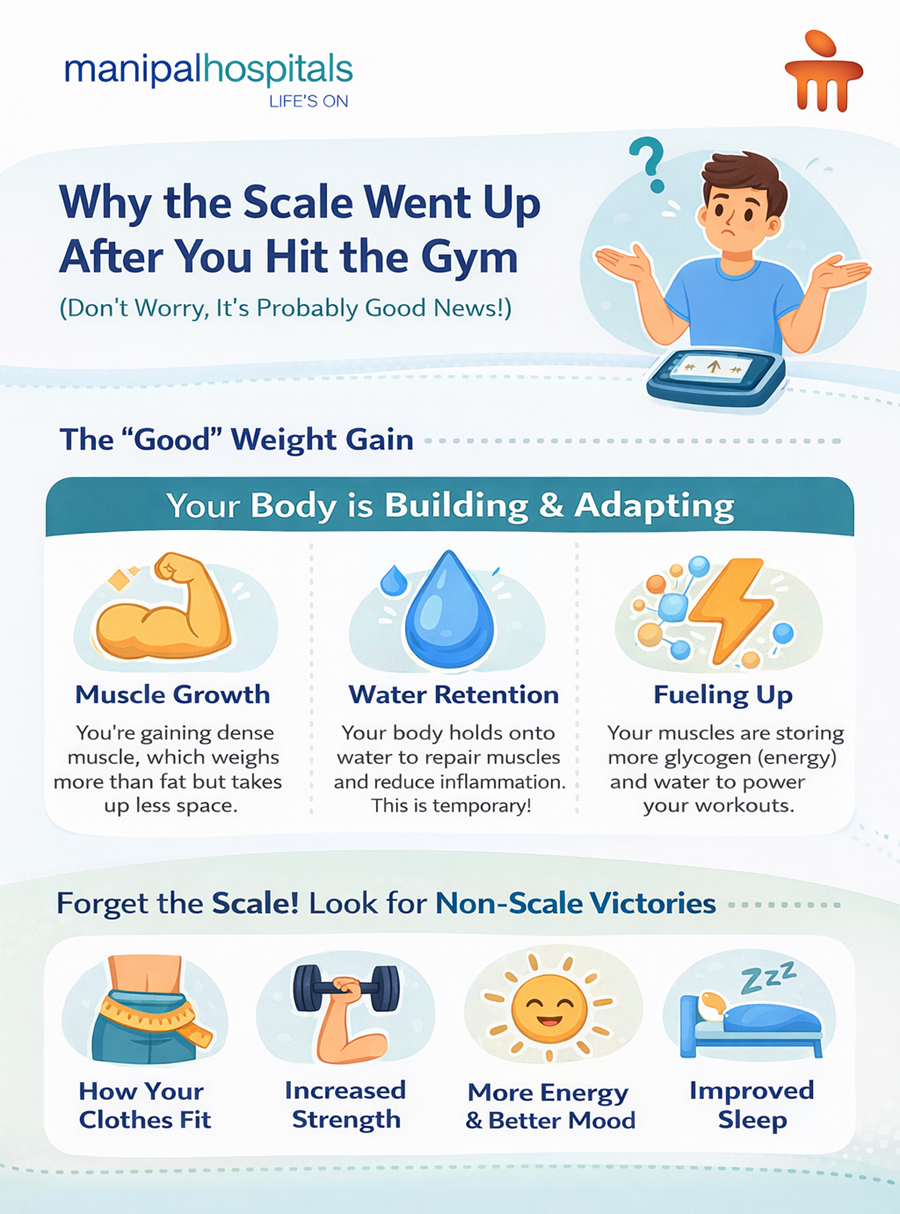
The primary reason for an initial weight gain after starting exercise is an increase in muscle mass. When you lift weights or engage in resistance training, your muscle fibers experience microscopic tears. Your body then repairs these tears, making the muscles stronger and slightly larger.
Muscle is denser than fat. In fact, muscle is about 18% denser than fat. This means that while you might be losing body fat, the increase in muscle mass can offset or even exceed the fat loss on the scale. So, while your clothes might feel looser, the number on the scale might increase, reflecting positive body composition changes with exercise.
Water Retention and Inflammation
A new or intense exercise routine can cause microscopic muscle damage, leading to an inflammatory response. This is a natural part of the muscle repair process. As a result, your body retains extra water to aid in healing and the transportation of nutrients to the damaged muscle tissue.
This initial inflammatory response can lead to fluid retention, often accounting for 1-2 kgs on the scale in the first few weeks. This is a normal physiological response to new stress on the body and is a temporary phase, subsiding as your body adapts to the new routine.
Increased Glycogen Stores
Glycogen is the stored form of glucose (carbohydrates) found in your muscles and liver, serving as your body's primary fuel source during exercise. When you start working out, your body becomes more efficient at storing glycogen to prepare for future workouts.
Each gram of glycogen also binds 3-4 grams of water, further contributing to a temporary increase in weight. This is a sign that your body is adapting and building its energy reserves, making you more efficient in your workouts.
Caloric Intake Adjustments
Sometimes, weight gain after starting the gym isn't physiological adaptation but rather an unconscious increase in calorie intake. Working out burns calories, and your body naturally signals for more fuel. For some, this can translate into an increased appetite, leading to unknowingly consuming more calories than they expend.
A 30-minute moderate workout may burn 200-300 calories, which can easily be negated by a single high-calorie protein bar or a large post-gym meal.
So, if you gained weight after starting gym, it's worth evaluating your dietary habits with a dietician at Manipal Hospitals Bangalore.
Hormonal Fluctuations
Exercise, especially intense training, can temporarily increase levels of certain hormones like cortisol (the stress hormone). While moderate exercise helps reduce stress, chronically elevated cortisol can sometimes lead to water retention and even fat storage, particularly around the abdomen, in sensitive individuals or those not managing stress well.
Navigate Your Fitness Journey: Tips for Weight Management
Once you understand the physiology of weight gain after starting exercise, the next step is to adopt strategies that help you manage your weight effectively and track true progress. Remember, the goal is long-term health and sustainable results, not just a number on the scale.
Focus on Body Composition, Not Just the Scale
Since muscle weighs more than fat, the scale doesn't tell the whole story. Instead of relying solely on your weight, consider other metrics. Take body measurements (waist, hips, arms, thighs) every 4-6 weeks, observe how your clothes fit, and notice improvements in your strength, endurance, and overall energy levels.
People who focus on body composition rather than just weight often report higher satisfaction (over 80%) with their fitness journey within 3-6 months.
This holistic approach helps you appreciate the true benefits of your hard work, even if you started exercising and gained weight initially.
Prioritize Nutrient-Dense Nutrition
Fuel your body with whole, unprocessed foods. Ensure adequate protein intake to support muscle repair and growth, plenty of fiber from fruits and vegetables for satiety, and complex carbohydrates for sustained energy. Be mindful of portion sizes and avoid excessive caloric intake, which can counteract your efforts.
Adequate protein intake (around 1.6-2.2 grams per kg of body weight) has been shown to support muscle repair and growth, enhancing fat loss by up to 25%.
For personalized guidance on the best nutrition advice for fitness in Bangalore, consider consulting a nutritionist.
Stay Hydrated
Proper hydration is very important for every bodily function, including metabolism and muscle recovery. Drink water throughout the day, especially before, during, and after your workouts. This helps reduce water retention and supports optimal performance.
Get Adequate Sleep
Sleep helps in hormone regulation, muscle recovery, and appetite control. Aim for 7-9 hours of quality sleep per night because lack of sleep can disrupt hormones that regulate hunger and satiety, making it harder to manage your weight.
Just one night of poor sleep can impair fat loss by up to 55%, even with calorie restriction.
Listen to Your Body and Vary Your Routine
Give your body time to recover between intense workouts. Overtraining can lead to increased cortisol levels and hinder progress. Incorporate a mix of strength training, cardiovascular exercise, and flexibility work. Gradually increase intensity and duration to avoid plateaus and keep your body challenged.
Things to Keep in Mind: Do's and Don'ts
To make the most of your fitness journey and avoid common pitfalls, keep these guidelines in mind:
|
Do's |
Don'ts |
|
Focus on consistency over intensity in the initial stages. |
Don't obsess over daily weight fluctuations; they are normal and often temporary. |
|
Prioritize protein and fiber in your diet to support muscle growth and satiety. |
Don't drastically cut calories, as this can hinder muscle repair and energy levels. |
|
Track non-scale victories like increased energy, improved mood, and better-fitting clothes. |
Don't compare your progress to others; everyone's body responds differently. |
|
Consult with a healthcare professional or a registered dietitian for personalized advice, especially if you have underlying health conditions. |
Don't ignore signs of overtraining or injury; listen to your body and seek help when needed. |
|
Allow for adequate rest and recovery between workouts. |
Don't forget to incorporate rest days into your routine. |
|
Hydrate consistently throughout the day. |
Don't rely solely on the scale as your only measure of success. |
If you're concerned about your progress or need a tailored plan, don't hesitate to consult fitness trainers, dietitians, or sports medicine specialists. They can provide expert guidance on your workout routine, nutrition plan, and help you with weight management after exercise in Bangalore. Manipal Hospitals Bangalore has comprehensive programs in place to support your fitness goals.
FAQ's
The initial weight gain, primarily due to water retention and increased glycogen stores, typically lasts for a few weeks to a couple of months as your body adapts to the new exercise routine. After this period, if your nutrition and training are aligned, you should start seeing a more consistent trend towards your goals.
It's important to assess your current diet before making drastic changes. Focus on whole, unprocessed foods, ensure adequate protein, and be mindful of portion sizes. If you suspect overeating, slightly reduce calorie-dense foods while maintaining nutrient intake. Consulting a dietitian can provide tailored advice.
Yes, it is possible, especially for beginners or those returning to exercise after a break, a process often called "body recomposition." This requires a balanced approach of resistance training, adequate protein intake, and a slight calorie deficit or maintenance, depending on individual goals.
If the weight gain is significant (more than a few kilos after the initial adaptation period), accompanied by other concerning symptoms, or if it persists despite consistent effort and mindful eating for several months, it's advisable to consult a doctor. They can rule out underlying medical conditions or provide further guidance.
Beyond the scale, excellent ways to track progress include taking regular body measurements, noting improvements in strength and endurance (e.g., lifting heavier weights, running longer distances), observing changes in how your clothes fit, taking progress photos, and monitoring your energy levels and mood.
Yes, stress can significantly impact weight management. High stress levels can increase cortisol, a hormone that can lead to water retention and potentially hinder fat loss. Combining a new workout routine with effective stress management techniques (like meditation or yoga) is beneficial
Share this article on: