




 8 Min Read
Have you ever experienced a sudden, rapid heartbeat, even when you're at rest? A quick pulse can be alarming and might indicate an underlying health problem. Stress, caffeine, or physical activity can sometimes cause your heart to beat quickly. But if it constantly happens, it could be a sign of tachycardia, which is when your heart beats faster than normal.
An adult’s normal resting heart rate typically ranges between 60 and 100 beats per minute. When the pulse exceeds this range without an obvious reason, it may be considered an elevated pulse rate. Understanding the reasons for high heart rate, recognising the symptoms, and seeking timely treatment are important for protecting long-term cardiovascular health.
Synopsis
What is Tachycardia?
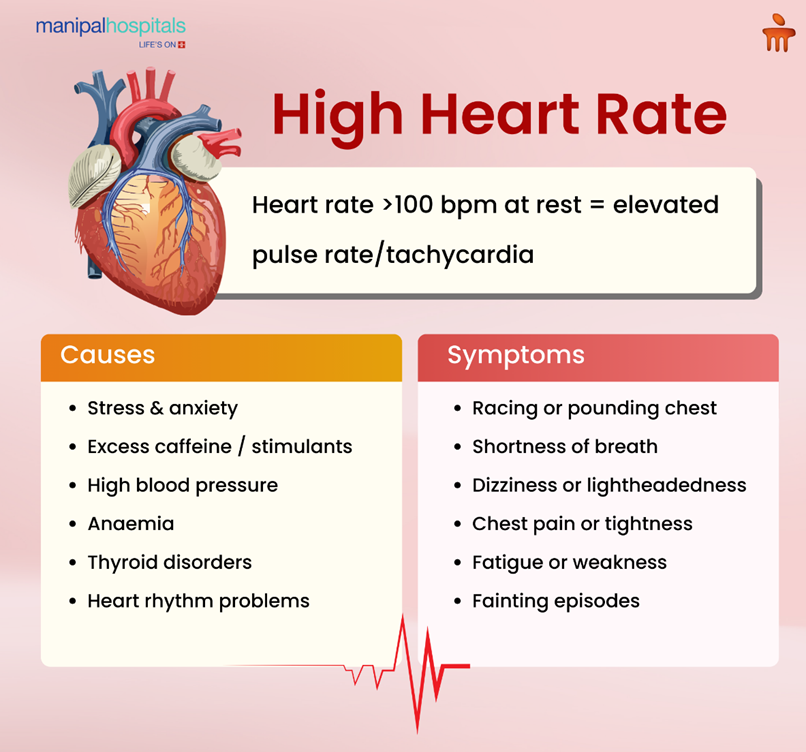
When the heart beats more than 100 times a minute while at rest, doctors call this an elevated pulse rate, or tachycardia. It may happen for a short time when you work out or are stressed out. If it occurs frequently, or seemingly without cause, it might indicate an irregular heartbeat.
The heart usually follows electrical signals that tell the heart muscles to contract. When these signals aren't regular, the heart can beat faster, which makes the pulse rate go up. Different forms of tachycardia may arise depending on the location of the abnormal electrical activity within the heart. Some types may be harmless and temporary, while others may require prompt treatment for a rapid heart rate.
If your rapid heartbeats don’t stop, you should always get it checked by a cardiologist, especially if it makes you feel dizzy or hurts your chest.
Causes for High Heart Rate
There are many reasons for a high heart rate, from bad lifestyle habits to serious heart problems. Some of the reasons are:
|
Stress and Anxiety |
When you're under a lot of stress, your body releases adrenaline, which makes your heart beat rapidly. This short-term rise can cause rapid heartbeats and an elevated pulse rate. |
|
Excessive Caffeine or Stimulants |
Caffeine, energy drinks, nicotine, and certain medications can overstimulate the heart, leading to tachycardia and noticeable rapid heartbeats. |
|
High Blood Pressure |
High blood pressure and a fast heart rate can sometimes occur together. High blood pressure places long-term strain on the heart and blood vessels. While it does not always directly increase heart rate, both conditions can coexist and contribute to cardiovascular risk. |
|
Anaemia |
Anaemia, characterised by low haemoglobin levels, means less oxygen gets delivered throughout the body. The heart recompenses by beating faster, resulting in rapid heartbeats and an elevated pulse rate. |
|
Thyroid Disorders |
An overactive thyroid gland increases metabolic activity, often causing tachycardia and frequent rapid heartbeats. |
|
Heart Rhythm Disorders |
Certain arrhythmias can disrupt the heart’s electrical system, making tachycardia persistent and requiring medical evaluation and treatment for rapid heart rate. |
Identifying the exact reasons for high heart rate helps doctors determine the most effective treatment for a high heart rate.
Symptoms of High Heart Rate
The symptoms of a fast heartbeat can be different depending on what caused it and how bad it is. Some common symptoms are:
-
A feeling of racing or pounding in the chest
-
Trouble breathing when doing very little
-
Feeling dizzy or lightheaded
-
Pain or tightness in the chest
-
Tiredness or weakness
-
Episodes of fainting or almost fainting
These signs of a fast heartbeat often happen when the heart has trouble pumping blood well during tachycardia. Don’t ignore these symptoms if you have consistent rapid heartbeats. If your pulse is up and you're also experiencing chest pain or feeling lightheaded, get medical help right away.
Rapid Heart Rate During Sleep
Many people are surprised to experience rapid heart rate during sleep, especially when waking suddenly with palpitations. Some reasons for a rapid heart rate during sleep are:
-
Stress or worry before bed
-
Sleep problems like sleep apnoea
-
Nightmares or panic attacks
-
Drinking too much coffee at night
-
Changes in hormones
-
Problems with the heart's rhythm that are not obvious
Frequent episodes of rapid heart rate during sleep may disrupt sleep quality and cause fatigue the following day. When tachycardia repeatedly occurs at night, medical evaluation is important to determine the reasons for high heart rate and begin appropriate treatment for rapid heart rate.
High Blood Pressure and High Heart Rate
High blood pressure can affect how hard the heart needs to work. When blood pressure stays high for a long period, the heart may pump more forcefully to move blood through the arteries, which can place extra strain on the heart. Your pulse and heart rate may go up because of this extra work. Therefore, high blood pressure can be one of the main reasons for high heart rate.
Persistent high blood pressure and high heart rate increase the risk of:
-
Heart attack
-
Stroke
-
Heart failure
-
Damage to blood vessels
-
Coronary artery disease
Early management of high blood pressure and high heart rate can reduce complications, supporting overall heart health.
Treatment for Rapid Heart Rate
For treatment for rapid heart rate, you need to find out what is causing it. Before suggesting treatment, cardiologists check the patient out through a physical exam and tests.
Lifestyle Modifications
In many cases, improving daily habits helps control rapid heartbeats.
Recommended measures include:
-
Reducing caffeine and stimulant intake
-
Managing stress through relaxation techniques
-
Maintaining a healthy weight
-
Regular physical activity (but avoid strenuous exercises)
-
Improving sleep quality
These measures may help reduce tachycardia episodes and stabilise the elevated pulse rate.
Medications
Doctors may prescribe medications to control heart rhythm and reduce rapid heartbeats. These medicines help regulate electrical activity in the heart and lower the elevated pulse rate. Medication may be used as part of treatment for rapid heart rate, especially when high blood pressure and high heart rate occur together.
Medical Procedures
If lifestyle changes and medicines are not sufficient, advanced treatments for tachycardia may be recommended:
-
Cardioversion: A controlled electrical shock that restores normal heart rhythm
-
Catheter Ablation: A procedure that targets abnormal electrical pathways causing tachycardia
-
Implantable Devices: Pacemakers or defibrillators to regulate heart rhythm
These procedures provide specialised treatment for rapid heart rate in patients with persistent arrhythmias.
When to Seek Medical Help
Although a temporary increase in heart rate can happen due to stress, exercise, or caffeine, medical advice should be sought if rapid heartbeats occur frequently or without a clear reason. You should consult a doctor if you experience:
-
A resting heart rate consistently above 100 beats per minute
-
Rapid heartbeats that last for several minutes or occur repeatedly
-
Chest pain or pressure along with a fast heartbeat
-
Dizziness, fainting, or feeling lightheaded
-
Shortness of breath during mild activity or at rest
-
Frequent episodes of rapid heart rate during sleep
Early medical evaluation helps doctors find the reasons for high heart rate and start the right treatment for rapid heart rate, which can lower the risk of serious heart complications. Consult top heart specialists in Bangalore for expert care and guidance.
Conclusion
An occasional increase in heart rate may occur due to stress, exercise, or temporary illness. Recognising the reasons for high heart rate, monitoring an elevated pulse rate, and addressing associated issues like high blood pressure and high heart rate are essential steps toward protecting cardiovascular health. If you are experiencing recurring palpitations or unexplained rapid heartbeats, consulting a cardiologist is important for accurate treatment for rapid heart rate. For advanced cardiac evaluation and specialised high heart rate treatment in Bangalore, seek expert consultation at Manipal Hospitals Bangalore, where experienced heart specialists provide comprehensive heart care and personalised treatment.
FAQ's
A resting heart rate consistently above 100 beats per minute may indicate tachycardia. Persistent rapid heartbeats accompanied by dizziness, chest pain, or fainting require medical evaluation.
Yes. Stress and anxiety can increase heart rate by triggering the release of adrenaline. This may cause a temporary rise in pulse rate. In some cases, high blood pressure and high heart rate may occur together.
A rapid heart rate during sleep can sometimes happen, possibly because of stress, nightmares, or sleep problems. If it happens often, a doctor might need to check for heart rhythm issues or other heart problems.
To check tachycardia or rapid heartbeats, doctors may use tests such as ECG, Holter monitoring, echocardiography, and blood tests. These tests help find the reasons for high heart rate and decide the right treatment for rapid heart rate.
Cutting down on caffeine, managing stress, staying physically active, and keeping high blood pressure and high heart rate under control may help reduce an elevated pulse rate. If symptoms continue, consult a cardiologist for high heart rate treatment in Bangalore.
You should see a doctor if rapid heartbeats happen often, continue for several minutes, or occur with symptoms of fast heartbeats, such as dizziness, chest pain, or fainting. Rapid heart rate during sleep should also be checked.
Share this article on:




