




 8 Min Read
Pregnancy brings many changes to a woman's body, some expected and some surprising. Gestational diabetes is one condition that can develop during this time. While hearing this diagnosis can cause worry, most pregnancies go smoothly with proper care and regular checkups. Learning about gestational diabetes, its causes, and how to manage it can help mothers feel more confident and at ease. This blog explains what gestational diabetes is, why it happens, the risks involved, and the best ways to manage it.
Synopsis
- What is Gestational Diabetes?
- What Causes Gestational Diabetes?
- Symptoms of Gestational Diabetes
- How Is Gestational Diabetes Diagnosed?
- Risks of Gestational Diabetes
- Importance of Blood Glucose Monitoring
- Management of Gestational Diabetes
- Post-Delivery Follow-Up
- Preventing Gestational Diabetes
- When Should You Consult a Doctor?
- Conclusion
What is Gestational Diabetes?
Gestational diabetes is a condition that affects women who are pregnant and have never had diabetes before. This condition results in blood sugar levels rising. It usually happens in the second or third trimester. Blood glucose levels usually return to normal after delivery, but women remain at increased risk of developing type 2 diabetes later in life.
Changes in hormones during pregnancy can reduce insulin effectiveness. Diabetes during pregnancy happens when the pancreas cannot produce sufficient insulin to compensate for pregnancy-related insulin resistance. Understanding gestational diabetes can help reduce worry and encourage timely visits to the doctor.
What Causes Gestational Diabetes?
Hormonal adaptations during pregnancy can interfere with how effectively insulin works, leading to elevated blood glucose levels in some women. Several additional factors may further increase susceptibility.
Common contributors include:
-
Insulin resistance triggered by pregnancy hormones
-
Excess weight before conception
-
Family history of diabetes
-
Previous history of gestational diabetes
-
Maternal age above 30 years
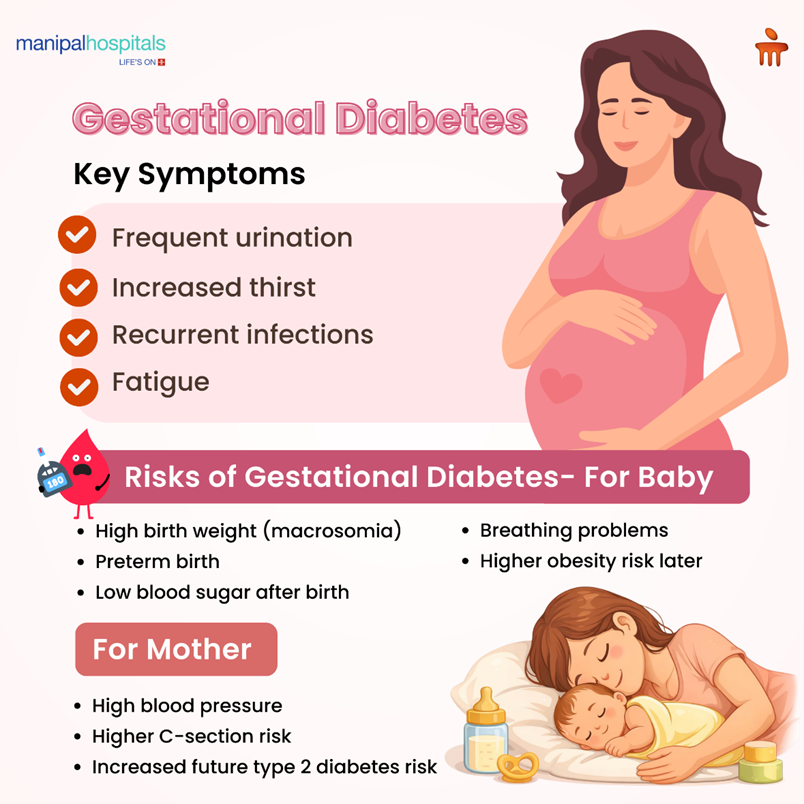
Symptoms of Gestational Diabetes
Gestational diabetes may remain silent in many women, which makes routine testing essential during pregnancy. When symptoms do appear, they are often mild and can resemble normal physiological changes. Some women may experience:
-
Increased thirst
-
Persistent tiredness
-
Recurrent infections
Because these features overlap with typical pregnancy experiences, confirmation through a timely diabetes test in Bangalore is crucial for accurate identification and appropriate care.
How Is Gestational Diabetes Diagnosed?
Most women are tested for diabetes during pregnancy between 24 and 28 weeks. Diagnosis includes:
-
Oral glucose tolerance test (OGTT)
-
Blood sugar test after fasting
Getting a diabetes test on time can help confirm the condition early in pregnancy. Early diagnosis allows prompt medical intervention, which lowers the risk of complications.
Risks of Gestational Diabetes
If left untreated, gestational diabetes can cause problems for both mother and baby.
Risks for the Baby
-
Macrosomia (high birth weight)
-
Preterm birth
-
Risk of shoulder dystocia
-
Low blood sugar after birth
-
Risk of neonatal respiratory distress
-
Increased risk of obesity later in life
Risks for the Mother
-
Increased chances of having a cesarean delivery
-
Higher risk of developing type 2 diabetes later
Careful follow-up and expert management significantly lower the chances of these outcomes.
Importance of Blood Glucose Monitoring
With gestational diabetes, structured glucose monitoring helps guide treatment decisions. This may involve checking:
-
Fasting blood sugar levels
-
Blood sugar levels after meals
Maintaining controlled levels is crucial for safe management of diabetes during pregnancy and guides your doctor’s decisions.
Management of Gestational Diabetes
Management focuses on keeping glucose values within recommended targets throughout pregnancy.
|
Management Area |
Key Points |
|
Nutrition is crucial for controlling gestational diabetes:
|
|
|
Exercise |
Helps control blood sugar and improves insulin use:
|
|
Blood Glucose Monitoring at Home |
Daily monitoring keeps sugar levels in range:
|
|
Medication or Insulin |
Used if diet and exercise aren’t enough:
|
Sometimes oral medicines like metformin are also used.
Post-Delivery Follow-Up
For most women, glucose levels stabilise after childbirth; however, medical follow-up remains essential. Continued assessment helps identify those at risk of future metabolic disease.
Women who experienced diabetes during pregnancy are advised to:
-
Undergo glucose testing 6–12 weeks postpartum.
-
Maintain structured nutrition and physical activity routines.
-
Participate in periodic long-term diabetes risk evaluation.
Sustained monitoring and preventive care significantly lower the likelihood of progression to type 2 diabetes later in life.
Preventing Gestational Diabetes
Although gestational diabetes cannot always be prevented, maintaining a healthy weight before pregnancy, following structured nutrition plans, engaging in regular physical activity, and attending antenatal appointments significantly reduce the risk. Steps that may help lower risk include:
-
Achieving a healthy weight before conception.
-
Following structured, nutrient-dense meal patterns.
-
Engaging in regular, pregnancy-appropriate physical activity.
-
Attending scheduled antenatal visits.
-
Undergoing a timely diabetes test in Bangalore.
Early identification through screening enables prompt intervention and contributes to improved maternal and foetal outcomes.
When Should You Consult a Doctor?
Timely communication with your obstetrician allows early identification of potential concerns and helps maintain a safe pregnancy course. Seeking guidance at the right time supports appropriate monitoring and intervention.
-
You have risk factors for gestational diabetes.
-
Your weight or blood pressure rises more rapidly than anticipated.
-
You notice new or concerning physical symptoms.
-
You experienced diabetes in a previous pregnancy.
Early assessment enables proactive care planning and reduces the likelihood of complications.
Conclusion
Gestational diabetes is a common and manageable condition during pregnancy. Timely diabetes tests in Bangalore, regular blood sugar checks, and healthy lifestyle changes all help ensure safe outcomes. By learning about gestational diabetes, understanding the importance of monitoring, and following their doctor’s advice, mothers can have a safe pregnancy and protect their baby’s health. At Manipal Hospitals Bangalore, we are dedicated to providing complete and caring support for women with gestational diabetes, helping them have a safe and healthy pregnancy.
FAQ's
Gestational diabetes refers to elevated blood glucose levels that are first detected during pregnancy in a woman without pre-existing diabetes. Hormonal changes affect insulin and glucose levels, leading to the risk of gestational diabetes.
Hormonal changes, insulin resistance, being overweight, and having a family history of diabetes are all things that can lead to gestational diabetes. Factors like age, lifestyle habits, and genetic predisposition also lead to increased susceptibility to gestational diabetes.
Yes, regular glucose monitoring is essential to maintain levels within the recommended range during pregnancy. It saves the mother and the baby from complications and supports healthy foetal growth.
It is diagnosed through an oral glucose tolerance test, commonly available via a diabetes test in Bangalore. This test helps the doctor understand how the mother’s body regulates sugar during pregnancy and plan the best treatment plan possible.
Gestational diabetes often resolves after delivery; however, follow-up testing remains essential. Postpartum monitoring helps confirm glucose normalisation and identifies women at increased risk of developing type 2 diabetes later.
Share this article on:




