




 8 Min Read
Severe back pain is something many people experience at some point, and it often improves with rest or medication. However, it can be alarming if it is accompanied by some uncommon symptoms, such as weakness in the legs and difficulty controlling the bladder. It can signal a rare but serious spinal disorder called Cauda Equina Syndrome (CES), which needs to be treated immediately. In this condition, compression of the cauda equina nerve roots occurs in the lumbar spinal canal. These nerves control how the legs feel and move, as well as how the bladder, bowels, and sexual organs work. If not treated, the condition can render permanent nerve damage, paralysis, or loss of bladder control.
This blog explains cauda equina syndrome causes, the symptoms to watch for, available treatment, and when surgery becomes necessary.
Synopsis
What Is Cauda Equina Syndrome (CES)?
The term 'Cauda Equina' is derived from the Latin phrase meaning ‘horse’s tail.' The group of nerves located at the lower end of the spinal cord resembles the tail of a horse. These nerves are responsible for controlling the sensation and movement in the legs, bladder, bowel, and sexual functions.
When these nerves are under pressure, messages from the brain to the lower body might not get through normally. As a result, a person may feel pain, numbness, muscle weakness, or changes in bladder and bowel control.
Unlike many other spinal conditions, Cauda Equina Syndrome is considered a medical emergency. Prompt evaluation and early cauda equina syndrome treatment significantly increase the chances of recovery.
Common Causes of Cauda Equina Syndrome (CES)
The condition usually develops due to pressure on the lower spinal nerves. Understanding the causes is essential for the early detection and prevention of complications. Some of the main causes of this condition are as follows:
-
Herniated Lumbar Disc: One of the most frequent causes of cauda equina syndrome is a severe herniated disc in the lower spine. When the inner disc material protrudes through the outer layer, it can compress or irritate nearby nerve roots.
-
Spinal Trauma or Injury: Injuries from sports, falls, and accidents can hurt the spine and put pressure on the cauda equina nerves. Trauma can be the major cause of this spinal condition.
-
Spinal Tumours: Sometimes a tumour can develop in or near the spinal canal. As it grows, it may press on the nearby nerve roots and affect how the nerves work. In some cases, this pressure can lead to symptoms of CES.
-
Spinal Infections: Infections that affect the vertebrae or spinal canal can cause swelling and inflammation, which can put pressure on the nerves. Infections, although less prevalent, are recognised as a potential underlying cause.
-
Spinal Stenosis: Intense narrowing of the spinal canal can compress the nerve bundle. When the narrowing becomes extreme, it may lead to CES.
-
Post-Surgical Complications: Complications after spine surgery can cause bleeding or swelling in the spinal canal, which can lead to nerve compression. However, this happens rarely.
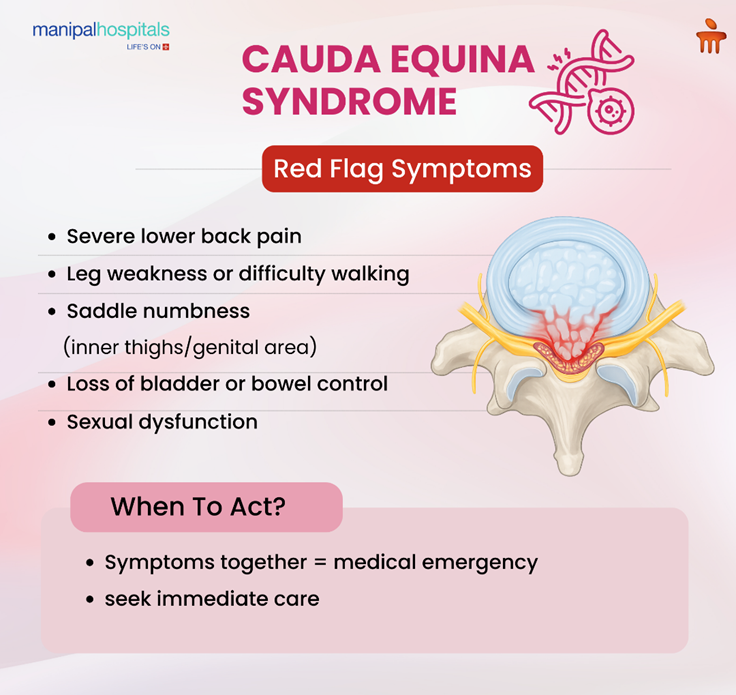
Symptoms That Need Immediate Medical Attention
Symptoms of Cauda Equina Syndrome may appear suddenly or progress gradually. Recognising the warning signs can help patients seek urgent medical care.
-
Severe Lower Back Pain: Pain in the lower back that doesn't go away or becomes worse.
-
Weakness in the Legs: Difficulty in walking or weakness in one or both legs due to nerve compression.
-
Saddle anesthesia: Loss of sensation in the inner thighs, buttocks, or genital area.
-
Bladder or Bowel Dysfunction: Difficulty controlling urination or bowel movements.
-
Sexual Dysfunction: Nerve compression may also affect sexual function in some patients.
When these symptoms occur together, immediate medical assessment is required. Early diagnosis improves the effectiveness of cauda equina syndrome treatment and reduces the risk of permanent nerve damage.
Diagnosis of Cauda Equina Syndrome
Diagnosing CES requires prompt clinical evaluation and imaging studies.
-
Medical History and Physical Examination: Doctors first evaluate symptoms, including weakness, numbness, and bladder control issues.
-
MRI Scan: Magnetic resonance imaging is a reliable method to detect nerve compression and identify the underlying causes.
-
CT Scan or X-ray: These imaging tests could help find broken bones, tumours, or problems with the structure.
Cauda Equina Syndrome Treatment Options
Treatment relies on the underlying cause and severity of nerve compression. The main goal of treatment is to relieve pressure on the nerves as quickly as possible.
-
Emergency Surgical Treatment
-
In most cases, cauda equina syndrome surgery is the primary treatment. The procedure removes the source of nerve compression, such as a herniated disc or tumour. Timely surgery performed within 24 to 48 hours often leads to better neurological recovery.
-
-
Medications
-
Doctors may prescribe medicines to handle inflammation and pain before or after surgery. These medications support the overall CES treatment process.
-
-
Physiotherapy and Rehabilitation
-
After surgery, rehabilitation helps restore strength, mobility, and nerve function. Physical therapy is important for recovery.
-
-
Bladder and Bowel Management
-
Some patients require specialised care to manage bladder or bowel function during recovery. In many cases, a combination of surgery and rehabilitation forms the most effective treatment plan.
-
Recovery and Long-Term Outlook
Recovery from Cauda Equina Syndrome varies depending on how severe the nerve damage is and how soon the treatment starts. Treatment given early can help patients regain movement and bladder control, while delays may increase the risk of permanent nerve damage.
When to Seek Medical Attention
Cauda equina syndrome is a medical emergency that requires immediate medical evaluation. If symptoms appear suddenly or worsen quickly, urgent care is necessary to prevent permanent nerve damage. Early diagnosis helps doctors begin treatment quickly and improve recovery outcomes.
Medical attention should be sought immediately if a person experiences:
-
Severe lower back pain along with weakness in one or both legs
-
Numbness or loss of sensation in the inner thighs, buttocks, or genital region (saddle area)
-
Difficulty controlling urination or bowel movements
-
Sudden changes in bladder or bowel function
-
Difficulty walking or loss of balance
When these symptoms occur together, they may indicate serious nerve compression in the lower spine. Prompt evaluation helps doctors determine if cauda equina syndrome surgery is required. Early cauda equina syndrome treatment improves recovery and reduces the risk of long-term complications. Patients should seek immediate care, especially when considering cauda equina syndrome treatment in Bangalore.
Conclusion
Cauda Equina Syndrome is a serious spinal condition that requires urgent medical attention. Recognising the symptoms, understanding possible causes, and seeking prompt cauda equina syndrome treatment can make a significant difference in recovery. In many cases, early cauda equina syndrome surgery relieves nerve pressure and prevents permanent complications.
Access to specialised spine care is essential for effective diagnosis and management. If you experience symptoms like severe lower back pain, numbness in the lower body, or bladder control problems, immediate medical evaluation is crucial. For expert spine care and advanced cauda equina syndrome treatment in Bangalore, consult the specialists at Manipal Hospitals, Bangalore to receive a timely diagnosis and personalised treatment.
FAQ's
Cauda Equina Syndrome develops when the group of nerves at the lower end of the spinal cord is put under pressure. When this happens, it can affect how the legs move and feel and may also lead to problems with bladder control.
Common causes include herniated discs, spinal injuries, tumours, infections, and severe spinal stenosis that compress the nerve roots. MRI scans can easily detect these issues.
Yes, CES surgery is often needed to relieve pressure on the nerves. But the treatment depends on what caused the problem and how severe the symptoms are.
The chances of recovery depend on how soon the treatment is offered. Surgery performed within 24 to 48 hours offers the best chance of recovery. Many patients improve when treatment is offered on time. However, recovery varies from person to person and depends on how much nerve damage has already occurred.
Patients seeking specialised cauda equina syndrome treatment in Bangalore can consult experienced spine specialists and advanced healthcare facilities for prompt diagnosis and surgical care.
Share this article on:




