6 Min Read
A thigh bone fracture can turn everyday life upside down very suddenly. One accident, a bad fall, or a strong impact can make even simple movements like standing or walking extremely painful. For many people, the shock of the injury is just as difficult as the pain itself.
The thigh bone, also called the femur, is the strongest bone in the body, so it usually breaks after major injuries such as road accidents or sports trauma. However, in older adults with weaker bones, even a simple fall can sometimes lead to a fracture.
In this blog a top orthopaedic surgeon in Vijayawada explains the symptoms of a thigh bone fracture, how surgery is performed, and what recovery and healing usually look like after treatment.
Synopsis
- What Happens When the Thigh Bone Fractures
- Thigh Bone Fracture Symptoms
- Why Surgery Is Often Needed
- Types of Thigh Bone Fracture Surgery
- How the Surgery Is Performed
- Thigh Bone Fracture Recovery Time
- Why Rehabilitation and Physiotherapy Matter
- Possible Risks and Complications
- When Should You Contact a Doctor
- Conclusion
What Happens When the Thigh Bone Fractures
The femur supports most of your body weight and helps you walk, balance, and move. Because the femur is extremely strong, fractures usually happen after major trauma such as road accidents or sports injuries. In older adults with weaker bones, however, even a minor fall may sometimes cause a fracture.
Thigh bone fractures can occur at various points:
-
Upper thigh bone
-
Midshaft of the thigh bone
-
Lower thigh bone
Different injuries will necessitate different surgical procedures for treating the fracture in this bone.
Thigh Bone Fracture Symptoms
Major fractures are undoubtedly difficult to ignore. However, if you suffer a small, hairline fracture, it can be easy to self-diagnose that as insignificant muscle pain and wait for it to heal on its own. Recognising the signs early can help people seek medical care quickly and avoid further complications.
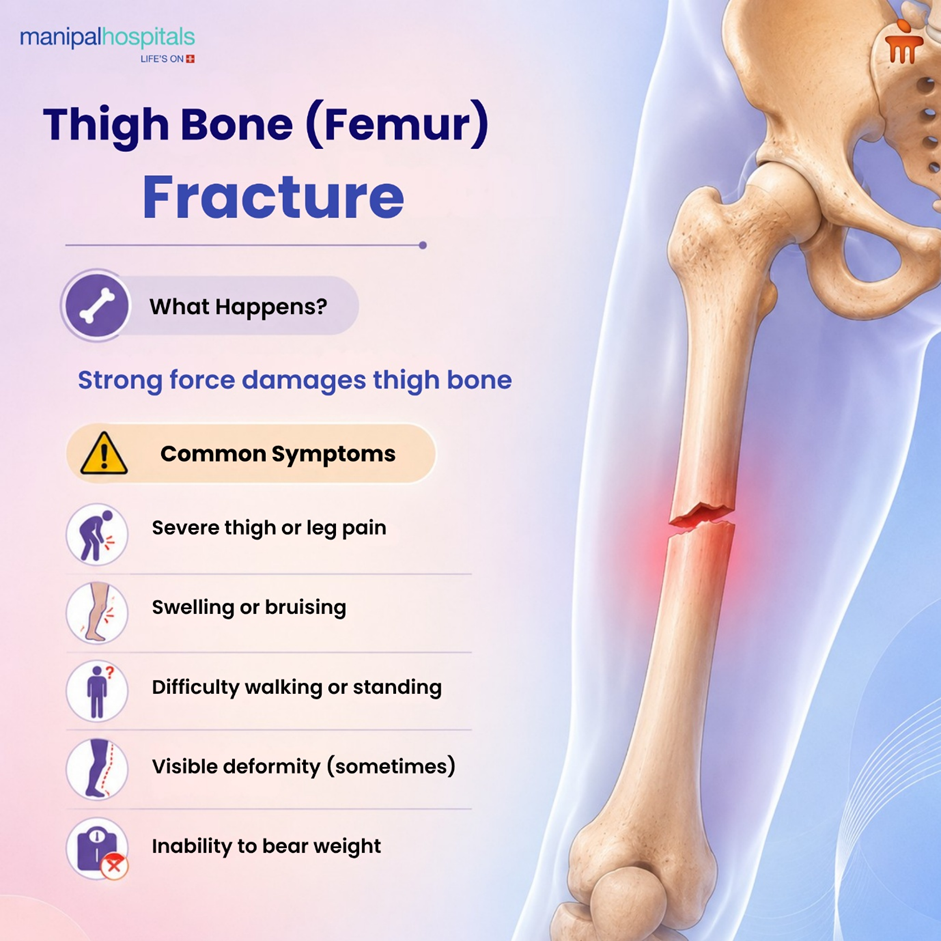
Common symptoms include:
-
Sudden severe pain in the thigh or leg
-
Swelling or bruising
-
Difficulty standing or walking
-
Visible deformity or abnormal leg position
-
Inability to bear weight on the leg
For many people, these symptoms appear immediately after a fall, accident, or other major injury.
Why Surgery Is Often Needed
Doctors usually confirm the fracture with X-rays, while CT scans may help assess complex injuries. Small fractures in other bones often recover without surgery, but most femur fractures do not. Good alignment is important as the femur supports the weight of the body. That’s why doctors often recommend surgery for a thigh bone fracture to stabilise the bone and restore movement safely.
Do you know, the femur is so strong that it usually takes the same amount of force to break it as you would get in high-speed road accidents.
Types of Thigh Bone Fracture Surgery
Surgery for a broken thigh bone (femur) depends on the pattern of fracture and the patient’s health. The three main thigh bone fracture surgery methods are intramedullary nailing, plates and screws, and external fixation. Intramedullary nailing is the most common approach today.
|
Surgical Method |
How It Works |
When It’s Used |
How It Helps |
|
Intramedullary Nailing |
A strong metal rod is placed inside the bone’s canal. |
Most femoral shaft fractures used for |
Provides stable fixation, allows early walking, and is the most common technique. |
|
Plates and Screws |
Metal plates and screws hold bone fragments together. |
Complex fractures, near joints, or when nailing isn’t possible. |
Offers precise bone alignment, particularly in complex fractures. |
|
External Fixation |
A temporary frame outside the body stabilises the bone. |
Severe trauma, open fractures, or when a patient is unstable. |
Quick to apply, useful in emergencies, usually temporary before final surgery. |
Recovery depends on the type of fracture, your age, bone strength, and how much you participate in rehabilitation.
How the Surgery Is Performed
For many people, the hardest part is not the surgery itself but learning to trust the leg again. Knowing the procedure can help reduce anxiety before surgery.
During a thigh bone fracture operation:
-
The patient is anaesthetised.
-
The fractured bone is realigned.
-
Metal rods, screws, or plates are used to stabilise the fracture.
-
Imaging guides accurate placement.
-
The incision is carefully closed and dressed.
The surgery usually takes a few hours, depending on the complexity of the fracture.
Thigh Bone Fracture Recovery Time
Getting back to normal after a thigh bone fracture rarely happens quickly. Some people bounce back faster than others. It all depends on the injury itself and your overall health.
Now, let us get to know about the stages of recovery:
|
Recovery Stage |
Timeframe |
What to Expect |
|
Initial Healing |
6–12 weeks |
The healing process begins as new bone tissue forms around the fracture. |
|
Walking Improvement |
2–4 months |
Walking becomes easier with therapy, and strength slowly returns. |
|
Full Recovery |
6–12 months |
Normal function is restored, muscles are rebuilt, and daily activities resume. |
A lot of people find that recovery from a thigh bone fracture takes longer than they thought. That's because you also need to rebuild your muscle strength.
Why Rehabilitation and Physiotherapy Matter
Recovery from a thigh bone fracture isn't just about the bone healing properly. You also need to rebuild your strength, get your balance back, and feel confident walking again.
Physiotherapy helps with:
-
Improving flexibility
-
Reducing stiffness
-
Rebuilding muscle strength
-
Improving walking and movement
Skipping rehabilitation can slow down recovery and make movement more difficult later on.
Possible Risks and Complications
Every surgical procedure carries a risk; however, these risks are manageable when detected early.
Let us look at some common risks:
-
Infection: The surgical wound may become infected, causing pain, redness, or swelling.
-
Blood clots: Reduced movement after surgery can increase the risk of clots in the leg veins.
-
Delayed healing: In some cases, the bone may take longer than expected to heal.
-
Implant irritation: Screws or plates used for surgery can irritate the body.
-
Stiff joint: Inactivity can make one's hip or knee joints stiff.
-
Nerve injury: Nerves around the area of surgery can become irritated.
-
Bleeding: There may be excessive bleeding from the surgical site.
-
Fat embolism: Fat droplets from the bone marrow can enter the bloodstream, causing problems with breathing.
-
Repeat surgery: On rare occasions, repeat surgery will be required.
Most of the complications can be successfully managed with early detection and follow-up care.
When Should You Contact a Doctor
After undergoing surgery on your thigh bone, there will always come a time for you to call your physician for consultation and assistance. If there is a presence of any unusual sign or symptom, such as having a fever or seeing reddened skin around your incision site, immediately contact your physician, since both may be indications of infection.
If there are any signs of swelling or persistent painful sensations, seek medical assistance, since these may be an indication of a poor healing process. Tingling sensations and numbness in your thigh should not be ignored, either, since this may be indicative of nerve injury.
Conclusion
A femur fracture can feel overwhelming at first, but outcomes are much better with modern orthopaedic care. In orthopaedic practice, femur fractures are considered serious injuries because they can involve significant blood loss and long recovery periods.
Patients looking for thigh bone fracture surgery in Vijayawada typically expect advanced orthopaedic treatment and rehabilitation support. Our experienced orthopaedic surgeons at Manipal Hospital Vijayawada offer a detailed fracture assessment and advanced imaging, expert orthopaedic surgical care, personalised rehabilitation plans, and long-term recovery guidance.
FAQ's
There is anaesthesia during the surgery, and medication is used post-surgery. Most patients will experience a reduction in pain gradually as recovery progresses.
The answer depends on how serious your injury is, your overall health, and what your surgeon recommends about putting weight on your leg after surgery.
Yes, elderly individuals take more time to heal because they have weak bones, less muscle mass, or other sicknesses hindering the healing process.
Yes, physiotherapy is very effective in improving flexibility, mobility, and strength in patients and accelerating their recovery process while avoiding stiffness and weakening of muscles after a surgical operation on a fractured leg bone.
During recovery from a femur fracture, it really helps to eat foods that support healing. Protein‑rich meals, nuts, eggs, leafy green vegetables, and other foods with calcium and vitamin D can all help your bones heal, and your muscles regain strength.
Share this article on:


.webp "Dr Girish Bathina | Best General Physician in Vijayawada | Manipal Hospitals")