6 Min Read
A pain that starts as a tingling effect or numbness in your lower back moving towards your legs in majority of the cases starts from the sciatic nerve, and is hence named 'sciatica'. Often, sciatic pain is manageable and alleviates with time and self-care. However, in some instances, the symptoms become severe and disrupt daily activities. In India, sciatica affects about 1.5-2% of the population annually, with higher urban incidence linked to sedentary lifestyles and spinal degeneration.
Noticing early signs and understanding the causes can help you recover faster and prevent long-term discomfort. This blog sheds light on the diagnosis and effective treatment options available. Read on to know what to do and where to get the best treatment for sciatic pain.
Synopsis
- What is Sciatica?
- Sciatica Pain Causes
- Sciatica Pain Symptoms
- Common Early Sciatica Pain Symptoms
- When to seek medical help?
- Common Tests and Sciatica Pain Treatment
- Sciatica Pain Treatment at Home
- Sciatica is treated mainly with these methodologies:
- Surgical Options for Advanced Sciatica Pain Treatment
- Living Well with Sciatica Pain
- Conclusion
What is Sciatica?
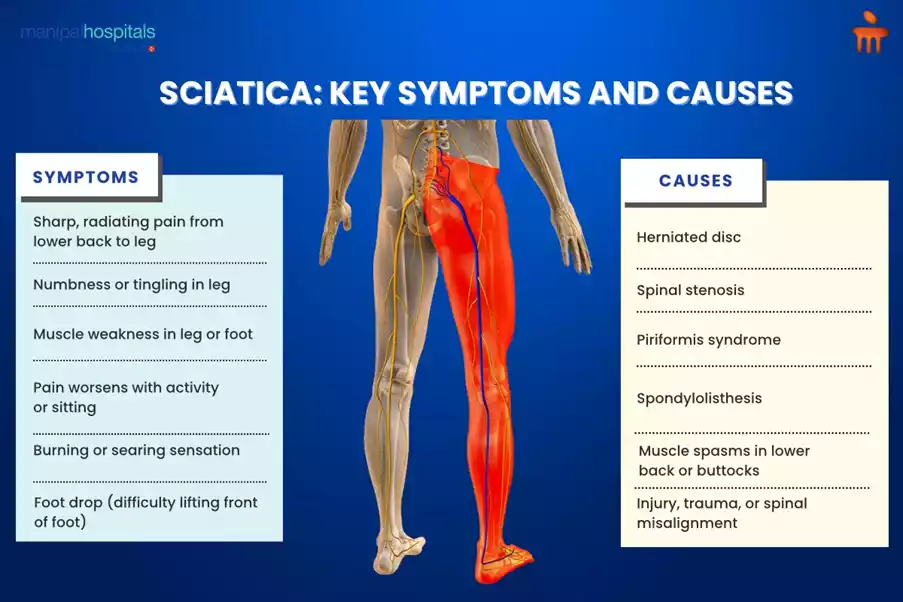
Sciatica is a condition that appears when the sciatic nerve gets compressed or irritated. The sciatic nerve is the thickest and longest nerve in the human body. It leads to mild or severe pain, starting from the lower back, passing through your buttocks, and reaching up to your leg. The pain may include numbness, tingling, a dull to sharp ache, or a burning sensation, making movement difficult.
Sciatica Pain Causes
It's important to understand the sciatica pain causes to tailor the best recovery method. Common causes include:
-
Bulging/Herniated Disc
-
Degenerative Disc Disease
-
Spinal Stenosis
-
Muscle Spasm or Strain
-
Piriformis Syndrome
-
Spondylolisthesis/Osteoarthritis
-
Pregnancy, obesity, poor posture, or injury
Sciatica Pain Symptoms
-
Pain- often feels like a burning sensation or an electric shock.
-
Tingling (paresthesia)—feels like a needle prickling your legs after prolonged sitting cross-legged.
-
Numbness—lack of sensation on the skin of affected areas of the back or leg.
-
Bladder incontinence—a severe symptom affecting bladder control.
-
Weakness—discomfort in walking, standing, or climbing stairs.
If the symptoms are consistent and severe, consult the best neuro specialist at Manipal Hospital Vijayawada. Early action can save you months of discomfort and reduce the chance of needing major interventions later.
Common Early Sciatica Pain Symptoms
The following are the most common early symptoms of sciatica to watch for:
-
Sharp, burning pain that begins in the back, extending up to one leg.
-
A tingling or fuzz-like sensation (paraesthesia) in the leg or foot.
-
Numbness or lack of sensation in the back of one leg or foot.
-
Discomfort in movement, walking, standing, or climbing stairs.
-
Worsening of the symptoms on prolonged sitting, coughing, or straining.
-
One-sided pain that appears only on one side of the body.
These signs can often be mild and go away with self-care. If the symptoms persist or keep worsening, seek immediate medical attention.
When to seek medical help?
Seek immediate medical help if you experience any discomfort for a prolonged period or witness any of the following symptoms:
-
Unbearable pain following a major injury.
-
Progressive weakness in one leg or foot.
-
Troubled or disturbed bowel or bladder control.
-
High fever and chills post-occurrence of infection.
If the sciatica pain symptoms are mild, you can perform basic treatment plans or at-home therapies and restart your locomotion. Most people thus recover fully from sciatica.
However, in some instances, you may come across complications like long-term pain. In severe cases, there may be damage to the affected sciatic nerve, causing drop foot or permanent loss of feeling in the affected leg.
Common Tests and Sciatica Pain Treatment
Diagnosing sciatica involves understanding both nerve involvement and structural changes in the spine. The tests listed below help identify the source of nerve compression, assess its severity, and guide the most effective treatment plan.
|
Test |
How Is It Done |
How It Helps |
|
X-Ray/Lumbar Spine |
Taking several clicks from different angles of the spine. |
Reveals mechanical changes that affect the nerve |
|
MRI Scan |
Uses powerful magnets and radio waves. |
Produces detailed images of the soft tissues |
|
CT Scan |
Injecting a dye into the spinal canal before taking a CT myelogram. |
Produces detailed images of spinal bones |
|
NCS (Nerve Conduction Study) |
Places electrodes on the sciatic nerve pathway. |
Measures electrical signals that travel across the nerves |
|
Clinical Examination |
Taking a detailed history and performing physical tests. |
Measures nerve involvement and range of motion. |
|
EMG |
A thin needle electrode is inserted into the specific muscles. |
Measures the electrical impulses and pinpoints the severity of the nerve damage. |
|
Blood Tests |
Analyses markers like NADK2 or immune cells. |
Rules out other causes of pain like infection |
Sciatica Pain Treatment at Home
Most people recover from sciatica pain symptoms without medical intervention, depending on the severity of the nerve damage. Some practical at-home remedies for a quick recovery:
-
Heat/cold pack—ice pack therapy for 15 to 20 minutes daily, switching to a heat pack.
-
Active movement includes gentle body movements, avoiding prolonged sitting.
-
Improved postures—maintaining the correct posture is the best form of recovery.
-
Over-the-counter anti-inflammatory medicines, on prescription of the doctor.
-
Basic physiotherapy techniques like stretching and strengthening core muscles.
-
Maintaining a healthy weight with a balanced diet and a healthy lifestyle.
Sciatica is treated mainly with these methodologies:
-
Limited rest
-
Physical therapy
-
Anti-inflammatory drugs (NSAIDs)
-
Muscle relaxants (with a doctor's prescription)
-
Spinal injections
-
Surgery
-
Tailored Therapies
Surgical Options for Advanced Sciatica Pain Treatment
Surgery is rarely necessary for sciatica pain. When degeneration or persistent pain affects basic mobility, further treatment is required:
-
Microdiscectomy to remove fragments of a herniated disc.
-
Laminectomy to remove the lamina/spinal cord bone and its tissues.
Your sciatica specialist at Manipal Hospitals Vijayawada may suggest injecting a cortisone-like anti-inflammatory medicine into your lower back to improve mobility. However, yoga, acupuncture, or biofeedback are some popular therapies to help relieve muscle spasms and sciatica pain.
Living Well with Sciatica Pain
Regular habits make a huge difference:
-
Stay active with low-impact exercise such as walking, swimming, or cycling.
-
Build core strength through guided resistance work.
-
Refrain from heavy weightlifting or any other form of lifting.
-
Balance rest and activity during flare-ups; avoid prolonged immobilisation.
-
Maintain a healthy weight with a healthy diet plan and therapies.
Neurology Department at Manipal Hospitals Vijayawada ensures safe recovery and long-term well-being.
Conclusion
Sciatica pain can often be overwhelming, causing disruption in daily routines. But it can be treated at its roots with proper care and professional guidance.
Book a consultation with the best neuro specialist at Manipal Hospital Vijayawada for complete care. Early intervention and the right treatment are the keys to achieving long-term relief.
FAQ's
The primary sciatica pain causes include exertion of pressure or compression on the sciatic nerves. Some common causes include herniated discs, spinal arthritis, spinal stenosis, and muscle spasms in the back or buttocks.
Sciatica is not a disease but a muscular discomfort that occurs suddenly with a stimulating agent. Most of the symptoms are mild and can be treated at home with basic procedures.
Early signs include a tingling effect on the lower back, sudden numbness in one part of the leg, and prolonged muscular discomfort.
Causes of sciatica are preventable in the majority of cases with basic lifestyle changes and healthy food habits. However, it is easy to prevent the onset of such causes by maintaining good posture, quitting nicotine, and keeping a healthy weight.
Yes, hormonal fluctuations cause sciatic pain during pregnancy, but you can manage it with warm showers and good posture.
Share this article on: