8 Min Read
Neck discomfort often starts quietly, with a slight stiffness, a dull ache after long hours at your desk, or a tingling sensation that travels down your arm. It’s easy to ignore at first, but when these symptoms linger or worsen, they can interfere with even simple daily tasks. In many cases, this could be due to a pinched nerve in the neck.
Understanding the early pinched nerve in the neck symptoms is essential because a timely diagnosis can prevent the condition from worsening. When the nerve compression persists, it may affect mobility, arm strength, and daily activities. Recognising the warning signs early can help you seek appropriate care and adopt lifestyle measures that support recovery.
In this blog, an experienced neurologist in Vijayawada explains how to recognise a pinched nerve in the neck, the signs to look out for, and ways to manage the discomfort.
Synopsis
- Understanding Pinched Nerve in the Neck
- Early Warning Signs of a Pinched Nerve in the Neck
- Risk Factors That Increase the Chances of Nerve Compression
- How to Sleep with a Pinched Nerve in the Neck
- How to Diagnose a Pinched Nerve in the Neck
- Treatment Options for Pinched Nerve in Neck
- Advanced Pain Management
- When to Seek Medical Attention
- Conclusion
Understanding Pinched Nerve in the Neck
A pinched nerve in the neck refers to compression or irritation of one of the nerves that exit the cervical spine. The cervical spine includes seven vertebrae that protect the spinal cord and allow neck movement. Nerves branch out from this area and travel to the shoulders, arms, and hands.
When a disc, bone spur, or surrounding tissue presses on a nerve, it can interfere with how signals travel between the brain and body. Because of this, you may feel numbness, pain, or weakness in the areas that the nerve is connected to. Some common causes are:
-
Herniated cervical discs pressing on nerve roots
-
Degenerative changes in the spine due to ageing
-
Bone spurs (osteophytes) that narrow nerve pathways
-
Poor posture from prolonged device use
-
Neck injuries or trauma
Early identification of the symptoms helps prevent prolonged nerve irritation and supports effective pinched nerve in neck treatment.
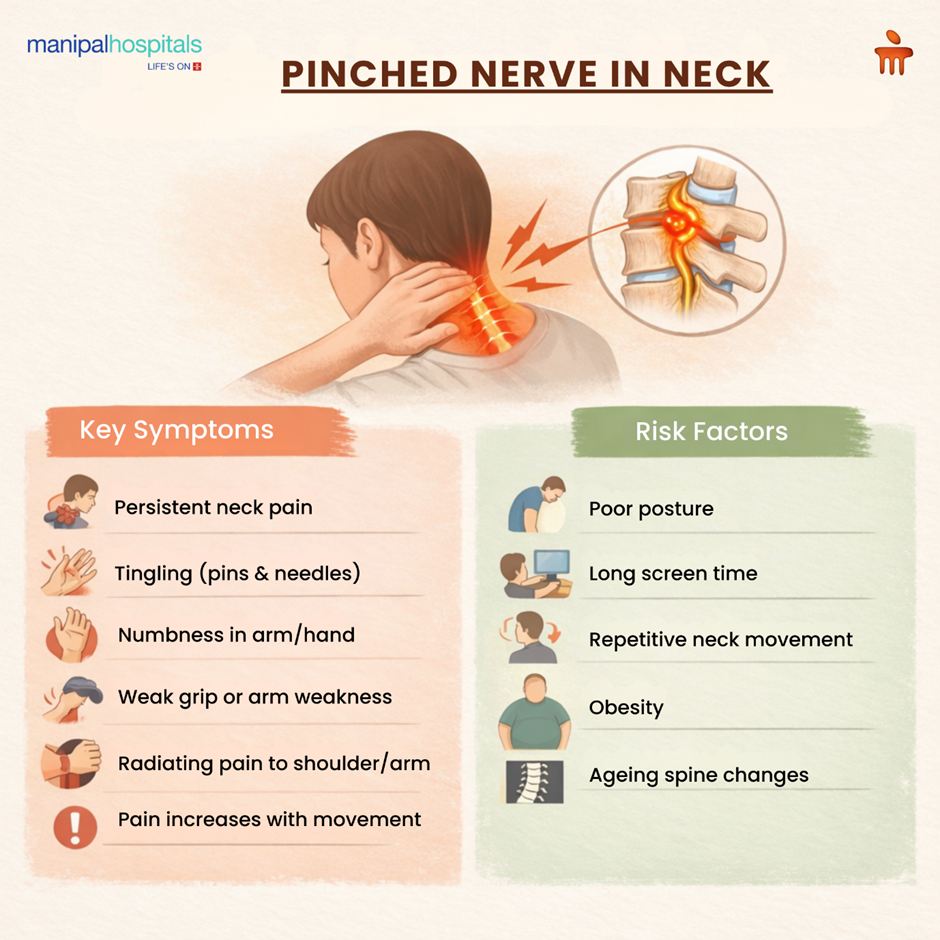
Early Warning Signs of a Pinched Nerve in the Neck
Early signs can be mild and easy to ignore. Paying attention to these symptoms can help you manage the condition before it worsens.
-
Persistent Neck Pain: A pinched nerve in the neck can induce persistent or sharp pain that does not subside. Some movements, such as turning the head or tilting the neck, can make the pain worse. Pain can sometimes move to the shoulder or upper back.
-
Tingling or “Pins and Needles”: A tingling feeling in the shoulder, arm, or hand is often a sign that the nerves are irritated. This feeling happens because the nerve that is being pressed is unable to transmit signals normally
-
Numbness in the Arm or Hand: Another pinched nerve in the neck symptom is numbness that starts in the neck and moves down to the fingers or arm. Patients often report reduced sensation or difficulty feeling touch in certain areas.
-
Weakness in the Arm or Grip: Nerve compression may affect muscle strength. Individuals with a pinched nerve in the neck sometimes find it harder to grip objects, lift items, or perform everyday tasks.
-
Radiating Pain Down the Arm: Cervical radiculopathy is when pain moves from the neck to the shoulder and arm. This radiating pain is a classic sign requiring prompt medical evaluation.
-
Increased Pain with Neck Movement: Certain head movements may intensify symptoms. If you look down for a long time, especially when using a phone or laptop, it could make a pinched nerve in the neck worse.
It is important to note that not all neck pain is due to nerve compression. Muscle strain, ligament injury, or poor ergonomics may present similarly but require different management. As such, healthcare professionals usually use tests to diagnose the actual condition and suggest effective ways to relieve neck pain caused by a pinched nerve.
Risk Factors That Increase the Chances of Nerve Compression
Several lifestyle and medical factors increase the likelihood of developing a pinched nerve in the neck.
-
Poor Posture: Long hours of desk work or frequent smartphone use can strain neck muscles and place pressure on cervical nerves.
-
Age-related Degeneration: As people get older, the discs in their spines lose moisture and flexibility. This can make discs bulge or bone spurs grow, which puts pressure on nerves.
-
Repetitive Movements: Jobs that require repeated neck movements may increase the risk of nerve compression.
-
Obesity: Excess weight places additional strain on the spine.
-
Injury or Trauma: Sports injuries and accidents can damage discs and lead to a pinched nerve in the neck.
Addressing these factors is essential for long-term management and prevention.
How to Sleep with a Pinched Nerve in the Neck
The position you sleep in is very important for recovery. Many individuals notice worsening discomfort at night due to poor neck support. Knowing how to sleep with a pinched nerve in the neck can reduce irritation of the affected nerve. Use the following tips:
-
Use a supportive pillow: Use a pillow that supports the natural curve of the neck. This can help relieve pressure on the cervical nerves.
-
Sleep on your back or side: Your symptoms might get worse if you sleep on your stomach because it twists your neck.
-
Keep the spine aligned: Putting a pillow between your knees while you sleep on your side helps keep your spine in line.
-
Avoid very high pillows: They may push the neck into an unnatural position, increasing nerve pressure.
Adopting these habits is essential for people wondering how to sleep with a pinched nerve in the neck without aggravating symptoms.
How to Diagnose a Pinched Nerve in the Neck
If symptoms don’t improve or start interfering with daily life, a proper medical evaluation becomes important to understand what’s causing the nerve compression. In such cases, doctors usually assess:
-
Medical history and symptom pattern
-
Physical examination of neck mobility and reflexes
-
Neurological tests to evaluate nerve function
Imaging tests may also be recommended for better assessment and diagnosis. The diagnostic tests include:
-
MRI Scan: Gives clear pictures of soft tissues, nerves, and discs.
-
CT Scan or X-ray: Helps identify structural changes in the cervical spine.
Treatment Options for Pinched Nerve in Neck
How bad the nerve compression is and what caused it will determine how it is treated. The common treatment approaches include:
Conservative Treatment
Most cases respond well to non-surgical approaches such as:
-
Physiotherapy
-
Medication for inflammation and pain
-
Lifestyle changes and posture correction
Most mild to moderate cases improve within 2–6 weeks with consistent physiotherapy, posture correction, and activity modification. However, recovery may take longer if nerve compression has been present for an extended period.
Advanced Pain Management
If the pain doesn’t settle, injections may be used to ease swelling around the nerve.
Surgical Treatment
Surgery is usually looked at only if other treatments don’t help or if the nerve pressure starts causing serious weakness or loss of function.
When to Seek Medical Attention
Early diagnosis and care can help treat the condition while it is still manageable, preventing it from developing into something serious. So, it is ideal to consult with a specialist if you show symptoms like:
-
Pain lasts for a few weeks
-
The arm weakness is getting worse.
-
Numbness gets worse or spreads
-
Symptoms make it hard to do everyday things
Conclusion
A pinched nerve in the neck can disrupt daily life, causing pain, numbness, and weakness if untreated. Recognising early symptoms and maintaining proper posture are key to managing the condition. If symptoms persist or worsen, seek professional care. For specialised pinched nerve in neck treatment in Vijayawada, consult the top neurology experts at Manipal Hospital Vijayawada.
FAQ's
Mild cases usually improve with rest, better posture, and avoiding neck strain. If symptoms last for weeks or worsen, a medical evaluation is necessary to rule out serious nerve compression conditions.
It’s best to avoid heavy lifting, sudden neck movements, and long periods of looking down at screens without breaks. These activities can increase pressure on the nerve and delay recovery.
Yes, a pinched nerve can return, especially if posture is poor or the neck is under repeated strain. Staying active, keeping good posture, and taking care of your neck can help prevent it.
Gentle, guided exercises can help improve flexibility, reduce stiffness, and support recovery when done correctly. However, high-impact or unsupervised movements may worsen symptoms, so it’s best to follow professional advice.
Yes, irritation of nerves in the neck can sometimes cause tension-type headaches that begin at the base of the skull. These may worsen with poor posture or prolonged neck strain.
Share this article on: