6 Min Read
Worried about the side effects and lifestyle changes chemotherapy brings along with it? People often worry about cancer and the side effects of the treatment. Chemotherapy uses powerful medicines that kill the fast-growing cancer cells and stop them from spreading further. Being an integral part of the treatment plan, chemotherapy side effects are common and can be managed with lifestyle changes.
It is crucial to understand chemotherapy types and prepare for the treatment. This blog brings you detailed, expert-approved information from the best cancer care hospital in Vijayawada. Read through to learn about the common side effects of chemotherapy, tips for coping with the before and after side effects of chemotherapy, and practical advice, all explained in a supportive manner.
Synopsis
- What is Chemotherapy?
- Understanding Various Chemotherapy Types
- Chemotherapy Before and After
- Cancer Types Chemotherapy Works on
- Why Chemotherapy?
- Chemotherapy Side Effects
- Preparing for Chemotherapy Treatment
- Emotional and Practical Support
- Common Tests, Timeline and What They Tell You
- When to Consult for Immediate Medical Care:
- Conclusion
What is Chemotherapy?
Chemotherapy is a form of cancer treatment that uses drugs to kill cancer cells and prevent the growth of tumour cells. It becomes effective when incorporated with radiotherapy and surgery. This powerful treatment involves side effects that can be managed with thoughtful changes.
The common side effects include fatigue, hair loss, low blood count, and sores in the mouth. Chemotherapy is given through injection or oral methods. Based on the type of cancer, your doctor will decide the best possible treatment plan.
Understanding Various Chemotherapy Types
Different chemotherapy types work differently, showing a different set of side effects. Understanding the types helps bring in changes in daily activities for effective cancer treatment.
Common chemotherapy types:
- Curative chemo combines with radiation therapy and surgery.
-
Adjuvant chemo works after surgery and kills the remaining tumour cells.
-
Neoadjuvant chemo reduces the size of the tumour cells and eliminates the tumour.
-
Palliative chemo is administered to advanced-stage cancer patients.
Chemotherapy works against the cancer cells by inhibiting cell division and disrupting metabolic processes.
Chemotherapy Before and After
Preparations make chemotherapy work effectively.
Before chemotherapy:
-
Regular blood tests and health assessments are used to record health parameters.
-
Dental checks are done to ensure adequate pre-treatment preparations.
-
Organ function tests like ECG and other relevant scans.
-
Discuss diet and lifestyle changes with the team.
After chemotherapy:
Post-chemotherapy, the body needs recovery and mental support. Some side effects occur immediately, and a few of them appear after hours or days. Most of them can be managed with basic lifestyle changes and a well-balanced diet.
Cancer Types Chemotherapy Works on
Chemotherapy is a powerful cancer treatment option, customised to the needs of each patient. It works for breast cancer, ovarian cancer, leukaemia, brain cancer, tongue cancer, stomach cancer, prostate cancer, colorectal cancer, cervical cancer, and rectal cancer.
Each type of cancer is different and shows different side effects. The best cancer specialists at Manipal Hospital Vijayawada will thoroughly assess your condition and guide you with the best suitable treatment.
Why Chemotherapy?
Advantages of chemotherapy in cancer treatment:
-
Highly effective in shrinking tumours and slowing down cell multiplication.
-
Systematically targets the cancer cells spread throughout the body.
-
It can be combined with surgery and radiation therapy for an effective outcome.
-
Prevents the recurrence of the cells, ensuring long-term benefit.
-
Provides palliative care by reducing symptoms and improving quality of life.
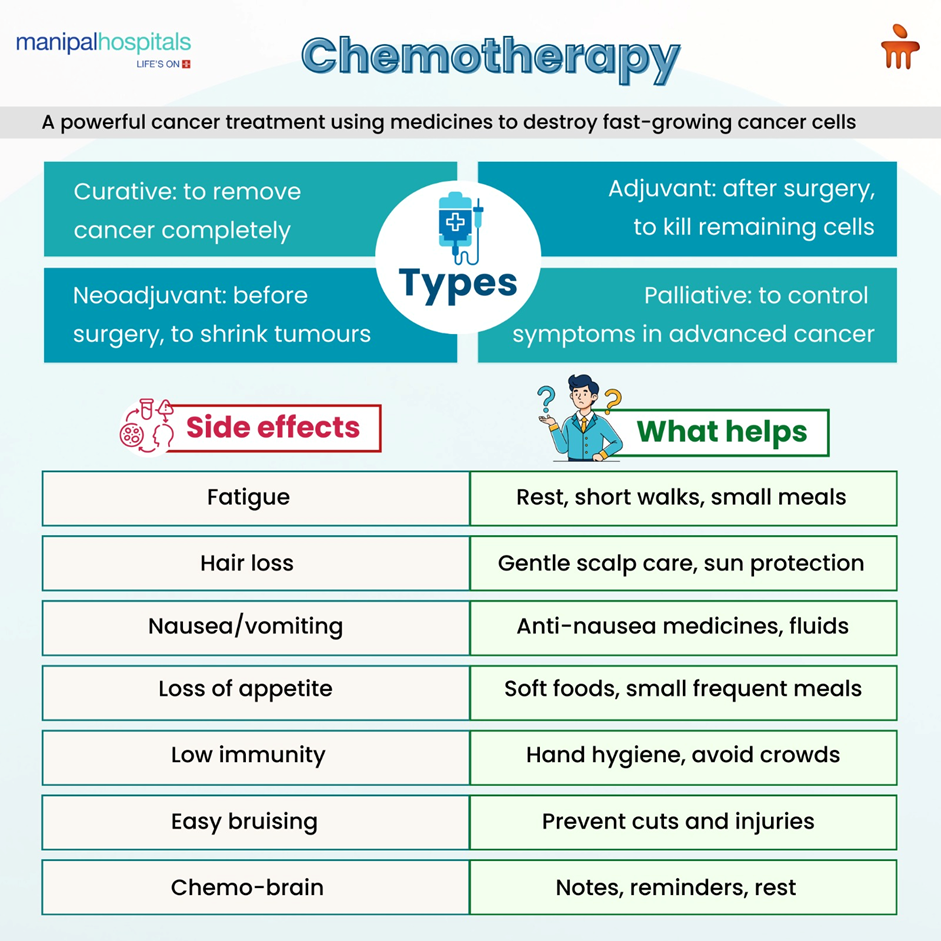
Chemotherapy Side Effects
Cancer treatment includes various steps based on the stage. The chemotherapy side effects usually go away within a few months or even for months. Based on the stage of the cancer, your specialist will tailor the best possible plan.
|
Side Effects |
What Happens |
How to Manage |
| Fatigue |
Keeps you feeling tired for the whole day. |
Take short naps or all-day sleep, and eat small, balanced meals. |
| Hair loss |
Is usually temporary, but demotivates emotionally. |
Keep short hair and avoid sun exposure. |
| Vomiting/nausea |
Irritates the stomach and reduces the urge to eat. |
Take anti-vomiting drugs and keep your body hydrated |
|
Loss of appetite |
Food tastes and smells different. |
Include soft and easy-to-digest foods and try new flavours. |
|
Weak immunity |
WBC levels reduce rapidly and increase the risk of infections. |
Sanitise frequently and avoid crowded places. |
|
Bruising/bleeding |
Lowers blood platelet counts. |
Avoid sharp objects and take maximum precaution. |
|
Trouble thinking/poor memory |
Unable to concentrate and remember things. |
Maintain a record of important details and keep in touch with important contacts. |
Preparing for Chemotherapy Treatment
Your cancer specialists at Manipal Hospital Vijayawada will run through the required tests. You can also take your own steps to prepare your body for the chemo:
- Discuss and record the list of chemo drugs, their dosage, and possible side effects.
-
Prepare for the side effects and list out the best ways to deal with them.
-
Make an appointment with the dentist to navigate dental side effects.
-
Discuss financial resourcing to remain stress-free during the treatment.
-
Redesign your chemotherapy before and after routine.
-
Create a comfortable resting area with your favourite books and entertainment sources.
Emotional and Practical Support
Dealing with chemotherapy involves a lot of emotional turmoil. As the drugs react with the cancer cells, your body starts showing new signs. Fear, anxiety, irritability, and mood swings are some of the common underlying emotional situations.
Try sharing your thoughts with your family, friends, or counsellor. Seek support or join support groups to bring in emotional well-being during chemotherapy.
Common Tests, Timeline and What They Tell You
Before and throughout treatment, regular testing is essential to ensure safety, monitor progress, and guide ongoing decisions. The following explains when each test is performed and what information it provides, helping clinicians track how the body is responding and adjust treatment when needed.
|
Test / Step |
Timeline |
What It Shows |
|
Blood tests (CBC/CMP) |
Before and during every treatment session |
This ensures sufficiently higher blood count levels, making it safe to receive treatment. |
|
Imaging scans (CT, MRI, PET, X-Rays, Ultrasound) |
These scans take place every 6-8 weeks during the course of treatment. |
Checks the size of the tumour and determines the treatment effects. |
|
Organ function tests |
Before beginning drugs that potentially affect an organ |
Monitors heart, lungs, and other vital organs to look out for potential damage caused by the chemo drugs. |
|
Physical exam |
At every treatment session. |
The physical exam ensures the correct calculation of dosage and determines overall well-being. |
When to Consult for Immediate Medical Care:
Contact your healthcare specialist if you witness any of these signs:
- Severe chills or high fever.
-
Diarrhoea or severe vomiting.
-
Sudden breathing discomfort.
-
Sudden onset of urinary difficulties.
Conclusion
Being a powerful cancer treatment, chemotherapy involves administering drugs, either orally or through injection, to kill the cancer-causing cells and slow down their growth. While the drugs fight with the cancer cells, your body shows several side effects, some manageable while others are severe. Our oncology specialists at Manipal Hospital Vijayawada offer tailored treatment plans and strong emotional support during your chemo journey. With the proper care and support, you can focus on healing and bringing in lasting well-being.
FAQ's
The frequency of the sessions depends on the type of cancer and the specific drugs used.
Most of the side effects are temporary and they improve with basic lifestyle changes.
Yes, you can carry out your routine work during the chemo sessions, avoiding overstraining.
Chemotherapy is primarily an outpatient procedure, letting you go home on the same day.
Yes, cancer may return, requiring chemotherapy before and after, based on the stage and drugs administered.
Share this article on: