8 Min Read
When the knees lean inward while standing or walking, it can cause worry or confusion. This is called knock knees, and it’s very common in children. In many cases, it gets better on its own as they grow. But sometimes, the alignment stays the same or starts causing discomfort.
Experts at Manipal Hospital Vijayawada, the top orthopaedic hospital in Vijayawada, focus on explaining things clearly and calmly. We help parents and individuals understand what’s happening in the body. Often, what seems unusual is actually a normal part of development; knowing that can bring a lot of relief and confidence.
Synopsis
What Are Knock Knees?
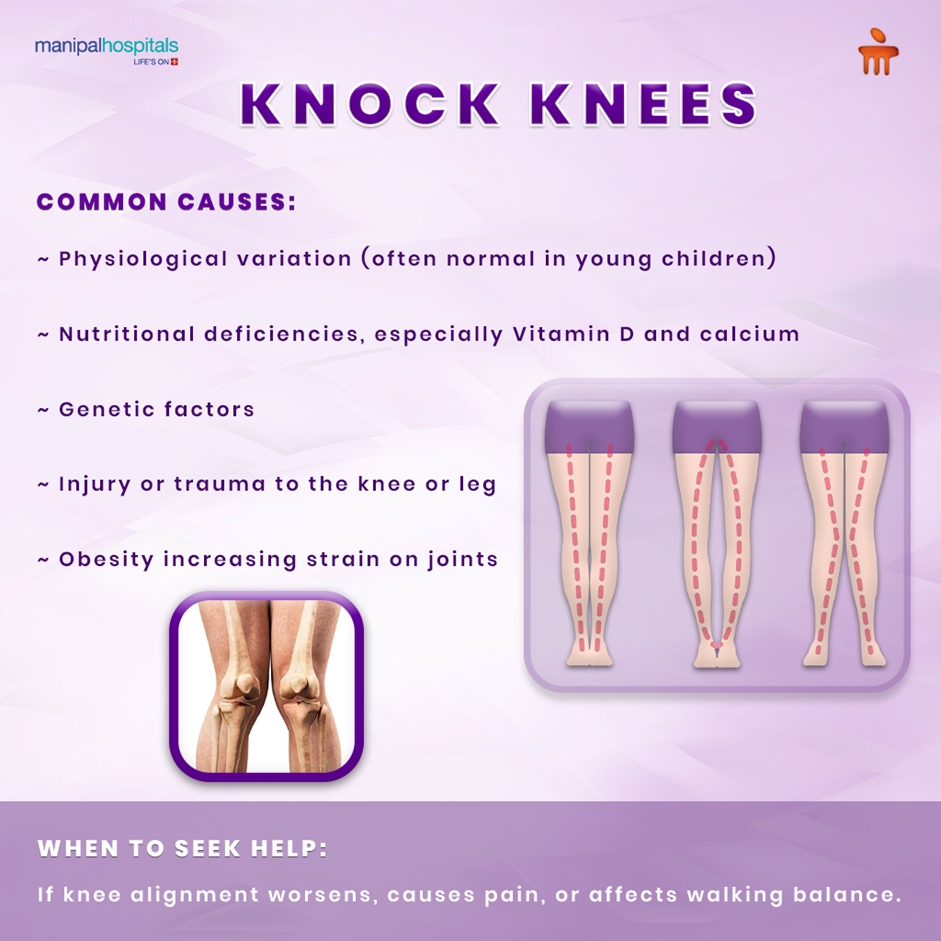
Knock knees is when the knees come close together, but the ankles stay apart. This makes the legs look like they’re bending inward. You can notice it when someone stands or walks. It’s very common in young children. In fact, many kids between the ages of two and seven have knock knees as a normal part of growing. In most cases, the legs straighten on their own as the child grows taller and their muscles get stronger.
But if the inward knee position continues into teenage years or adulthood, or if it becomes uncomfortable or affects normal activities, it is helpful to consult an orthopaedic specialist in Vijayawada. A skilled doctor can determine whether the condition is due to natural growth patterns, bone development, or another influence. Understanding the reason behind the alignment brings clarity and direction.
Physiological Variation in Children
For many young children, knock knees are just a normal stage of growing. Babies are born with slightly curved legs because of how they were positioned before birth. As they learn to stand and walk, the shape of the legs changes. During early childhood, it is common for the knees to turn inward for some time. As the child grows, the legs usually straighten on their own.
Most children run, play, and move without any pain. Parents often notice the leg shape most when the child is standing barefoot. Orthopaedic doctors reassure parents when the child is active, healthy, and growing well. In many cases, nothing special needs to be done. Gentle monitoring during routine check-ups is usually enough.
Nutritional Factors
Bones need important nutrients to grow strong and straight. Calcium and vitamin D play key roles in helping bones maintain shape and strength. If a child does not receive enough of these nutrients in their diet, the bones may soften slightly. Softer bones may not hold alignment well, and this can contribute to knock knees.
Children who have weaker bones due to nutrition may get tired faster, play less, or say their legs feel uncomfortable. In such cases, the focus is on improving food habits in an easy and natural way. Doctors may suggest adding simple foods like milk, curd, pulses, nuts, eggs, and leafy green vegetables to daily meals. Spending some time in gentle sunlight also helps the body make vitamin D. Supplements are only given if needed, after checking the child’s health.
Genetics and Family Patterns
Sometimes, knock knees run in families. If parents or close relatives had similar leg alignment during childhood or adulthood, the child may show it too. Genetics does not mean the condition will cause problems. In many cases, inherited alignment differences remain mild and do not interfere with movement or comfort.
When a family pattern is seen, an orthopaedic specialist usually checks how the child walks, stands, and balances. If movement remains smooth and the alignment stays steady without causing strain, the doctors may simply monitor over time. Understanding family patterns can provide peace of mind, showing that what appears unusual may actually be familiar and safe.
Injury or Trauma Influences
The growth plates in children’s legs are areas where bones are still forming. A significant fall, accident, or injury around the knee can sometimes affect how the bone grows afterwards. If an injury happens before the bones finish growing, it may lead to changes in leg alignment later on. This can result in knock knees developing as the child grows.
If there is a history of such injury, a timely medical assessment becomes important. Early evaluation helps guide healing in the right direction. At Manipal Hospitals in Vijayawada, doctors follow growth over time with gentle monitoring and check whether alignment changes need treatment. The goal is always balanced recovery, without stress or hurry.
Obesity and Body Weight Influence
Carrying extra weight can place added pressure on the knees and leg joints. Over time, this can affect the alignment of the legs, leading to or worsening knock knees in both children and adults. The joints try to adjust to support the additional weight, and this can shift posture.
Small, gradual lifestyle changes can be helpful. Light exercise, playful outdoor movement for children, and balanced eating habits support healthy growth and comfortable joints.
When Knee Pain Appears
Some individuals might experience knee pain, especially when they walk for long periods, run, or climb stairs. This may happen because the weight of the body is not distributed evenly on the knee joint. Extra pressure on certain areas can cause discomfort.
Children may describe tired legs after playing. Adults may feel soreness after standing for long hours. These are gentle signals from the body that some support may be needed. Early attention can prevent the discomfort from advancing or affecting daily life.
Diagnosis and Treatment
Diagnosis begins with observing how a person stands, walks, and moves. The doctor may take measurements of leg angles and look at posture. Sometimes imaging tests, such as an X-ray, are recommended to understand bone development more clearly.
Treatment depends entirely on what is causing the condition. Common supportive options include:
-
Exercises to strengthen the muscles supporting the knees
-
Physiotherapy to improve stability and movement
-
Balanced nutrition for bone strength
-
Weight management support where needed
-
Surgery is performed in rare cases where alignment causes significant discomfort or limitation
At Manipal Hospitals Vijayawada, treatment plans are personalised, slow-paced, and comfortable. The aim is to help individuals move freely, reduce discomfort like knee pain, and maintain healthy joints.
Long-Term Outlook and Prevention
Most children with knock knees get better naturally as they grow. For adults, doing light strengthening exercises, staying active, and keeping a healthy weight can help support the knees. Paying attention to the body and avoiding too much strain can also prevent discomfort.
Regular check-ups with an orthopaedic specialist help make sure the knee alignment stays steady and movement stays comfortable.
When to Seek Guidance
You may want to see a doctor if:
-
Knock knees do not improve as the child grows
-
Walking or balance feels difficult
-
There is regular knee pain
-
The knee alignment looks like it is getting more noticeable
As a leading orthopaedic hospital in Vijayawda, Manipal Hospital Vijayawada offers gentle and supportive care for both children and adults.
FAQ's
Yes. Knock knees are often a normal part of growth in children. Many children show this between ages two and seven, and it usually improves on its own as they grow older.
Parents should check with a doctor if knock knees do not improve after the usual growth years, or if walking becomes difficult, unbalanced, or painful.
Having extra weight can put added pressure on your knees. Because of this, knock knees might look more obvious or feel uncomfortable when you walk or move around. Staying active in a gentle way and eating a balanced diet can help reduce the strain and make your knees feel better over time.
Diagnosis usually involves watching how a person stands and walks. A doctor may measure leg angles, and sometimes an X-ray or similar imaging is used for a clearer understanding.
Yes. Adults can improve comfort through strengthening exercises, light physical activity, and maintaining a healthy weight. Regular guidance from an orthopaedic specialist helps support better movement over time.
Share this article on: