6 Min Read
Smoking is one of the most widespread habits across the world. There are approximately 1.3 billion adult tobacco users globally. It is estimated that smoking kills about 7-8 million people each year, including those exposed to second-hand smoking. Smokers’ v/s normal lungs is a stark contrast between a healthy set of lungs compared to one affected by smoking. While a normal pair of lungs supports efficient gaseous exchange, immune response and disease resistance, smokers’ lungs face impaired functionality, disease risk and irreversible damage caused by smoking.
Synopsis
Smoker’s Lung
The term “smoker’s lung” refers to the effects of smoking on the lungs. Cigarette smoke carries more than 7000 harmful chemicals, of which 70 are carcinogens. Long-term smoking harms the airway, leading to respiratory diseases, heart problems, and even cancer. Smoking also causes emphysema, where the tiny air sacs in the lungs are damaged and cannot grow back. Emphysema causes permanent damage to the lungs, leading to reduced lung elasticity and impaired breathing.
How does Appearance Differ in Smoker’s v/s Normal Lungs?
There are notable differences between smoker’s v/s normal lungs:
-
Colour: A normal lung is pink in colour, whereas a smoker’s lung appears grey or black.
-
Elasticity: A normal lung is elastic and spongy. It expands and relaxes with each breath. On the other hand, a smoker’s lung has reduced elasticity.
-
Inflammation: A normal lung does not show any inflammation. A smoker’s lung shows patches of inflammation, likely due to chemicals from the smoke.
-
Diaphragm: A healthy set of lungs has a dome-shaped diaphragm. Chronic smoking leads to muscle loss in the diaphragm.
How does Lung Function Differ in Smoker’s v/s Normal Lungs?
The main function of lungs is to perform gaseous exchange by taking in oxygen and releasing carbon dioxide. When you inhale, oxygen enters through the trachea. It is a tube that connects your mouth and nose to your lungs. The inhaled oxygen then passes through the bronchial tubes. The lungs are lined by small hair-like structures called cilia. They prevent dirt and other particles from entering the lungs. The tiny sacs in your lungs, called alveoli, transfer this oxygen into your blood. Carbon dioxide, which is created in your body due to metabolic processes, is then filtered out of the body through the alveoli.
Smoking heavily disrupts lung function and lead to severe complications, including cardiovascular and respiratory disorders.
How does Smoking Damage Lungs?
Smoking causes permanent damage to the lungs.
-
Alveolar damage: Smoking damages the tiny air sacs, called alveoli. It changes their structure and makes breathing difficult. Alveolar damage is permanent.
-
Excess mucous production: Smoking increases the size and number of the cells which produce mucous. This leads to excess mucous production, leading to persistent coughing and breathing difficulties.
-
Damage in lung tissue: Smoking impairs lung function by causing tissue damage. This increases risk of diseases like emphysema and lung cancer.
-
Exposure to toxins: Cigarette smoke contains innumerable toxic chemicals, including carbon monoxide and tar. These affect lungs immensely and leave them vulnerable to life-threatening diseases.
-
Chronic diseases: Smoking increases the risk of chronic lung diseases.
-
Risk of stroke and heart disease: The risk of stroke and heart disease among smokers is substantially higher compared to non-smokers.
-
Cilia damage: Smoking destroys cilia, the tiny hair-like structures in the lung. This leaves the lungs vulnerable towards the effects of toxic chemicals, leading to acute problems.
How does Quitting Help?
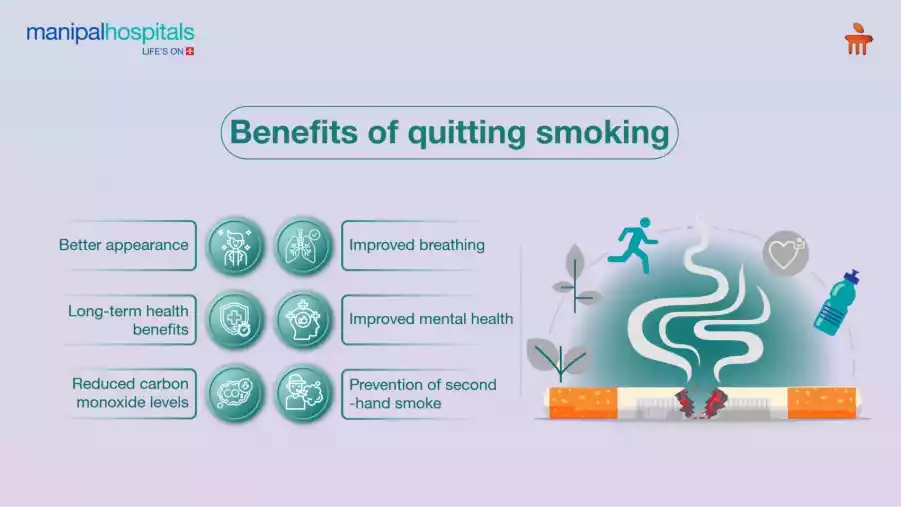
Quitting smoking is not just letting go of a bad habit. It comes with a multitude of other benefits:
-
Improved breathing: Within 20 minutes of quitting smoking, your heart rates returns to normal. In a matter of days, your lung function improves and you breathe better.
-
Long-term health benefits: Smoking puts you at risk of serious diseases, including lung cancer, heart disease, chronic lung disease and stroke. When you quit smoking, the risk of being affected by these conditions reduces significantly.
-
Reduced carbon monoxide levels: Cigarette smoke introduces several harmful chemicals in your body, including carbon monoxide. When you quit smoking, carbon monoxide levels start to normalise gradually.
-
Better appearance: Smoking is detrimental for your appearance. It causes premature skin aging, stained teeth and more. Quitting smoking improves the health of your skin and teeth.
-
Improved mental wellbeing: Quitting smoking helps reduce anxiety and depression, providing improved focus and mental clarity.
-
Preventing second-hand smoking: Second hand smoking is extremely dangerous, especially for children and elderly people. When you quit smoking, you simultaneously protect the people around you from the effects of second hand smoke.
Conclusion
There are many differences in smokers’ v/s normal lungs. Smoking changes the appearance of lungs. It also damages the lung tissue, cilia and alveoli. Lung damage leaves one vulnerable to chronic lung diseases and lung cancer. Quitting will help you avoid the risks that are associated with smoking. At Manipal Hospitals, our expert team of Pulmonologists are here to assist you for all kinds of disorders affecting your lungs. From common problems to more complex issues, our expert is here to help you in every step of the way. Visit your nearest Manipal Hospitals unit today for prompt pulmonary care. Book an appointment now or visit the Manipal Hospitals Pulmonology Department today!
FAQ's
A smoking lung weighs heavier than a normal lungs. This is because of the accumulation of tar, inflamed lung tissue and fibrosis, which add density and reduce elasticity, as opposed to normal lungs, which remain elastic and spongy.
Smoking affects lung elasticity, making breathing difficult. Non-smokers usually have diaphragm-based breathing, whereas smokers rely more on neck and chest muscles.
Smoking narrows down the airways and increases mucous production. This leads to difficulty in breathing, forcing the heart and the lungs to work harder. This is the reason why smokers often experience more fatigue during physical activities.
Cigarette smoke contains carbon monoxide, which binds to haemoglobin and disrupts oxygen transport. This lowers oxygen delivery to other organs of the body, leading to shortness of breath, fatigue, and dizziness.
Regular exercise, nicotine replacement therapy, keeping yourself busy, eating crunchy fruits and vegetables during withdrawals, and avoiding triggers are some useful tips that will help you quit smoking.
Share this article on: