8 Min Read
Could a bump on the head change someone’s life? A traumatic brain injury, and even a seemingly minor blow, can lead to problems that show up right away or emerge days later. Knowing the warning signs, the basic steps of first response, and what doctors do for care helps people protect themselves and get the right help quickly.
Synopsis
- What Is Traumatic Brain Injury?
- Common Causes of Traumatic Brain Injury
- Signs and Symptoms: What to Watch For
- Red Flags: When To Seek Emergency Care
- How Doctors Assess a Head Injury
- Mild Traumatic Brain Injury and Concussion
- Medical Treatment for Head Injury: What Doctors Offer
- Risks and Long-Term Effects
- Preventing Head Injury
- Symptoms, Urgency, and Typical Response
- Recovering Well: Practical Steps For Patients and Families
- Where to Seek Specialist Care
- Conclusion
What Is Traumatic Brain Injury?
A traumatic brain injury (TBI) happens when an external force, such as a fall, a blow, a road-traffic crash, or a sports impact, injures the brain. The injury can be a mild traumatic brain injury (often called a concussion), moderate, or severe. Even a mild traumatic brain injury can cause distressing symptoms for weeks or months.
Doctors use terms like "head trauma" and "concussion" to describe the event and immediate effects, but the core concern is whether the brain itself has been bruised, stretched, or deprived of oxygen, which is when brain damage can occur.
Common Causes of Traumatic Brain Injury
Many events lead to head trauma and TBI:
-
Falls (very common in children and older adults).
-
Road-traffic accidents and motorbike crashes.
-
Sports injuries (contact sports, cycling).
-
Assaults and workplace incidents.
Because the causes are common, simple prevention measures, such as helmets, seat belts, and removing trip hazards at home, make a big difference.
Signs and Symptoms: What to Watch For
Recognising brain traumatic injury symptoms is the first step to prompt care. Symptoms vary by severity and may be immediate or delayed.
-
Common head injury symptoms and TBI symptoms include:
-
Headache, pressure in the head.
-
Confusion, memory problems, or feeling “foggy.”
-
Dizziness, balance problems, blurred vision.
-
Nausea or vomiting.
-
Sensitivity to light or noise.
-
Changes in mood, sleep problems, or difficulty concentrating.
These are also listed under brain damage symptoms when they are persistent or progressive. For mild traumatic brain injury, symptoms often improve over days to weeks, but if they worsen, further assessment is essential.
If anyone wonders how to tell if they have brain damage, note that persistent worsening of concentration, memory, clear changes in personality, repeated vomiting, seizures, or weakness are signs that need urgent medical review.
Red Flags: When To Seek Emergency Care
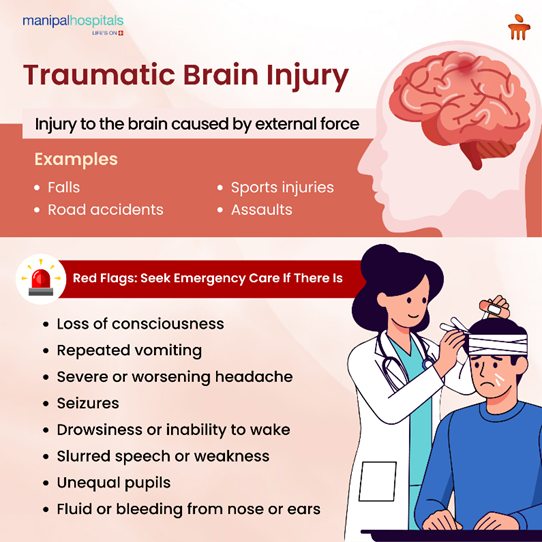
Knowing when to seek emergency care for a head injury can be lifesaving. Go to the emergency department or call emergency services if the injured person has:
-
Loss of consciousness, even briefly.
-
Repeated vomiting.
-
Worsening or new severe headache.
-
Seizure activity.
-
Confusion, drowsiness, or inability to wake.
-
One-sided weakness, slurred speech, or unequal pupils.
-
Bleeding from the skull or clear fluid from the nose/ears.
These signs may indicate bleeding in the brain, swelling, or other serious problems requiring urgent intervention.
How Doctors Assess a Head Injury
When someone arrives for care after a head trauma, clinicians perform a stepwise assessment:
-
A focused history and neurological exam (including memory and balance tests).
-
The Glasgow Coma Scale is used to measure the consciousness level.
-
Imaging, like a CT scan, is fast and effective to find bleeding or fractures; an MRI may be used later for more detail.
-
Observation for changing signs, especially in the first 24–48 hours.
These steps guide decisions on TBI treatment and whether hospital observation or surgery is needed.
Mild Traumatic Brain Injury and Concussion
Most TBIs are mild traumatic brain injuries, often called concussions. Typical signs of concussion include brief confusion, headache, and sensitivity to light or sound. Rest for a day or two, then gradually return to normal activities under guidance. A simple concussion management plan helps avoid early return to risky activities.
However, persistent symptoms such as ongoing dizziness, worsening headaches, sleep disruption, or cognitive problems mean the patient should see a specialist for further assessment and TBI treatment options.
Medical Treatment for Head Injury: What Doctors Offer
The medical treatment for head injury depends on severity:
-
Immediate care: Stabilisation, airway, breathing, and circulation first. Control bleeding, immobilise the spine if needed. Rapid assessment limits damage.
-
Observation: Many mild injuries are observed for changes over 24–48 hours. Families receive clear instructions on warning signs.
-
Medications: Pain relief, anti-seizure drugs if seizures occur, and medications to reduce brain swelling in some cases.
-
Surgery: If scans show bleeding or pressure rising inside the skull, surgical removal of the haematoma or decompression may be lifesaving.
-
Rehabilitation: Physical therapy, occupational therapy, speech therapy, and neuropsychology address lasting deficits and support recovery after TBI.
Good TBI treatment is multidisciplinary and tailored to the person’s needs, aiming to limit brain damage and rebuild function.
Risks and Long-Term Effects
Depending on severity, TBI can have short- and long-term consequences:
-
Persistent cognitive problems: memory, attention, and executive function.
-
Mood and behavioural changes, including depression or irritability.
-
There is an elevated risk of seizures or epilepsy.
-
In severe cases, permanent brain damage with physical disability.
Early treatment and rehabilitation reduce the risk of permanent harm. For those with repeated head injuries, such as some athletes, cumulative effects may occur, and long-term planning is important.
Preventing Head Injury
Simple prevention steps drastically reduce risk:
-
Wear helmets for cycling and contact sports.
-
Always use seat belts; ensure child restraints are correct.
-
Keep living spaces free of trip hazards for older adults.
-
Supervise young children around stairs and playgrounds.
Public health and personal safety both protect the brain; prevention is always better than treating brain damage later.
Symptoms, Urgency, and Typical Response
|
Symptom |
How Urgent |
Typical Response |
|
Brief confusion, headache after a minor bump |
Low to moderate |
Rest, observation, follow-up with GP or clinic |
|
Repeated vomiting, worsening headache, drowsiness |
High |
Emergency assessment, CT scan, possible admission |
|
Loss of consciousness, seizure, focal weakness |
Very high |
Call emergency services immediately; urgent imaging/surgery |
|
Persistent memory or mood changes weeks later |
Moderate |
Specialist neuro-rehab or neurology referral |
Recovering Well: Practical Steps For Patients and Families
Recovery timelines vary. For mild traumatic brain injury, many improve in weeks, but the pace differs. Practical steps that help recovery:
-
Rest, both physically and cognitively, initially.
-
Gradual return to school or work with a stepwise plan.
-
Regular sleep, good nutrition, and hydration.
-
Avoid alcohol and sedating drugs in early recovery.
-
Keep follow-up appointments for rehabilitation if problems persist.
Families should keep a symptom diary to track progress and share it with clinicians.
Where to Seek Specialist Care
Complex or persistent problems benefit from specialised teams, neurologists, neurosurgeons, neurorehabilitation specialists, and clinical neuropsychologists. For people in the region seeking advanced care, a recognised Neuro hospital in Salem can provide imaging, specialist assessment, and coordinated rehabilitation services.
Conclusion
A blow to the head can be far more than a bump. Recognising head trauma early, watching for brain traumatic injury symptoms, and acting quickly on red flags reduces the chance of lasting brain damage. Treatment ranges from careful observation for mild traumatic brain injury to emergency surgery and comprehensive rehabilitation for more severe cases. If any concerning signs appear, prompt medical assessment and the right medical treatment for head injury are essential.
If someone needs expert review or ongoing care after a head injury, the neurology and neurosurgery team at Manipal Hospital Salem offers rapid assessment, imaging, and multidisciplinary rehabilitation. Book a consultation with Manipal Hospitals Salem today to get a specialist review and a personalised recovery plan.
FAQ's
Common TBI symptoms include headache, dizziness, confusion, memory issues, nausea, and sleep changes. If symptoms worsen, seek urgent care.
Serious signs include loss of consciousness, repeated vomiting, seizures, severe or worsening headache, confusion, weakness, or unequal pupils; these require emergency care.
A mild traumatic brain injury often means brief or no loss of consciousness and transient symptoms; moderate/severe injury involves longer unconsciousness, neurological deficits, and sometimes visible findings on imaging.
Yes. Severe TBIs can cause lasting brain damage. Early treatment and rehabilitation lower the risk of permanent problems.
For regional specialist services, seek a dedicated neuro centre such as a Neuro hospital in Salem, or contact the neurology and neurosurgery teams at Manipal Hospitals Salem for assessment, imaging, and rehabilitation.
Share this article on: