6 Min Read
Have you ever jolted awake in the night, only to find your nose completely blocked? Or has your snoring gotten so loud that others have to nudge you awake? Living with a stuffy nose, frequent sinus headaches, or sleep disruptions can make life challenging. One possible cause is a deviated nasal septum- a condition many people aren’t even aware of. In fact, you might go years without realising there’s a solution. In this blog, you will get to know more about the deviated nasal septum, recognising its signs, and deviated nasal septum treatment options.
Synopsis
- What Is Nasal Septum Deviation?
- Causes of Nasal Septum Deviation
- Typical Symptoms of Nasal Septum Deviation
- When Should You Go to the Doctor?
- What Tests Do Doctors Use to Check for a Deviated Nasal Septum?
- Treatment Options for Nasal Septum Deviation
- What is Septoplasty?
- Results and Recovery
- Can Nasal Septum Deviation Be Corrected?
- Conclusion
What Is Nasal Septum Deviation?
The nasal septum is the part of the nose that separates the left and right airways. It should be in the middle so that air can flow freely on both sides. But for a lot of people, the septum is tilted or moved to one side, which makes the nasal septum deviate. A deviated nasal septum occurs when the thin wall of bone and cartilage separating the two nasal passages is off-centre. This is known as nasal septum deviation.
This condition can be present at birth or develop subsequently due to nasal trauma, including that from sports, accidents, or falls. Studies suggest that nearly 70–80% of people have some degree of septal deviation, but not everyone experiences symptoms. This variation causes breathing difficulties and frequent nose blockage and may reduce the quality of life in general. While mild cases may not require treatment, severe deviation can lead to persistent symptoms and may need septoplasty surgery.
Causes of Nasal Septum Deviation
Understanding what causes a deviated septum can help people see how common and treatable it is. The main causes include:
-
Factors that are present at birth: Some people are born with a crooked nasal septum. This can happen because of how the baby is positioned in the womb or during birth.
-
Injury or Trauma: Accidents, sports injuries, or falls that impact the nose can shift the septum out of place. Injuries from childhood can also cause issues later on.
-
Changes that happen with age: As we age, the structures in our noses can change, making even a small deviation more noticeable or troublesome.
These common reasons for a nasal septum deviation show why the condition can happen to anyone, no matter how old they are.
Typical Symptoms of Nasal Septum Deviation
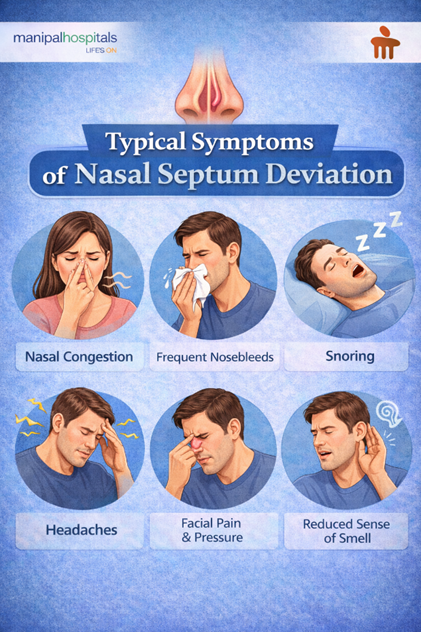
Some people with nasal septum deviation don't have any symptoms. With the symptoms, people start experiencing discomfort in daily activities and difficulty sleeping. Common nasal septum deviation symptoms are:
-
Persistent nasal blockage, often worse on one side
-
Difficulty breathing through the nose
-
Recurrent sinus infections due to poor sinus drainage
-
Facial pressure or headaches
-
Frequent nosebleeds due to dryness
-
Snoring or disturbed sleep
-
Reduced sense of smell
When Should You Go to the Doctor?
Many people ignore nasal symptoms because they think they're just allergies or colds that keep coming back. Consult a doctor if you experience:
-
Nasal blockage is frequent and getting worse.
-
Frequent sinus infections.
-
If breathing difficulty is affecting sleep.
-
Frequent bleeding from the nose is also a concern.
What Tests Do Doctors Use to Check for a Deviated Nasal Septum?
Doctors start by asking about your medical history and doing a physical exam. An ENT specialist might also:
-
Use a nasal speculum to look inside the nose.
-
Use an endoscope to get a better look inside.
-
Recommend imaging tests in complicated cases.
The goal is to see how severe the deviation is and check for related problems, such as enlarged turbinates or sinus disease.
Treatment Options for Nasal Septum Deviation
Treatment depends on how severe the symptoms are and how they affect daily life. Not every case needs surgery.
Non-Surgical Management
For mild symptoms, treatment for a deviated nasal septum may involve:
-
Nasal sprays to help with swelling
-
Antihistamines for swelling caused by allergies
-
Decongestants for short-term relief
These options help with symptoms but don't fix the problem itself.
Surgery (Septoplasty) - If symptoms last a long time or are severe, surgery may be suggested. The best way to fix a deviated nasal septum is with septoplasty.
What is Septoplasty?
Septoplasty is a surgical procedure that corrects septal alignment by reshaping or removing displaced bone and cartilage. The surgery is usually performed under local or general anaesthesia and focuses on improving airflow while preserving the external nasal appearance.
Modern septoplasty methods are safe, accurate, and meant to keep the shape of the nose while making it easier for air to flow.
Results and Recovery
Most people recover from septoplasty without any problems. At first, mild swelling or congestion is common, but it gets better over time. Long-term benefits are:
-
Easier breathing through the nose
-
Better sleep quality
-
Fewer sinus infections
-
Better overall comfort
Can Nasal Septum Deviation Be Corrected?
While nasal septum deviation does not improve on its own, symptoms can often be managed medically. Surgical correction through septoplasty offers a long-term solution for patients with significant symptoms.
-
Wearing protective gear during sports.
-
Getting prompt treatment for nose injuries.
-
Treating symptoms early can also help prevent further problems.
Conclusion
You don't have to put up with a stuffy nose all the time. Nasal septum deviation is a common condition that can be treated. Modern medical care offers safe and effective ways to do this. It is important to recognise the signs early, seek timely treatment, and know that solutions include surgery if needed. This can greatly improve your breathing and quality of life. If you experience breathing difficulty, sinus problems, or disturbed sleep, visit an ENT specialist at Manipal Hospitals Salem. Nasal septum correction in Salem can help you breathe better and live a better life.
FAQ's
Nasal septum deviation is not usually dangerous, but if it is not treated, it can lead to chronic nasal blockage, sinus infections, headaches, snoring, and sleep problems. Severity is determined by the intensity of symptoms and the extent to which the deviation disrupts normal respiration.
Yes. Symptoms of a deviated nasal septum can get worse with age, repeated infections, allergies, or swelling of the nasal tissues. What starts as mild discomfort may slowly turn into ongoing breathing problems and sinus problems that keep coming back.
When medical treatment doesn't work for nasal blockage, sinus infections, headaches, or trouble sleeping, surgery is recommended. Septoplasty straightens the septum, makes it easier for air to flow, and lowers the risk of long-term problems caused by a deviated nasal septum.
When done by an experienced ENT surgeon, nasal septum correction is a safe and common procedure. Most people have a smooth recovery, and complications are rare. Most people also notice a big improvement in their breathing and overall nasal comfort.
Most people go back to their normal activities a few days after having their nasal septum fixed in Salem. It takes a few weeks for the body to fully heal, during which time breathing gets better as the swelling goes down and the nasal passages heal correctly.
Share this article on: