7 Min Read
What should you do if abdominal pain, vomiting, and increasing bloating appear and do not settle? Intestinal obstruction is a common and potentially serious problem in which passage through the small or large bowel is partially or completely blocked. Early recognition matters because some blockages can lead to loss of blood supply to the bowel and tissue death. In this blog, we will look at what causes intestinal obstruction and how doctors treat it today.
Synopsis
- What is an Intestinal Blockage?
- Symptoms of Intestinal Obstruction
- Causes of Intestinal Obstruction
- Intestinal Obstruction Diagnosis
- Contemporary Approaches to Intestinal Obstruction Treatment
- Care After Treatment and Recovery
- Reducing the Risk of Recurrence
- Diet After Intestinal Obstruction Recovery
- Conclusion
What is an Intestinal Blockage?
The intestines help break down food, absorb nutrients, and remove waste. If food, fluids, or gas cannot move through them as they should, it is called an intestinal obstruction. This blockage can affect either the small or large intestine and may develop suddenly or gradually. In simple terms, intestinal obstruction means that something is stopping the intestines from working properly. The blockage could be:
-
Mechanical: happens due to a physical barrier like scar tissue or a tumour.
-
Functional: known as pseudo-obstruction or ileus; the bowel stops moving in the absence of physical blockage
Symptoms of Intestinal Obstruction
Symptoms can vary based on the age, location, and severity of the blockage, but they often include:
-
Severe or cramping abdominal pain
-
Abdominal swelling or bloating
-
Nausea and vomiting
-
Constipation or trouble passing gas
Signs of Blockage in Kids:
Children may show different signs compared to adults. Early recognition is important. Common warning signs include:
-
Greenish vomiting, which may indicate bile obstruction
-
Persistent crying or severe abdominal pain
-
Swollen or tight abdomen
-
Lethargy or low energy levels
-
Blood in stool or rectal bleeding
Causes of Intestinal Obstruction
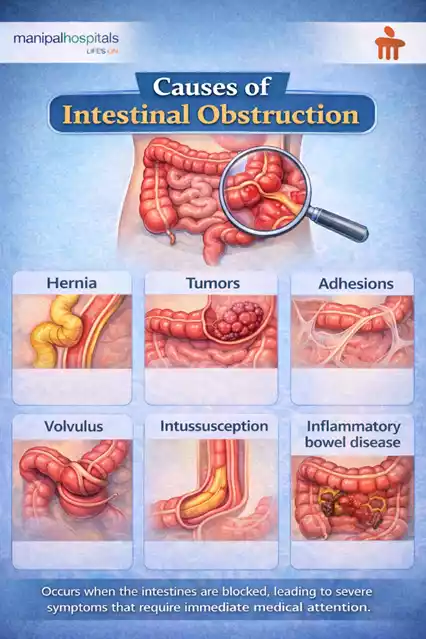
Identifying the underlying cause is essential because each type of obstruction requires a different approach to treatment and management. The following outlines the common causes of intestinal obstruction:
|
Cause of Intestinal Obstruction |
Description |
|
Adhesions or Scar Tissue |
The most common cause in adults. Adhesions form after abdominal surgery and create fibrous bands that twist, kink, or compress the intestines, blocking the passage of contents. |
|
Abdominal Hernias |
It occurs when a weak area in the abdominal wall allows part of the intestine to protrude and become trapped, potentially blocking blood flow and causing obstruction. |
|
Tumors or Colon Cancer |
Benign or malignant growths in the bowel or nearby organs can narrow or block the intestine, especially in large bowel obstruction. |
|
Volvulus (Twisting of the Intestine) |
A loop of intestine twists around itself, obstructing blood flow and intestinal contents. This is a surgical emergency. |
|
Intussusception |
A rare condition, most common in children under 3 years, where one segment of the intestine slides into another, causing obstruction. |
|
Inflammatory Bowel Disease |
Conditions such as Crohn’s disease cause chronic inflammation and scarring, leading to narrowing (strictures) that impair intestinal movement. |
|
Foreign Substance Consumption |
Swallowed objects (such as toys or non-digestible items) can become lodged in the intestine and cause a blockage. |
|
Radiation Enteritis |
Radiation therapy to the abdomen or pelvis damages healthy tissue, causing scarring and narrowing that can result in bowel obstruction. |
|
Pseudo-obstruction (Functional Causes) |
Not caused by a physical blockage. Associated with long-term diabetes, neurological disorders (e.g., Parkinson’s disease), electrolyte imbalances, severe infections, or inflammation. |
Intestinal Obstruction Diagnosis
Intestinal obstruction treatment begins with the following diagnostic tests that help in initial stabilisation:
-
Clinical examination to evaluate pain, distension, and bowel sounds.
-
Blood tests to check for infection, dehydration, or electrolyte imbalances.
-
Imaging tests such as X-rays, ultrasounds, and CT scans help find the location and cause of the blockage.
Contemporary Approaches to Intestinal Obstruction Treatment
Doctors decide on treatment plans for intestinal obstruction by looking at the cause, how severe it is, and the patient’s overall health.
Non-Surgical Treatment Options
Sometimes, especially with a partial obstruction, doctors may suspect adhesions if there is no sign of bowel movement. Treatment options in these cases may include:
-
Fluids are given through an IV to fix dehydration
-
Using a nasogastric tube to relieve pressure and reduce vomiting
-
Medications to manage pain and treat infection
-
Careful monitoring to ensure the blockage resolves
Treatment Involving Surgery
Surgery is needed if non-surgical treatments do not work or if complications arise. Open surgery may be needed in emergencies or complex cases to ensure patient safety. Surgery for intestinal obstruction may involve:
-
Removal of the blockage
-
Releasing adhesions
-
Fixing hernias
-
Taking out damaged parts of the bowel
Care After Treatment and Recovery
Recovery time after treatment for intestinal obstruction depends on whether surgery was needed and the patient’s overall health. Most patients will:
-
Gradually start eating again with medical help
-
Get help with pain and avoiding infections
-
Follow dietary modifications and gradual activity progression
-
Routine long-term follow-up
Reducing the Risk of Recurrence
Not all cases can be prevented, but some steps can reduce the risk:
-
Early treatment of hernias.
-
Regular follow-up is crucial for long-term bowel problems.
-
It is crucial to seek prompt medical attention for any ongoing abdominal problems.
Diet After Intestinal Obstruction Recovery
After an intestinal obstruction, the diet should help the bowel heal gently while restoring normal digestion. Progression is gradual and personalised; the aim is to reduce mechanical stress on the gut, supply protein and fluids for recovery, and slowly reintroduce fibre and regular foods under medical guidance.
-
Begin gently and progress slowly. Follow the clinician’s plan for moving from clear fluids to full liquids, then to soft, low-residue foods.
-
Small, frequent meals are easier to tolerate than large plates.
-
Prioritise easy-to-digest, low-residue choices at first: well-cooked white rice, plain pasta, mashed potato, white bread, smooth soups, yogurt, eggs, tender fish, and lean poultry.
-
Keep protein in every meal to support healing: eggs, soft fish, yoghurt, lentil purees if tolerated.
-
Stay well hydrated. Sip water and oral rehydration solutions if advised. Avoid fizzy drinks and excess caffeine.
-
Avoid high-fibre, bulky, and hard-to-digest foods initially: raw vegetables, skins, seeds, nuts, popcorn, whole grains, and tough meats.
-
Steer clear of very fatty, fried, or spicy foods until bowel function is normal. These can provoke cramping or diarrhoea.
-
Reintroduce fibre gradually once symptoms settle. Start with soluble fibre (oats, peeled fruit, mashed banana) before adding coarser fibre.
-
Chew food thoroughly and eat slowly to reduce the chance of blockage from large, poorly chewed pieces.
Conclusion
Intestinal blockage can be frightening, but doctors now have better ways to diagnose and treat it. Most patients recover and return to normal life with timely care. Recognising the signs early and knowing about available treatments can make a big difference. If you or someone you know has ongoing stomach pain, vomiting, or bloating, see a doctor right away. At Manipal Hospitals Salem, expert care ensures intestinal obstruction is managed clearly, confidently, and to the highest standards.
FAQ's
When your intestines are blocked, you experience mild to severe stomach pain that may last for a long time. You might also feel bloated, vomit, or have trouble passing stool or gas.
No. A partial obstruction can be treated with non-invasive treatments by giving fluids, resting the bowel, and monitoring the patient closely. Surgery is recommended for a complete blockage or if there is a risk of bowel damage.
Delaying treatment can reduce blood flow to the intestine, increasing the risk of infection, tissue damage, or a tear. Without prompt care, these problems can become life-threatening.
Yes, this is possible if the cause was adhesions or a long-term bowel condition. Regular checkups, recognising early signs, and getting immediate medical help can lower your chances of having another blockage.
Getting help early can prevent serious problems and lead to better results. Visit the emergency room if you have strong belly pain, keep vomiting, have a fever, or cannot defecate or have gas.
Share this article on: