6 Min Read
Headaches are one of the most common health complaints experienced by people of all ages. Almost everyone gets a headache occasionally due to stress, lack of sleep, dehydration, or long hours in front of screens. However, not all headaches are the same. Many people confuse a migraine with a regular headache, but the two conditions are very different in terms of symptoms, triggers, and treatment.
Understanding the difference between migraine vs headache is important because migraines often require specialised medical care and lifestyle management. If ignored, they can significantly affect daily activities, work productivity, and overall quality of life.
At Bhagwan Mahavir Manipal Hospital Ranchi, doctors frequently treat patients who assume they have a simple headache but are actually suffering from migraines. Early diagnosis can help reduce the frequency and severity of attacks.
Synopsis
Understanding the Difference Between Migraine vs Headache
A regular headache usually causes mild to moderate pain in the head and can be triggered by everyday factors like fatigue or stress. It often resolves with rest, hydration, or simple pain relief medication.
A migraine, on the other hand, is a neurological condition. It causes intense throbbing pain, often on one side of the head, and may be accompanied by nausea, vomiting, and sensitivity to light or sound.
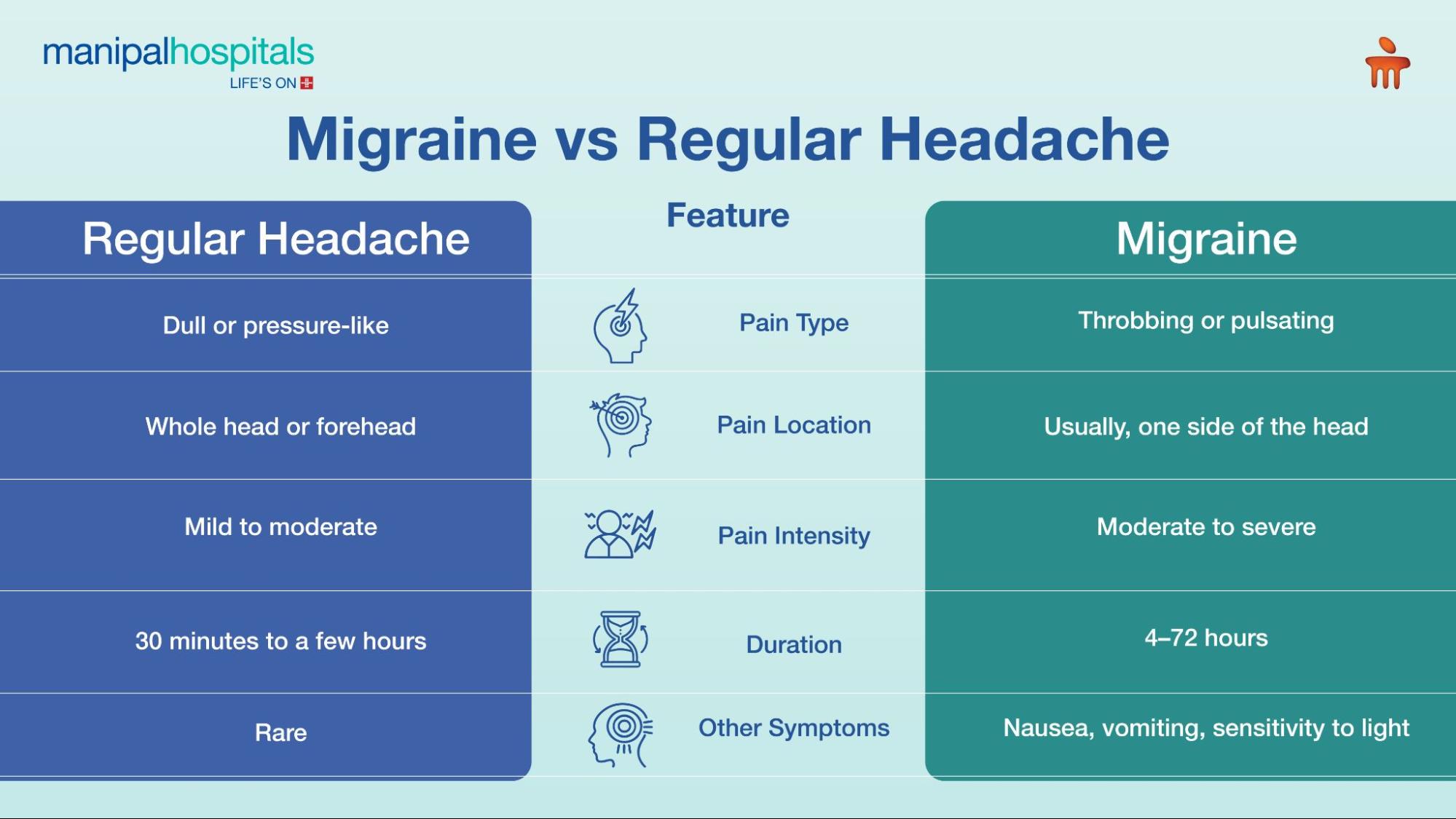
Key Differences
|
Feature |
Regular Headache |
Migraine |
|
Pain intensity |
Mild to moderate |
Moderate to severe |
|
Pain location |
Whole head or forehead |
Usually, one side of the head |
|
Duration |
30 minutes to a few hours |
4 hours to 72 hours |
|
Other symptoms |
Rare |
Nausea, vomiting, visual disturbance |
|
Impact on activities |
Usually manageable |
Can disrupt daily routine |
Common Types of Regular Headaches
There are different forms of headaches that people may experience. The most common types include:
1. Tension Headache
This is the most common headache type. It causes a dull, tight pressure around the forehead or the back of the head. Stress, poor posture, or long working hours are common triggers.
2. Sinus Headache
This occurs due to sinus infection or inflammation. It causes pressure around the eyes, cheeks, and nose.
3. Cluster Headache
Cluster headaches are rare but extremely painful. They occur in cycles or clusters and often affect one side of the head near the eye.
Understanding the difference between tension headache vs migraine is especially important because treatment approaches differ.
Migraine Symptoms
Migraines can produce a wide range of symptoms that go beyond head pain. Some individuals even experience warning signs hours or days before the attack begins.
Common migraine symptoms include:
-
Severe throbbing pain on one side of the head
-
Sensitivity to light, sound, or smell
-
Nausea and vomiting
-
Visual disturbances such as flashing lights or zigzag patterns (aura)
-
Dizziness or weakness
-
Difficulty concentrating
In many cases, migraines can last from 4 hours to 3 days, making them much more disruptive than a regular headache.
Chronic Headache Causes
If headaches occur frequently, they may be classified as chronic headaches. This means headaches occur 15 or more days per month.
Some common chronic headache causes include:
-
Long-term stress or anxiety
-
Sleep disturbances
-
Hormonal changes
-
Excessive screen time
-
Dehydration
-
Skipping meals
-
Overuse of pain medication
-
Underlying neurological conditions
Doctors at Bhagwan Mahavir Manipal Hospital Ranchi, recommend medical evaluation if headaches become frequent or progressively severe.
Migraine Triggers
Migraines are often triggered by certain lifestyle or environmental factors. Identifying triggers can help reduce attacks.
Common migraine triggers include:
1. Stress and emotional pressure
Work stress or emotional anxiety is one of the most common migraine triggers.
2. Lack of sleep
Irregular sleep patterns or sleep deprivation can trigger migraines.
3. Hormonal changes
Many women experience migraines before or during their menstrual cycle.
4. Certain foods
Processed foods, aged cheese, chocolate, and caffeine withdrawal can trigger migraines.
5. Bright lights and loud noises
Environmental triggers such as flashing lights or strong smells may cause attacks.
6. Weather changes
Sudden changes in temperature or air pressure may also trigger migraines in some people.
Treatment Options for Migraine vs Headache
Treatment varies depending on the type and severity of the headache.
Treatment for Regular Headaches
Most regular headaches can be managed with simple measures:
-
Rest
-
Drinking adequate water
-
Over-the-counter pain relievers
-
Proper posture and stretching
-
Stress management techniques
Lifestyle changes can significantly reduce headache frequency.
Migraine Treatment Options
Migraines usually require a more comprehensive approach.
Common migraine treatments include:
1. Prescription medications
Doctors may prescribe medications to relieve pain and prevent migraine attacks.
2. Preventive therapy
For frequent migraines, preventive medications may be recommended.
3. Lifestyle modifications
Maintaining a regular sleep schedule, eating balanced meals, and managing stress can help reduce attacks.
4. Trigger management
Keeping a migraine diary can help identify triggers and prevent future episodes.
5. Advanced medical care
Neurologists may recommend specialised treatments depending on the severity of the condition.
Patients experiencing frequent migraines can seek expert evaluation at Bhagwan Mahavir Manipal Hospital Ranchi, where specialists offer personalised treatment plans.
While occasional headaches are common, certain symptoms require medical attention.
Consult a doctor if you experience:
-
Severe or sudden headache
-
Headache with fever or neck stiffness
-
Headaches after head injury
-
Frequent migraines affect daily life
-
Vision problems or confusion during a headache
-
Headache that does not improve with medication
Early diagnosis can help prevent complications and improve long-term management.
Preventing Headaches and Migraines
Adopting healthy lifestyle habits can help reduce both headaches and migraines.
Helpful prevention tips include:
-
Drink enough water throughout the day
-
Maintain a consistent sleep routine
-
Avoid skipping meals
-
Limit caffeine and processed foods
-
Exercise regularly
-
Manage stress through meditation or relaxation techniques
-
Reduce screen time and maintain good posture
Small lifestyle adjustments can significantly reduce the frequency of headaches.
Understanding the difference between migraine and headache can help people seek the right treatment at the right time. While regular headaches are usually mild and temporary, migraines are a neurological condition that can cause severe pain and multiple symptoms.
Recognising migraine symptoms, chronic headache causes, and triggers can help individuals manage their condition effectively. If headaches become frequent or interfere with daily life, consulting a specialist is important.
At Bhagwan Mahavir Manipal Hospital Ranchi, experienced doctors provide comprehensive diagnosis and personalised treatment plans to help patients find lasting relief from migraines and chronic headaches.
FAQ's
Migraines usually cause intense throbbing pain on one side of the head and may include nausea, sensitivity to light, and visual disturbances, while regular headaches are generally milder.
Stress, lack of sleep, hormonal changes, and certain foods are among the most common migraine triggers.
Migraines cannot always be cured, but proper treatment and lifestyle changes can significantly reduce their frequency and severity.
A migraine attack can last anywhere from 4 hours to 72 hours if untreated.
You should consult a doctor if headaches become frequent, severe, or interfere with your daily routine.
Share this article on: