6 Min Read
Heart disease symptoms are not always limited to daytime discomfort or exertional pain. In many individuals, heart disease symptoms can silently emerge or worsen during sleep, often going unnoticed until they become severe. Night-time symptoms are especially concerning because they may signal underlying cardiovascular stress that the body can no longer compensate for. Early recognition of heart disease symptoms during sleep can make a critical difference in timely diagnosis and treatment. This is why our cardiologists in Ranchi emphasise paying close attention to unusual nighttime bodily changes rather than dismissing them as simple sleep disturbances.
This blog explores heart disease symptoms that appear during sleep, explains why they occur, outlines key signs of heart disease, and highlights when medical evaluation becomes essential. Understanding these symptoms can help prevent serious complications and improve long-term heart health.
Synopsis
- Why Heart Disease Symptoms Can Appear During Sleep
- Common Heart Disease Symptoms That Occur During Sleep
- Types of Heart Disease Linked to Night-Time Symptoms
- Heart Disease Causes That Worsen Symptoms at Night
- When to Seek Medical Attention
- Diagnosis of Heart Disease Symptoms Occurring at Night
- Managing Heart Disease Symptoms for Better Sleep
- The Importance of Early Awareness
- Conclusion
Why Heart Disease Symptoms Can Appear During Sleep
Sleep is a period when heart rate, blood pressure, and breathing patterns naturally change. In people with underlying heart-related diseases, these changes may unmask hidden cardiac issues. Reduced oxygen levels, fluid shifts, and altered autonomic nervous system activity can all trigger heart disease symptoms at night.
Common physiological changes during sleep that affect the heart include:
-
Slower heart rate and blood circulation
-
Increased fluid redistribution from legs to chest
-
Changes in oxygen levels, especially during deep sleep
-
Reduced awareness of early warning signs
These factors make sleep a vulnerable time for people experiencing signs of heart disease, even if daytime symptoms are mild or absent.
Common Heart Disease Symptoms That Occur During Sleep
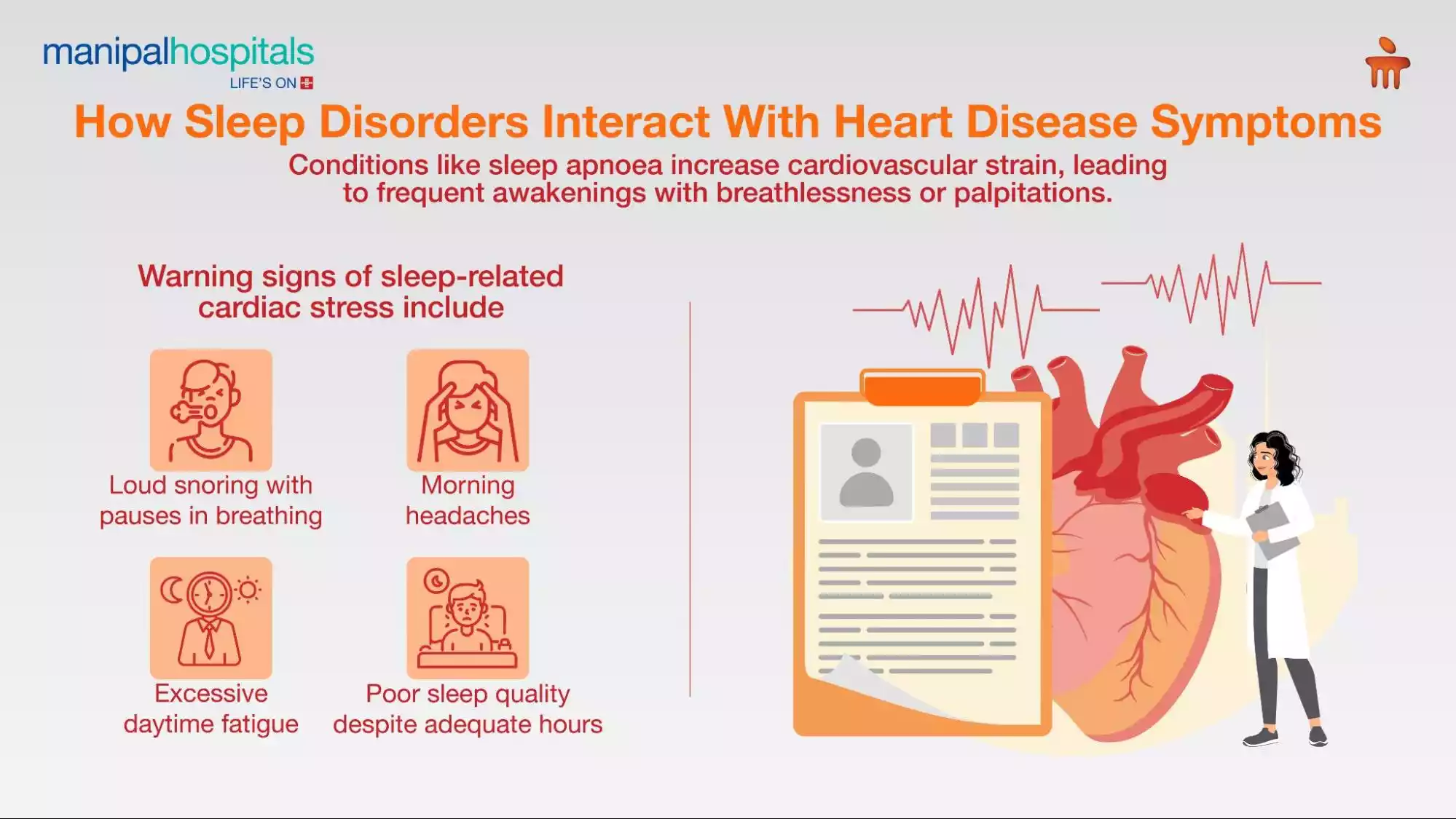
Recognising heart disease symptoms during sleep requires awareness of subtle but persistent warning signs. These symptoms may wake a person from sleep or leave them feeling unwell upon waking.
1. Chest Discomfort or Pressure at Night
Chest tightness, heaviness, or discomfort during sleep is one of the most concerning heart disease symptoms. Unlike sharp pain, this sensation may feel dull, squeezing, or pressure-like and can radiate to the jaw, shoulder, or arm.
This symptom is commonly associated with coronary artery problems and other types of heart disease, particularly when blood flow to the heart muscle is compromised during rest.
2. Shortness of Breath While Lying Down
Difficulty breathing when lying flat, known as orthopnoea, is a classic sign of heart disease. People may wake up gasping for air or feel relief only after sitting upright.
This symptom often points to heart failure-related heart disease causes, where fluid accumulates in the lungs when the heart cannot pump effectively during rest.
3. Palpitations During Sleep
Palpitations during sleep are a common but often overlooked manifestation of heart disease symptoms. Individuals may wake up feeling that their heart is racing, fluttering, or beating irregularly.
Night-time palpitations can indicate rhythm disorders linked to various heart-related diseases, including atrial fibrillation or other arrhythmias.
4. Night Sweats Without Obvious Cause
Excessive sweating during sleep, unrelated to room temperature or infections, can be an indirect sign of heart disease. The body may activate stress responses due to reduced blood flow or oxygen delivery.
Night sweats are frequently reported alongside other heart disease symptoms such as chest discomfort or breathlessness.
5. Sudden Awakening With Anxiety or Panic
Unexplained panic-like episodes during sleep may actually be cardiovascular in origin. Reduced oxygen supply or irregular heart rhythms can trigger stress responses, mimicking anxiety attacks.
Such episodes are increasingly recognised as early heart disease symptoms, especially when recurrent.
Types of Heart Disease Linked to Night-Time Symptoms
Different types of heart disease can present with sleep-related symptoms. Understanding these connections helps identify risks early.
|
Type of Heart Disease |
Night-Time Symptoms Commonly Seen |
|
Coronary artery disease |
Chest pressure, sweating, breathlessness |
|
Heart failure |
Shortness of breath, coughing at night |
|
Arrhythmias |
Palpitations during sleep, dizziness |
|
Valvular heart disease |
Fatigue, breathlessness, disturbed sleep |
|
Cardiomyopathy |
Irregular heartbeat, night sweats |
These heart-related diseases may remain silent during the day but become evident at night.
Heart Disease Causes That Worsen Symptoms at Night
Several heart diseases contribute to nocturnal symptom onset. These causes often interact with sleep-related physiological changes.
Key contributing factors include:
-
High blood pressure affects nighttime circulation
-
Obstructive sleep apnoea reduces oxygen levels
-
Diabetes-related nerve damage masks early symptoms
-
Obesity increases cardiac workload during rest
-
Smoking and alcohol affect the heart rhythm
Addressing these heart disease causes is essential for symptom control and prevention.
When to Seek Medical Attention
Night-time heart disease symptoms should never be ignored. Medical evaluation is essential if symptoms are frequent, worsening, or accompanied by other warning signs.
Seek immediate care if you experience:
-
Persistent chest discomfort during sleep
-
Recurrent palpitations during sleep
-
Sudden breathlessness or choking sensations
-
Fainting or near-fainting episodes at night
Specialists, including our cardiologist in Ranchi, stress that early diagnosis significantly improves outcomes for most heart-related diseases.
Diagnosis of Heart Disease Symptoms Occurring at Night
Identifying the cause of sleep-related heart disease symptoms requires targeted investigations.
Common diagnostic tools include:
-
Electrocardiogram (ECG)
-
Holter monitoring for night-time rhythm tracking
-
Echocardiography
-
Sleep studies for oxygen monitoring
-
Blood tests for cardiac markers
These tests help determine underlying types of heart disease and guide appropriate treatment plans.
Managing Heart Disease Symptoms for Better Sleep
Managing heart disease symptoms involves a combination of medical treatment and lifestyle modifications.
Key strategies include:
-
Adhering to prescribed cardiac medications
-
Reducing salt intake to prevent fluid retention
-
Maintaining a consistent sleep schedule
-
Elevating the head during sleep if breathless
-
Managing stress and anxiety
-
With proper care and monitoring, many people experience significant relief from nighttime signs of heart disease.
The Importance of Early Awareness
Night-time heart disease symptoms often indicate advanced or progressing conditions. Early awareness empowers individuals to seek help before complications such as heart attacks or heart failure develop.
Ongoing education, preventive screening, and expert guidance from professionals like our cardiologists in Ranchi play a vital role in protecting heart health and improving quality of life.
Conclusion
Heart disease symptoms that appear during sleep are important warning signals, not minor sleep disturbances. Recognising palpitations during sleep, breathlessness, chest discomfort, or unexplained night sweats can lead to early diagnosis of serious heart-related diseases. Prompt evaluation and timely treatment remain the most effective tools for safeguarding long-term cardiovascular health.
FAQ's
Yes, certain heart disease symptoms emerge primarily during sleep due to physiological changes affecting circulation and oxygen levels.
Not always, but frequent palpitations during sleep may indicate underlying heart-related diseases and should be evaluated.
Chest discomfort, shortness of breath, night sweats, and irregular heartbeats are common signs of heart disease during sleep.
Coronary artery disease, heart failure, arrhythmias, and cardiomyopathy are common types of heart disease linked to night symptoms.
If heart disease symptoms during sleep are recurrent, worsening, or associated with chest pain or breathlessness, immediate medical consultation is advised.
Share this article on: