7 Min Read
Many women have vaginal swelling (vulval swelling) of the hairy skin around the vagina at some point in their lives. Infections, irritation, hormonal changes, or some medical conditions can all cause it. Mild swelling may go away on its own, but swelling that lasts or hurts needs to be diagnosed and treated by a doctor. One common type is vaginal lip swelling, which happens when the labia, the folds of skin around the vaginal opening, get enlarged, sore, or inflamed. Swelling can also happen in some cases because of allergies, infections, or increased blood flow to the pelvic area. Another situation where swelling may occur is vaginal swelling during pregnancy. This isn't usually dangerous, but a doctor should always check for severe swelling or pain that comes with it.
Understanding the causes and recognising symptoms can help ensure timely care. Modern vaginal swelling (vulval swelling) treatment focuses on identifying the underlying cause and providing targeted therapy. Women with ongoing symptoms can also get specialised vaginal swelling treatment in Mysore, where doctors can safely check on and treat the problem.
In this blog, an obstetrics and gynaecology expert in Mysore talks about the causes of vaginal swelling, the most common symptoms, and the different vaginal swelling (vulval swelling) treatment options.
Synopsis
Common Symptoms of Vaginal Lip Swelling
The symptoms of vaginal lip swelling can be different depending on what caused it. A lot of the time, women notice that their vulva looks and feels different.
Typical symptoms include:
-
Visible swelling of the labia: One or both sides of the labia may look bigger or puffy.
-
Pain or tenderness: Inflamed tissues may feel sensitive to touch and have a burning sensation.
-
Redness or warmth: Inflammation often makes the area around it red.
-
Itching or irritation: This symptom frequently occurs when swelling is related to infections or allergic reactions.
-
Discomfort while walking or sitting: Severe vaginal lip swelling can cause discomfort during everyday activities.
-
Pain during sexual intercourse: Swelling and inflammation may make intercourse painful.
These symptoms may appear abruptly or develop gradually. Persistent discomfort requires evaluation and appropriate vaginal swelling treatment.
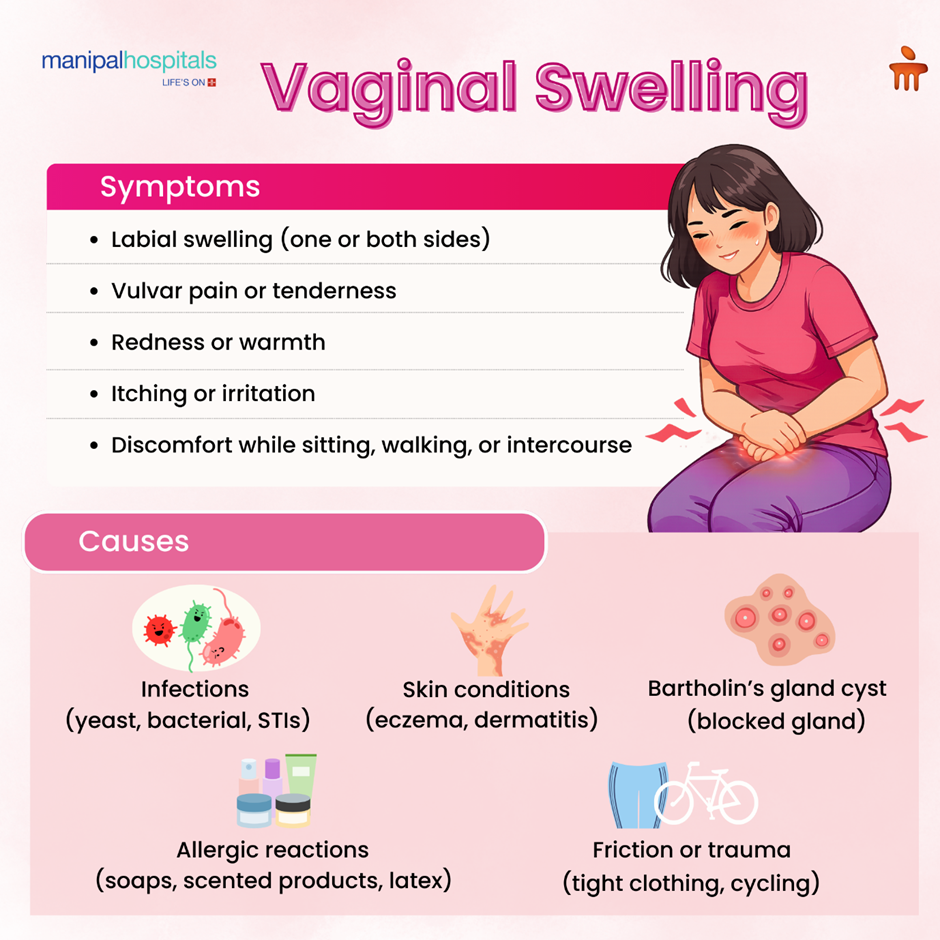
Causes of Vaginal Swelling
There are many things that can cause vaginal lip swelling. To choose the best vaginal swelling (vulval swelling) treatment, you need to know what caused it.
Infections
Vaginal infections are one of the most common reasons for swelling.
-
Yeast infections: These happen when there is too much Candida fungus, and they usually make you itch, turn red, and swell.
-
Bacterial infections: Some bacteria can cause swelling of the vulva and nearby tissues. Sexually transmitted infections (STIs) can also make you feel irritated and swollen.
Allergic Reactions
Some women develop vaginal lip swelling due to allergic reactions to products such as:
-
Soaps or body washes
-
Scented sanitary products
-
Latex condoms
-
Certain detergents are used for washing underwear
Avoiding irritants often resolves the swelling without extensive vaginal swelling treatment
Trauma or Friction
Physical irritation from tight clothing, prolonged cycling, or vigorous sexual activity may cause temporary swelling. Minor injuries can lead to inflammation and discomfort until the tissue heals.
Bartholin’s Gland Cyst
The Bartholin’s glands produce mucus that helps lubricate the vaginal opening. If the duct becomes blocked, a fluid-filled cyst may form, leading to noticeable vaginal lip swelling. Infected cysts may require medical drainage as part of vaginal swelling treatment.
Skin Conditions
Eczema and dermatitis are two skin conditions that can make the vulvar area red and swollen. For these conditions, you need a special vaginal swelling (vulval swelling) treatment that focuses on reducing inflammation. Herpes infection or any abscess on the vulva.
Vaginal swelling (vulval swelling) During Pregnancy
Many women experience vaginal swelling during pregnancy, especially in the later stages. Changes in hormones and more blood flow to the pelvic area cause the vulva and nearby tissues to swell. During pregnancy, hormonal changes increase blood flow and fluid retention in the body. As a result, some women may notice mild swelling of the vaginal lips. Some of the most common reasons for vaginal swelling during pregnancy are:
-
Increased blood volume
-
Pressure from the uterus getting bigger
-
Changes in hormones
-
Less blood flow in the pelvic veins
Most of the time, vaginal swelling during pregnancy goes away after the baby is born. But if the swelling is very bad and comes with pain, fever, or discharge, it could be an infection that should be checked out right away. Doctors may recommend simple measures such as resting, elevating the pelvis, wearing loose clothing, and using cold compresses. When necessary, medical professionals provide safe vaginal swelling treatment suitable for pregnancy.
Vaginal Swelling Treatment
For effective vaginal swelling treatment, you need to figure out what caused it. Doctors usually perform a physical exam and may suggest lab tests if they think you have an infection.
Medications
If the swelling is caused by infection, treatment may include:
-
Antifungal medications for yeast infections
-
Antibiotics for bacterial infections
-
Antiviral medications for certain viral infections
These medications help reduce inflammation and relieve vaginal lip swelling.
Anti-Inflammatory Treatments
To help with swelling and irritation, a doctor might give you creams or ointments to put on your skin. When people have skin problems or allergic reactions that affect the vulva, they often use these treatments.
Drainage of Bartholin’s cyst or Abscess of the skin of the vulva and clitoris
When a cyst forms in the Bartholin’s gland, doctors may perform a minor procedure to drain the fluid and relieve swelling. This procedure is sometimes necessary when conservative vaginal swelling treatment does not resolve the problem.
Lifestyle Adjustments
Certain lifestyle measures can also help manage symptoms:
-
Wearing loose cotton underwear
-
Avoiding scented hygiene products
-
Maintaining good genital hygiene
-
Avoiding prolonged friction or pressure on the vulva
For persistent symptoms, specialised vaginal swelling treatment in Mysore may require a thorough assessment by gynaecology specialists.
When to Seek Medical Attention
Some situations call for professional medical care, even though mild swelling can happen from time to time. If you have any of the following, see a doctor:
-
Vaginal lip swelling persists for several days
-
Severe pain or discomfort develops
-
There is unusual vaginal discharge
-
Fever accompanies swelling
-
Symptoms worsen instead of improving
Prompt consultation ensures timely diagnosis and appropriate vaginal swelling treatment.
Conclusion
Vaginal swelling is a common condition that can cause concern for many women. Infections, irritation, hormonal changes, or other medical reasons can cause vaginal lip swelling. Recognising symptoms early and getting the right care is important for a full recovery. Conditions such as vaginal swelling during pregnancy are often temporary, but persistent or painful swelling should always be evaluated by a healthcare professional. With accurate diagnosis and proper vaginal swelling treatment, most cases can be managed effectively.
Women experiencing ongoing symptoms can benefit from expert evaluation and specialised vaginal swelling treatment in Mysore. For comprehensive gynaecological care, advanced diagnostics, and personalised treatment plans, consult our obstetrics and gynaecology specialists at Manipal Hospital Mysore.
FAQ's
Infections, allergic reactions, trauma, hormonal changes, and blocked Bartholin's glands are all common reasons for vaginal lip swelling.
Yes, mild vaginal swelling during pregnancy is common due to increased blood flow and fluctuating hormones. But a doctor should look at any swelling or pain that is very bad.
Vaginal swelling treatment depends on the cause. Treatment may involve medications, topical creams, or minor procedures if a cyst is present.
In some cases, mild swelling caused by irritation or friction may resolve without treatment. Persistent symptoms require medical evaluation.
Yes. Maintaining proper hygiene, avoiding irritants, wearing breathable clothing, and practising safe sexual health can all mitigate the risk of vaginal lip swelling.
Share this article on: