5 Min Read
.webp "Discomfort While Eating: Causes, Symptoms & Dysphagia Treatment")
Mild discomfort while eating or difficulty while swallowing may seem like nothing serious at first. It is easy to dismiss as a pause while eating or a decrease in eating speed. But when this sensation becomes frequent or distressing, it may point to esophageal dysphagia, a condition that affects how food and liquids travel through the esophagus or the food pipe. Often described as an unpleasant experience of food “getting stuck” after swallowing or a constant urge to clear your throat, this problem can interfere with nutrition, comfort, and everyday life.
Through this blog, a top ENT specialist in Mysore helps you understand what esophageal dysphagia symptoms are, why timely esophageal dysphagia treatment is important, and how access to accurate esophageal swallowing disorder diagnosis in Mysore matters for long-term outcomes and quality of life.
Synopsis
Understanding Esophageal Dysphagia
Esophageal dysphagia occurs when swallowed food or liquids face difficulty moving from the throat to the stomach. Unlike swallowing problems that begin in the mouth or throat, this condition develops within the esophagus or the food pipe itself. Many people describe it as a pressure-like sensation in the chest, delayed swallowing, or discomfort after meals.
While occasional swallowing difficulty can happen to anyone, persistent symptoms should never be ignored. Early evaluation allows doctors to identify the cause and begin targeted esophageal dysphagia treatment before complications arise.
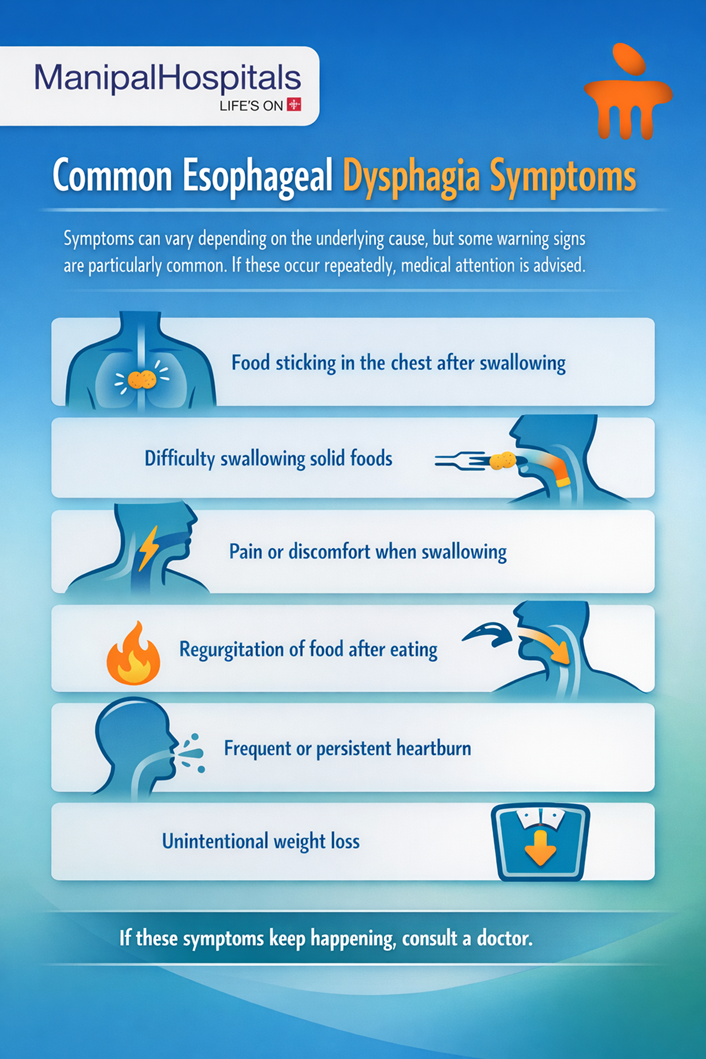
Common Esophageal Dysphagia Symptoms
What are the causes of Esophageal Dysphagia?
The causes of esophageal dysphagia range from structural narrowing to muscle-related disorders. Identifying the root issue is essential for choosing the right treatment approach.
|
Common Causes |
How It Affects Swallowing |
|
Achalasia |
The lower esophageal muscle fails to relax properly |
|
Esophageal strictures |
Narrowing caused by acid reflux or scarring |
|
Esophagitis |
Inflammation due to acid reflux, allergy, or infection |
|
GERD |
Long-term acid exposure damaging the esophagus |
|
Esophageal tumors |
Physical obstruction of the food pathway |
|
Scleroderma |
Weakening of esophageal muscle movement |
|
Diverticula |
Pouches where food may collect |
Diagnosis: Getting Clear Answers
Accurate esophageal swallowing disorder diagnosis in Mysore begins with understanding both symptoms and swallowing mechanics. At Manipal Hospital Mysore, specialists use a step-by-step diagnostic approach to pinpoint the exact cause.
Common diagnostic tests include:
-
Barium swallow X-ray to assess food movement
-
Upper endoscopy to examine the esophageal lining
-
Esophageal manometry to measure muscle coordination
-
pH monitoring to evaluate acid reflux
-
CT or MRI scans when external compression is suspected
Timely diagnosis helps ensure that esophageal dysphagia treatment is precise, effective, and personalised.
Esophageal Dysphagia Treatment Options
Treatment depends on what is causing the swallowing difficulty. Most patients experience significant improvement once the underlying issue is addressed.
Treatment approaches may include:
-
Medications to reduce acid reflux or inflammation
-
Esophageal dilation to widen narrowed areas
-
Botox injections for muscle-related disorders
-
Surgical procedures for structural or advanced conditions
-
Dietary adjustments to reduce strain while swallowing
-
Swallowing therapy guided by trained specialists
With the right care plan, esophageal dysphagia treatment can restore comfort and confidence during meals.
Daily Care Essentials: Do’s and Don’ts
Do:
-
Eat slowly and chew food thoroughly
-
Choose soft, moist foods
-
Take small sips of water during meals
-
Sit upright while eating and afterward
-
Follow prescribed medications consistently
Don’t:
-
Rush meals or eat while distracted
-
Lie down immediately after eating
-
Ignore recurring symptoms
-
Self-adjust medications without medical advice
Conclusion:
Living with swallowing discomfort can quietly affect nutrition, confidence, and everyday enjoyment of food. However, with the right treatment, esophageal dysphagia is highly manageable.
If you or a loved one are experiencing persistent swallowing difficulty, don’t wait. Book an appointment with our expert ENT specialist at Manipal Hospital today for personalised esophageal dysphagia treatment, more comfortable swallowing, and reclaimed quality of life.
FAQ's
Esophageal dysphagia affects food movement through the esophagus, while oropharyngeal dysphagia begins in the mouth or throat and often causes coughing during swallowing.
Yes. Most patients experience significant improvement once the underlying cause is treated appropriately.
Stress does not directly cause it, but it may intensify symptoms by affecting muscle coordination or acid reflux.
Yes, age-related muscle changes and long-term reflux make it more common in older individuals.
Manipal Hospitals Mysore offers comprehensive evaluation and advanced diagnostic services for swallowing disorders.
Share this article on: