8 Min Read
A strong immune system protects the body from viruses, infections, and other health problems. It is made up of different organs, tissues, and cells that work together to defend the body against harmful germs. When the immune system works properly, it can recognise and fight these germs before they make you sick. More people are aware of preventive healthcare these days, which makes natural ways to boost immunity even more important. Instead of just relying on medications or supplements, doctors are putting more and more focus on lifestyle changes that make the immune system stronger.
Today, in 2026, doctors and nurses want people to take care of their immune systems in every way possible. This means paying attention to things like nutrition, sleep, mental health, preventive medicine, and making healthy choices in your daily life.
In this blog we present you a complete guide on practical, evidence-based ways that doctors say you can naturally boost your immune system and stay healthy for a long time, as recommended by a top internal medicine doctor in Mysore.
Understanding the Immune System
The immune system safeguards the body from harmful bacteria, viruses, parasites, and toxins. It consists of specialised components, including white blood cells, antibodies, lymph nodes, and organs such as the spleen and thymus.
These components work together to identify threats and destroy them before they cause disease. However, the immune system can weaken due to poor lifestyle habits, lack of sleep, chronic stress, or nutritional deficiencies.
Medical experts emphasise several key strategies that support immune health. These include
-
Eat a Balanced Diet and Maintain Good Gut Health
-
Get Quality Sleep, Stay Hydrated
-
Exercise Regularly
-
Manage Stress
-
Avoid Unhealthy Habits
-
Stay Updated with Vaccinations
-
Regular Health Checkups
These pillars form the foundation of a healthy immune system.
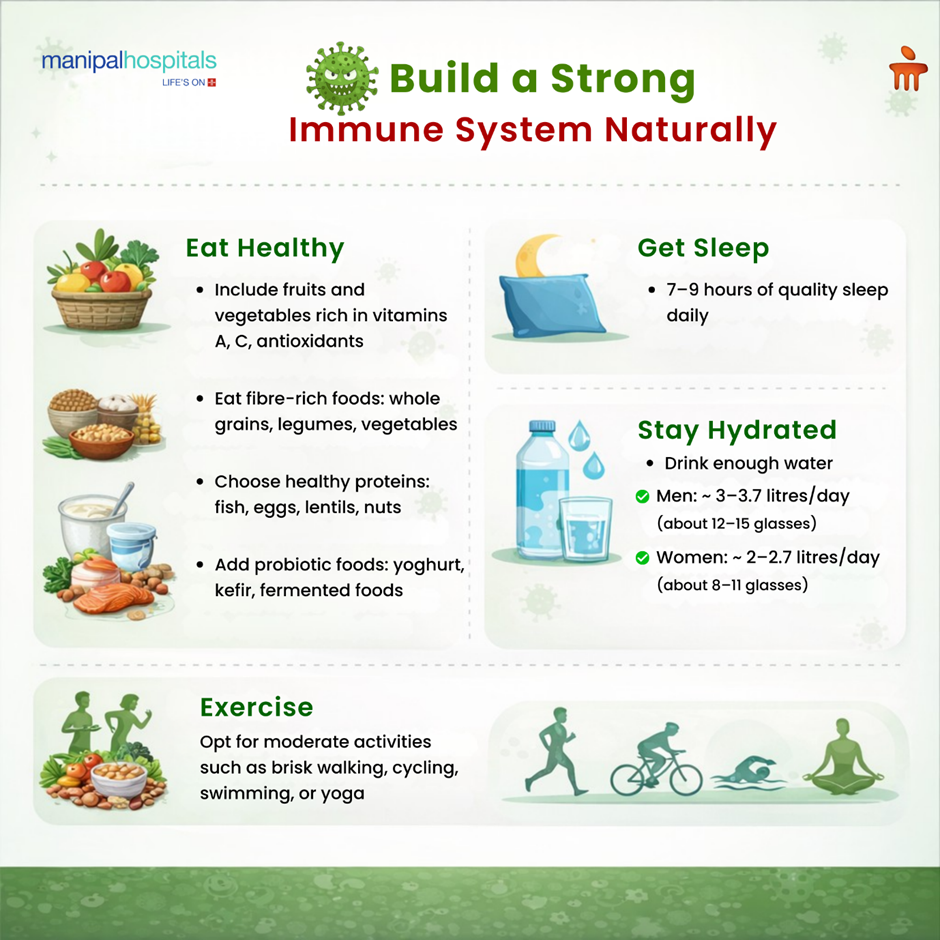
1. Eat a Balanced Diet and Maintain Good Gut Health
Nutrition is essential for keeping the immune system healthy. When people eat a balanced diet and maintain excellent gut health, their bodies get the vitamins, minerals, and nutrients they need to keep their immune system strong.
Approximately 70–80% of immune cells are associated with the gut-associated lymphoid tissue (GALT). Doctors recommend several dietary practices:
-
Include Fruits and Vegetables: Fruits and vegetables are rich in vitamins such as vitamin C, vitamin A, and antioxidants.
-
Add Fiber-Rich Foods: Whole grains, legumes, and vegetables are all high in fibre, which is good for gut bacteria. This helps the immune system and digestive health.
-
Consume Probiotic Foods: Kefir, yoghurt, and fermented vegetables are all good for the bacteria in your gut.
-
Choose Healthy Protein Sources: Choose healthy protein sources because protein supports the production of immune cells. Fish, eggs, chicken, lentils, and nuts are all good choices.
When people consistently eat a balanced diet and maintain good gut health, they strengthen their body’s natural ability to fight infections.
2. Get Quality Sleep, Stay Hydrated, and Exercise Regularly
Getting enough sleep, drinking plenty of water, and staying active all help keep the immune system strong. These daily habits support the body. They also help it respond better to infections.
-
Importance of Sleep: During sleep, the body repairs tissues and regulates immune responses. Adults require 7-9 hours of quality sleep every night. When individuals get quality sleep, stay hydrated, and exercise regularly, immune cells become more effective in identifying and destroying pathogens.
3. Staying Hydrated
Water helps transport nutrients throughout the body and supports the removal of waste products. Staying hydrated is also good for circulation and cell function.
4. Regular Physical Activity
Moderate exercise improves blood circulation and supports immune cell activity. Activities like swimming, yoga, cycling, or walking are beneficial. Healthcare professionals emphasise that people who get quality sleep, stay hydrated, and exercise regularly tend to experience fewer infections and better overall health.
5. Manage Stress and Avoid Unhealthy Habits
Your immune system can also be affected by your mental health and the choices you make in your daily life. Stress that lasts a long time can make the immune system weaker and make infections more likely. Doctors strongly advise individuals to manage stress and avoid unhealthy habits to protect their immune function.
-
Effects of Chronic Stress: When you are under stress, the body releases hormones that can weaken the immune system. Long-term stress can make inflammation worse and make it harder for the body to fight off illness.
-
Stress Management Techniques: Effective strategies include meditation, breathing exercises, mindfulness, and regular relaxation.
6. Avoid Smoking and Excess Alcohol
Smoking damages lung tissues and weakens the immune defence. Excessive alcohol consumption also interferes with immune responses. When individuals manage stress and avoid unhealthy habits; they reduce inflammation and improve overall well-being.
7. Lifestyle and Preventive Medicine Approach
Preventive healthcare remains a key component of immune protection. Doctors advise individuals to stay updated with vaccinations and regular health checkups as part of a comprehensive approach to health.
-
Vaccines help the immune system recognise harmful germs and react quickly if they come into contact with them. This stops the spread of contagious diseases and keeps people from getting very sick.
-
Regular checkups can also help find health problems early on, like diabetes, high blood pressure, or not getting enough nutrients, which can make your immune system weaker.
-
Healthcare professionals encourage people to stay updated with vaccinations and regular health checkups because preventive care is often the most effective way to maintain long-term health.
-
Screenings, routine blood tests, and vaccinations help keep the immune system ready to fight infections.
8. Additional Habits That Support Immune Health
In addition to the major pillars discussed above, several daily habits can further strengthen immunity.
-
Maintain a healthy weight: Being overweight can cause inflammation and immune system problems that last for a long time.
-
Maintain Good Hygiene: Taking care of your personal hygiene and washing your hands lowers your risk of getting sick.
-
Go Outside: Getting some sun helps the body make vitamin D, which is good for the immune system.
Conclusion
Building a strong immune system requires consistent lifestyle habits rather than quick solutions. Exercising regularly, managing stress, avoiding unhealthy habits, and staying updated with vaccinations and regular health checkups form the foundation of long-term immune resilience. By following these medically recommended strategies, individuals can support their body’s natural defence system and reduce the risk of infections and chronic illness.
For personalised preventive care, routine health assessments, and expert medical guidance, consult our general medicine doctors at Manipal Hospital Mysore.
FAQ's
Doctors recommend a combination of healthy habits. The most important practices include eating a balanced diet and maintaining excellent gut health, adequate sleep, physical activity, and stress management.
Your body needs the right nutrients to make and work with immune cells. Eating a balanced diet and maintaining excellent gut health supports proper immune function.
Sleep of excellent quality helps the body heal tissues and control immune responses. Experts say that adults should obtain enough sleep, drink enough water, and exercise regularly to keep their immune systems strong.
Yes. Chronic stress can suppress immune responses. Long-term stress can weaken the immune system. It's important to deal with stress and stay away from unhealthy habits like drinking alcohol or smoking.
Yes. Even healthy individuals should stay updated with vaccinations and regular health checkups because vaccines protect against serious infectious diseases.
Share this article on:


.webp "Discomfort While Eating: Causes, Symptoms & Dysphagia Treatment")