6 Min Read
Planning on having a baby, but are you worried if pregnancy is safe after 40? Is it realistic? The answer is yes, conception is possible, but the path often looks different than in your twenties or thirties. This blog brings realistic insights from experts from a leading fertility hospital in Mysore. They explain how your body changes biologically, what factors affect the chances of pregnancy after 40, tests and treatments that help, and practical steps for how to have a healthy pregnancy at 40.
Synopsis
- What Changes Biologically After 40
- Understanding the Chances: Realistic Expectations
- How to Assess Fertility After 40
- Fertility Options that Improve Success
- Preparing Your Body: Steps for Success
- Emotional and Practical Support
- Common Tests, Timeline and What They Tell You
- Pregnancy Risks and How They are Managed
- Labour, Delivery and Postnatal Considerations
- How To Have A Healthy Pregnancy At 40: Clear Steps
- Conclusion
What Changes Biologically After 40
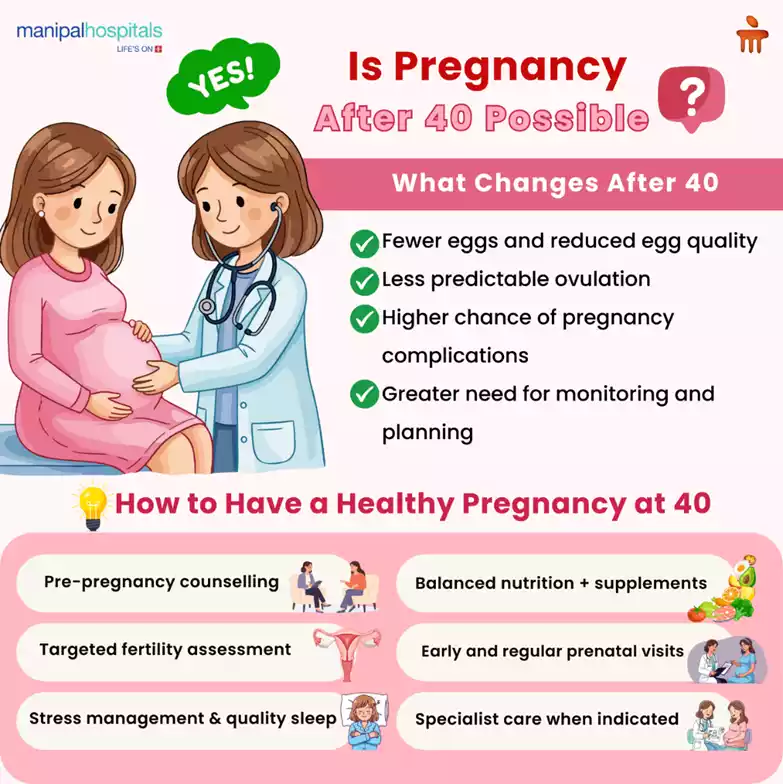
Fertility declines with age because the number and quality of eggs reduce over time. Ovarian reserve falls gradually and accelerates in the late thirties. The menstrual cycle may get more irregular as ovulation patterns shift. These are normal, expected changes and not a reflection of lifestyle or womanhood. They just change the timeline and strategies you and your doctor may use when planning for pregnancy after 40 years.
With increased age comes a heightened risk for complications in pregnancy, such as gestational diabetes, high blood pressure while pregnant, and certain chromosomal abnormalities in the foetus. Knowing this will help you to be prepared and to choose monitoring that reduces the risks for you and your baby.
Understanding the Chances: Realistic Expectations
It provides realistic expectations of the chances of pregnancy after 40. The chances of natural conception decrease as ovarian reserve declines. Rates of conception per menstrual cycle are lower than in younger years. It does not mean it is impossible; it does mean it might take more time, planning, and often medical support.
If you are wondering about pregnancy after 40, remember that individual factors such as previous pregnancies, overall health, body weight, smoking status, and underlying medical conditions all influence outcomes. A frank conversation with a fertility specialist will give you the clearest picture of your situation.
How to Assess Fertility After 40
If you are planning for pregnancy after 40, start with a few straightforward assessments:
-
Medical history and review of prior pregnancies or fertility attempts.
-
A blood test called AMH is used to estimate ovarian reserve.
-
Day-3 hormone levels, including FSH and estradiol, when appropriate.
-
A pelvic ultrasound to look at antral follicle count and reproductive anatomy.
-
Screening for thyroid and metabolic conditions that affect fertility.
These tests do not predict everything, but they guide realistic planning and help advise whether to try naturally, proceed with fertility treatment, or consider other options.
Fertility Options that Improve Success
When natural attempts do not succeed in the time frame you and your doctor set, several fertility options can help. Assisted reproduction, such as in vitro fertilisation, can increase the chances of pregnancy after 40, especially when timed and tailored correctly. In some cases, using donor eggs offers the highest success rates because egg quality plays a major role in implantation and a healthy pregnancy.
Other supportive options include ovarian stimulation protocols, IVI, IVF with careful embryo selection, and preimplantation genetic testing when appropriate. Your fertility team will explain benefits, risks, and likely success rates so you can make informed choices.
Preparing Your Body: Steps for Success
Preparing well improves outcomes and supports how to have a healthy pregnancy at 40. Consider the following practical steps:
-
Optimise your weight: even modest weight loss improves fertility and reduces pregnancy complications.
-
Stop smoking and limit alcohol. Both lower fertility and raise complication risks.
-
Control chronic conditions: effective control of diabetes, blood pressure, and thyroid disorders matters.
-
Start folic acid and review other supplements with your clinician. Some vitamins and minerals support early pregnancy development.
-
Move regularly and build strength gently; exercise improves metabolic health and reduces stress.
-
Check immunisations and address infections before conception when possible.
-
Change the medications accordingly while planning pregnancy.
These measures raise your overall health and create a stronger foundation for conception and pregnancy.
Emotional and Practical Support
Trying for pregnancy after forty can bring a mix of hope, frustration, and practical concerns. Talking with a counsellor or joining a support group helps many women maintain resilience. Practical planning, such as workplace discussions, childcare arrangements, and family support, can ease stress and let you focus on health and treatment if needed.
Common Tests, Timeline and What They Tell You
Testing for fertility may involve several tests that must occur at different stages in a bid to gather a comprehensive overview of fertility status. The below will clarify when these tests and stages must occur and what insight they give to guide further actions and decision-making based on fertility status.
|
Test / Step |
When To Do It |
What It Shows |
|
AMH (blood) |
Before trying or early in assessment |
Estimate of ovarian reserve |
|
Day 3 FSH/Estradiol |
Early cycle if AMH unclear |
Ovarian response indicator |
|
Pelvic ultrasound (antral follicle count) |
During assessment |
Number of recruitable follicles |
|
Thyroid and metabolic screen |
At baseline |
Conditions that affect fertility and pregnancy |
|
Semen analysis (partner) |
With initial workup |
Male factor fertility information |
|
Fertility treatment (IVF/IVI) |
After natural attempts or per plan |
Directly increases chances; may use own or donor eggs |
Pregnancy Risks and How They are Managed
With pregnancy after 40 years, some risks increase, but modern prenatal care mitigates many concerns:
-
Gestational diabetes is more common and is managed with monitoring, diet, and medication when needed.
-
High blood pressure disorders receive close surveillance and timely treatment.
-
Chromosomal screening and diagnostic testing are offered for informed choices.
-
Careful fetal surveillance, including growth scans, helps catch and manage problems early.
A proactive team approach at a top fertility hospital in Mysuru with experience in higher-risk pregnancies improves safety for mother and baby.
Labour, Delivery and Postnatal Considerations
Delivery plans for pregnancy after 40 depend on obstetric history, current pregnancy course, and fetal well-being. Many women have straightforward vaginal births. Others may need a planned cesarean delivery for specific indications. Postnatal care includes monitoring recovery, breastfeeding support, and attention to emotional health. Older birthing parents sometimes need extra time for recovery, and planning ahead helps ensure support is in place.
How To Have A Healthy Pregnancy At 40: Clear Steps
-
Get preconception counseling and optimise chronic conditions.
-
Ensure proper nutrition and start taking folic acid before conception.
-
Follow the recommended screening and diagnostic testing when advised.
-
Maintain regular prenatal visits and ask for a specialist referral if needed.
-
Prioritise sleep, stress reduction, and moderate exercise during pregnancy.
Following these steps improves outcomes and makes pregnancy safer and more manageable.
Conclusion
Yes, it is possible to become pregnant at 40. While it may involve some planning, many women do have healthy pregnancies. Successful planning, proper assessment, and professional consultation are crucial factors. Schedule an appointment with our reproduction medicine experts at Manipal Hospital Mysore for counselling on your plans and strategy for a successful pregnancy at 40 or after 40.
FAQ's
Yes. Spontaneous conception can occur, although the probability per cycle is decreased. Collaborate with a provider to evaluate ovarian reserve and plan appropriately.
If you are under 35, the normal advice is one year; after 40, seek evaluation after 3 to 6 months of attempts or sooner based on your individual factors.
Genetic screening and diagnostic testing are available options to consider. Both can provide an idea about chromosomal risks and pregnancy choices.
It is considered a higher risk compared with younger ages, but with monitoring and management, most pregnancies can be safely handled.
Stopping smoking, optimizing weight, managing chronic conditions, and reducing alcohol intake improve fertility and pregnancy outcomes.
Share this article on:


.webp "Discomfort While Eating: Causes, Symptoms & Dysphagia Treatment")