5 Min Read
Urinary discomfort, although bothersome, does not gain serious attention from many people. The symptoms are either neglected until they get severe to the point of no return or are treated as a routine urine infection. While many cases are indeed simple UTIs, some symptoms point to a deeper concern, known as obstructive uropathy, a condition where urine flow is blocked somewhere along the urinary tract. When left unrecognised, this blockage can quietly strain the kidneys and lead to long-term damage.
Through this blog, a renowned urologist in Mysore explains what obstructive uropathy is, how it affects the urinary system, common obstructive uropathy causes, recognising obstructive uropathy symptoms, and the importance of knowing when to seek obstructive uropathy treatment. With timely medical attention, especially through specialised obstructive uropathy care in Mysore, most patients experience significant improvement and, in many cases, full recovery.
Synopsis
What Is Obstructive Uropathy?
Obstructive uropathy occurs when urine is unable to flow freely from the kidneys to the bladder or out of the body. This obstruction causes urine to back up, increasing pressure within the kidneys. Over time, this pressure can impair kidney function and, if ignored, may progress to chronic kidney disease.
However, when detected early and treated appropriately, outcomes are overwhelmingly positive. In fact, prompt intervention often prevents permanent kidney damage altogether.
Causes of Obstructive Uropathy
Understanding the root cause is the first step toward effective treatment. Obstructions can develop suddenly or build up gradually, depending on the underlying issue.
Common obstructive uropathy causes include:
- Kidney stones - One of the most frequent causes, especially when stones lodge in the ureters
-
Benign Prostatic Hyperplasia (BPH) - An enlarged prostate in older men that compresses the urethra
-
Tumours or cancers - Growths in or near the urinary tract, including the bladder or prostate
-
Scar tissue (strictures) - Narrowing of urinary passages following infection, injury, or surgery
-
Nerve-related bladder dysfunction - Often linked to spinal injuries or neurological conditions
-
Congenital abnormalities - Structural urinary tract issues present from birth
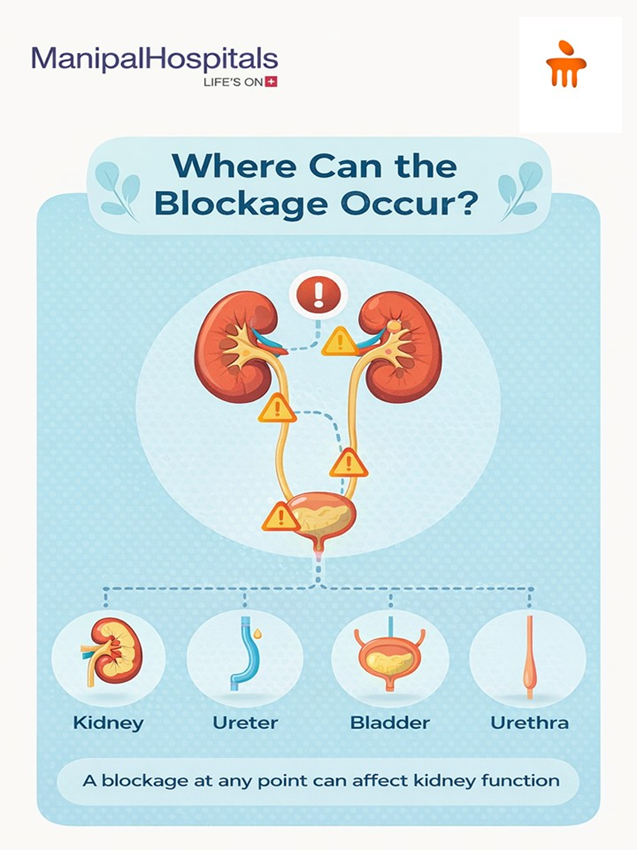
From the kidneys to the bladder, here is a simple visual representation of where the obstruction can occur:
Obstructive Uropathy Symptoms
Obstructive uropathy symptoms can vary depending on where the blockage is and how severe it has become. Some signs are obvious, while others develop quietly over time.
Common obstructive uropathy symptoms include:
-
Pain in the flank, abdomen, or lower back
-
Reduced urine output or difficulty passing urine
-
Frequent urges to urinate with little relief
-
Weak or interrupted urine stream
-
Blood-tinged or discoloured urine
-
Recurrent urinary tract infections
-
Nausea or vomiting during severe episodes
-
Fever and chills, especially if infection is present
-
Swelling of the legs or feet due to fluid retention
In long-standing cases, symptoms may be subtle and may include persistent fatigue, poor appetite, or a general feeling of unwellness.
How are the Obstructive Urological Problems Diagnosed?
Obstructive urological problems are typically diagnosed by combining a detailed symptom history, clinical evaluation, laboratory tests, and imaging tests to pinpoint the obstruction. Diagnostic approach may include:
-
Blood and urine tests to assess kidney function
-
Ultrasound for initial evaluation
-
CT or MRI scans for detailed anatomical insight
Patients diagnosed early often preserve normal kidney function, reinforcing the importance of seeking medical advice at the first sign of persistent urinary symptoms.
What are the Options for Obstructive Uropathy Treatment?
Obstructive uropathy treatment focuses on two priorities:
-
Immediate relief by relieving the blockage - this approach may involve urinary catheterisation to drain the bladder, followed by ureteral stent placement to bypass the obstruction and nephrostomy tube insertion for direct kidney drainage in severe cases
-
Addressing its underlying cause - this approach involves the use of medications, especially for prostate enlargement, minimally invasive stone removal procedures, and surgical correction for strictures, tumours, or congenital abnormalities
Care Essentials: Do’s and Don’ts That Help Manage Obstructive Uropathies
Managing obstructive uropathy doesn’t stop with treatment. Every day, care choices matter.
|
Do’s |
Don’ts |
|
Stay adequately hydrated unless advised otherwise |
Ignore ongoing urinary discomfort or pain |
|
Follow your treatment plan and attend follow-ups |
Self-medicate, particularly with painkillers |
|
Monitor and report new or worsening symptoms |
Delay medical evaluation |
|
Maintain a kidney-friendly diet when recommended |
Frequently consume processed foods and carbonated drinks or foods with high salt or sugar content |
|
Schedule regular kidney function checks. |
Skip follow-up appointments |
Conclusion
Obstructive uropathy requires timely, coordinated care. If you’re experiencing persistent urinary symptoms, don’t wait. Consult our expert urology specialists at Manipal Hospital Mysore today and take the first step toward recovery.
With advanced diagnostics, minimally invasive interventions, and a strong focus on patient comfort, Manipal Hospital Mysore delivers trusted obstructive uropathy care in Mysore.
FAQ's
With early diagnosis and appropriate treatment, most patients recover fully or maintain good kidney function long-term.
Obstructive uropathy is a physical blockage, while UTI is an infection. Antibiotics are effective in treating the infection but they are not resolving an obstruction.
Yes. Depending on the location of the blockage, one or both kidneys may be affected.
Not always. Many cases respond well to medications or minimally invasive procedures.
Yes. Some children are born with structural urinary tract abnormalities that may require early intervention.
Share this article on: