9 Min Read
Some babies take longer than usual to attain neck stability and hold their head up, or fail to move their limbs. Even as they start to move eventually, their movements might seem weak and unsteady. This happens when the child is affected by hypotonia.
This article brings a detailed understanding of what hypotonia is, what the early identification signs of hypotonia are, when to seek medical help for hypotonia, and what kind of support may help children with hypotonia grow with confidence.
Synopsis
- What is Hypotonia?
- Understanding Early Signs of Hypotonia
- Causes of Hypotonia in Children
- Symptoms of Hypotonia
- How Hypotonia Affects Daily Life?
- Diagnosis and Evaluation
- Why Early Checks Matter
- Treatment Options Available
- Living with Hypotonia
- How to Support a Child at Home?
- When to Seek Guidance?
- What Families Can Expect?
- A Short Note
What is Hypotonia?
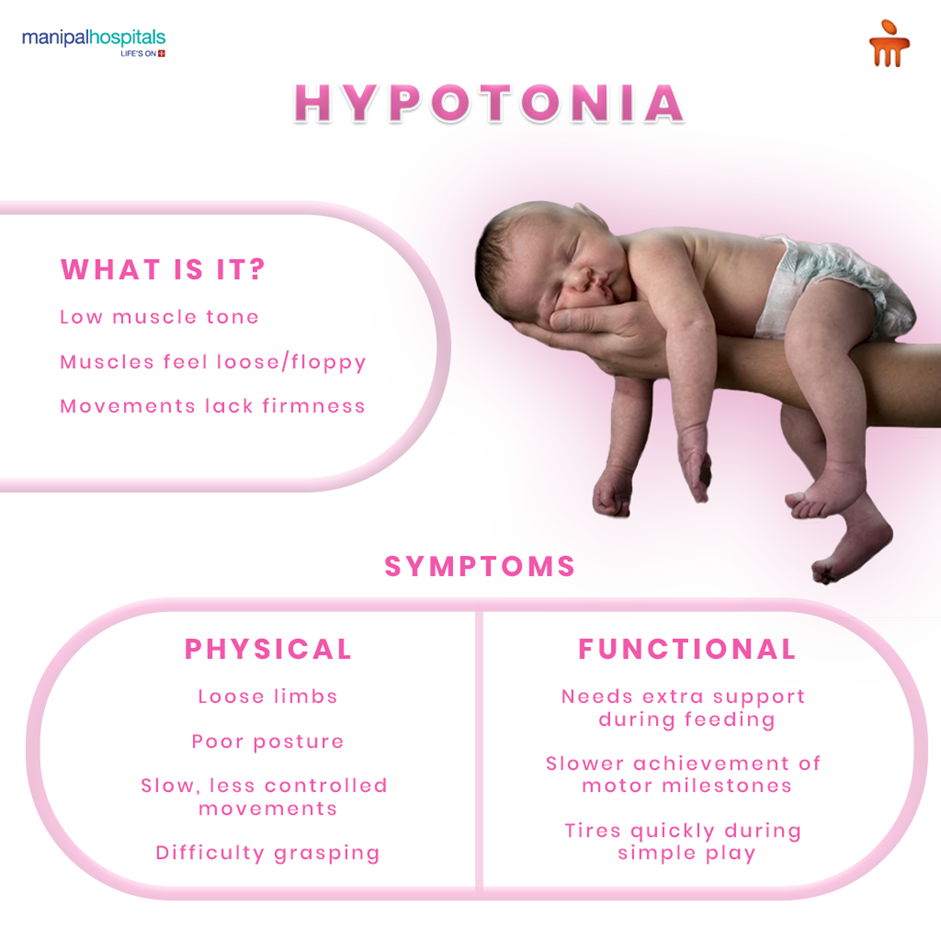
Hypotonia, also called "floppy infant syndrome", describes a condition where a child’s muscles feel looser than usual or lack firmness. It may either be present at birth - neonatal hypotonia or show up during infancy (within the first year) - infantile hypotonia. Some children with this condition move more slowly or need more time to manage everyday movements, prompting parents to seek medical help at the leading paediatric hospital in Mysuru.
Understanding Early Signs of Hypotonia
Many families notice early signs during everyday routines. These signs can differ from child to child, but a few patterns appear often. Some children have trouble holding up their heads. Others may feel floppy when lifted. These simple observations encourage families to speak with a medical team. Common early indicators include:
-
Rolling, sitting, or crawling may take more time
-
Feeding may feel challenging as holding the posture becomes tiring
-
Joints may look more flexible than usual
-
Movements can appear slower or less controlled
These indicators do not confirm hypotonia, yet they guide people towards further checks. Patterns such as neonatal hypotonia are noted quite early, while infantile hypotonia becomes clearer as development unfolds through the first months.
Causes of Hypotonia in Children
There are several causes of hypotonia in children. Sometimes the cause appears at birth. Other times it develops during childhood. Many situations have explanations that remain clear, but a few might require more exploration.
-
Congenital Factors: Some children are born with conditions that influence how their muscles respond. When this happens, the pattern is often noticed as neonatal hypotonia. Babies with this early presentation show signs within days or weeks of life. These outcomes follow developmental pathways that begin during pregnancy.
-
Developmental Factors: There are also situations where the body works differently as the child grows. These patterns may progress slowly. They might become obvious when the child reaches new milestones. Infantile hypotonia often fits into this category. Infants may struggle slightly with stability or coordination, and parents sense that something feels unusual.
-
Environmental Influences: There are instances where external factors affect the body’s responses. Illnesses, nutritional gaps, or other short-term concerns may contribute. These influences can make the child appear less firm or less steady. With time and supportive care, many of these situations improve.
-
Genetic Pathways: Some causes follow family patterns. Certain genetic conditions may shape the way the body holds posture or manages movement. This is not always the case, yet it is one part of the broader picture. Families are encouraged to seek guidance if they notice repeated patterns among close relatives.
Symptoms of Hypotonia
Symptoms of hypotonia are variable, ranging from very subtle to obvious. Since the symptoms first appear during early growth, they are often noticed by parents of other family members during feeding times, play sessions, and interactions. The symptoms are classified as follows:
Physical Signs
-
Delayed head control
-
Arms and legs feeling looser
-
Difficulty maintaining posture
-
Challenges with grasping objects
-
Lower stability during simple movements
Children with neonatal hypotonia often show these symptoms at birth. Those with infantile hypotonia may show them later, but still early in life. Watching for these patterns helps parents decide when to seek a check.
Functional Signs
Symptoms also appear during daily routines. Dressing the child may feel different. Holding the child upright may require more support. Reaching for toys might take extra effort. Crawling and sitting require more time, which may raise concerns. These simple observations help guide families toward supportive resources.
How Hypotonia Affects Daily Life?
Children with Hypotonia navigate the world at their own pace. It is important for parents and primary caregivers to understand the impact hypotonia has on their child's routine activities and make suitable adjustments.
-
Impact on Mobility: Mobility might develop more slowly. Sitting may take longer. Rolling over might seem difficult. Crawling, pulling to stand, and walking may appear delayed. This does not define the child’s ability; it only means they grow through a different timeline.
-
Impact on Social Interactions: Children with hypotonia may prefer shorter play periods because movements tire them sooner. They may need more breaks during activity. Interaction remains joyful and meaningful, although they might adjust their pace. Parents often find creative ways to keep play lively without overwhelming the child.
-
Impact on Daily Activities: Simple activities such as holding a cup, reaching for food, or climbing on a sofa may require more time. The child often improves with practice and steady support. Families learn to create routines that encourage growth at a comfortable pace.
Diagnosis and Evaluation
Evaluation for Hypotonia starts with observation. Medical teams look at how the child moves, holds posture, and responds during simple tasks. There is no single test that identifies hypotonia every time. Instead, assessment includes various small steps.
What the Evaluation May Include
-
Observing the child during feeding and play
-
Checking posture and flexibility
-
Reviewing early milestones
-
Assessing the pace of movement development
-
Discussing birth history and family background
Diagnosing patterns such as neonatal hypotonia or infantile hypotonia requires attention to timing. Early signs point towards the neonatal pattern, while later signs lean towards the infantile pattern.
Why Early Checks Matter
Early checks help families understand what support may benefit the child. They also guide decisions about therapies or other interventions. When people act early, the child receives time to grow with more comfort and stability.
Treatment Options Available
Treatment for hypotonia focuses on helping children build strength, coordination, and confidence. It does not follow a single plan because each child’s needs differ. Care teams usually develop individual pathways that feel realistic for families.
-
Therapy-Based Support: Therapies often play a central part in supporting children. Sessions often involve small movements that help a child find better balance and control. They use their arms and legs in steady, repeated ways that slowly build confidence. Families also learn a few easy activities they can try at home during normal daily moments
-
Home-Based Activities: Caregivers play an important role in helping children progress. Simple routines such as gentle stretching, playful reaching activities, or supported sitting can help. These do not replace therapy but contribute nicely to daily progress.
-
Addressing Underlying Causes: When Hypotonia is connected to another condition, supporting that underlying factor becomes part of the plan. If the cause is nutritional, guidance is offered. If illness contributes, recovery often leads to improvement. When genetic concerns are present, families are given clearer pathways for support.
Living with Hypotonia
Life with hypotonia brings both challenges and meaningful steps forward. Families often learn new ways to encourage progress. Each milestone becomes a moment of celebration. There is no fixed timeline, and children develop through varied experiences.
-
Role of Caregivers: Caregivers often adapt routines to help the child grow steadily. They learn supportive positions for feeding and create playful moments that strengthen the child’s movements. They observe small improvements that guide further steps.
-
Building Confidence Over Time: Children with patterns such as neonatal hypotonia or infantile hypotonia can gain confidence through regular practice. They learn that movement becomes easier through repetition. Families watch these changes and often feel reassured as progress becomes visible.
How to Support a Child at Home?
There are simple steps families can try at home. These steps do not replace therapy but support daily growth. They create an environment where the child can practise movements safely.
Simple, Supportive Ideas
-
Encourage short play sessions that involve reaching
-
Allow the child to explore safe spaces on the floor
-
Support sitting with cushions placed nearby
-
Offer toys that invite grasping and holding
-
Include gentle pushing or pulling games
These small steps help children learn movement patterns in natural ways. Families often combine home activities with professional guidance for better outcomes.
When to Seek Guidance?
Parents often wonder when they should speak with a healthcare team. It may be time to seek guidance when everyday tasks become noticeably harder for the child. Struggles with holding the head, moving limbs, or reaching for objects may raise questions. Delays in major milestones also prompt a check.
What Families Can Expect?
Families can expect clear explanations and supportive conversations. They can ask questions freely, discuss early signs and talk about patterns that seem connected to neonatal hypotonia or infantile hypotonia. These discussions help families understand what steps to take next.
A Short Note
Children with hypotonia often make progress in meaningful ways. Some improve steadily, while others move in small steps. Both paths hold value. Families learn to appreciate the child’s pace and celebrate achievements that appear through patient support.
If you feel unsure about your child’s movements, you can reach out to the paediatrics team at Manipal Hospital Mysuru. They offer conversations, assessments, and guidance that help families understand what their child may need during early development.
FAQ's
Hypotonia means a child’s muscles feel looser than usual, so some movements take more time. Parents often notice this during the early months when certain milestones come later. Every child is different, so calm observation helps people understand what they are seeing.
Some families notice signs during infancy, especially in patterns like neonatal Hypotonia. Babies might feel less firm when lifted or may need more time to hold their head steady. These early moments help parents decide when to seek a check.
Assessment usually involves watching how the child moves, holds posture, and responds during simple activities. Teams may ask about birth details and daily routines to build a clearer picture. There is no single test, so evaluation happens through small steps.
Many children with hypotonia show progress through regular support and simple therapy. Activities that encourage balance and control help them grow at a comfortable pace. Families often notice gradual changes that feel meaningful.
If parents notice unsteady body movements, delay in their child's milestones, such as failure to attain neck stability, head control, or body firmness, or if the child experiences difficulty in managing everyday tasks, they can consider consulting an expert. Early guidance helps families understand the next steps.
Share this article on:


.webp "Discomfort While Eating: Causes, Symptoms & Dysphagia Treatment")