8 Min Read
A blow to the head can be frightening, but what’s even more concerning is that even an injury that looks minor on the outside may affect the brain inside. This type of injury is called a Traumatic Brain Injury (TBI), and it can range from a short-lived concussion to a serious condition that changes a person’s life. Knowing the warning signs and acting early can make a meaningful difference in recovery, not just physically, but emotionally, too.
Read the blog to know more about traumatic brain injury, where a renowned neurosurgeon in Mysuru explains traumatic brain injury symptoms, what the options available for traumatic brain injury treatment are, and how to access traumatic brain injury emergency care in Mysore.
Synopsis
What is a Traumatic Brain Injury?
A traumatic brain injury happens when an external force, such as a fall, road accident, sports injury, or blow to the head, causes a sudden impact in the form of a sudden jolt, direct hit, or penetrating injury and disrupts the brain’s normal function.
TBIs are usually grouped by severity:
-
Mild TBI (Concussion): This is the most common form. A person may feel dazed or confused or develop a headache, even without losing consciousness. Mild TBI is usually transient or temporary and resolves with rest and proper care. Most people recover completely without any complications.
-
Moderate TBI: In this type of injury, the symptoms last longer and may include a period of unconsciousness, memory difficulties, or noticeable changes in thinking and behaviour.
-
Severe TBI: This type of injury is a medical emergency. It may involve prolonged unconsciousness or coma and can affect movement, speech, memory, emotions, and independence over the long term.
Traumatic Brain Injury Symptoms
Not all symptoms show up immediately. Some symptoms may appear hours or even days after the injury. Symptoms can also vary based on the injury's severity and location. That’s why it’s important to be aware of the traumatic brain injury symptoms, especially if you or someone you know has recently experienced head trauma.
Common symptoms include:
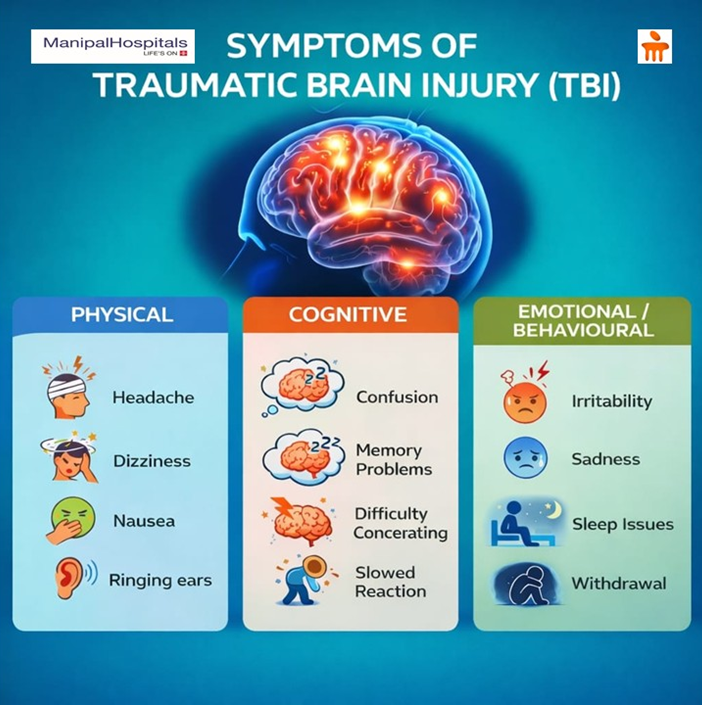
When to seek emergency care for TBI
Never underestimate any head injury. It is recommended that every head injury, irrespective of how minor it appears, should be brought to medical attention.
Although some injuries may not show any external signs of concern, they demand immediate medical help. Seek urgent medical care if you notice:
-
Loss of consciousness, even briefly
-
A headache that keeps getting worse
-
Repeated vomiting
-
Vision problems, double vision or blurred vision
-
Difficulty waking up or extreme drowsiness
-
Seizures or sudden weakness in arms or legs
-
Confusion, agitation, or unusual behaviour
If you or a loved one notices any worrying symptoms following head trauma, it is highly recommended to consult an expert neurologist or a neurosurgeon for proper medical evaluation and treatment.
Time is a defining factor in the outcomes of head injury treatment. Early treatment, especially in the first few hours, can reduce complications and improve long-term recovery.
Traumatic Brain Injury Treatment
Treatment for TBI isn’t one-size-fits-all. It’s carefully planned based on how severe the injury is and how the person is affected.
Care may include:
-
Emergency stabilisation to protect the brain and vital functions
-
Medications to control pain, nausea, swelling, or seizures
-
Surgery, if needed, to relieve pressure or repair damage
-
Rehabilitation, involving physiotherapy, speech therapy, occupational therapy, and psychological support
Conclusion
Any head injury can lead to a traumatic brain injury; hence, timely medical care is essential. medical care. If you or someone you know is experiencing symptoms or has concerns after a head injury, book an appointment with our expert neurologist and neurosurgeon at Manipal Hospital Mysore today. Our focus goes beyond treating the injury to helping patients regain confidence, independence, and quality of life.
FAQ's
Yes. While most mild TBIs heal well, some people may experience lingering symptoms such as headaches, dizziness, or difficulty concentrating, often called post-concussion syndrome. Proper rest and follow-up care are important.
Doctors assess symptoms, perform a neurological examination, and may recommend CT scans or MRI scans to check for bleeding, swelling, or structural damage.
Recovery varies widely. Mild injuries may improve within days or weeks, while moderate to severe TBIs can take months or longer, often with rehabilitation support.
Yes. Children’s developing brains and older adults’ higher risk of falls mean symptoms can present differently. Extra caution and early assessment are especially important in these age groups.
Many TBIs are preventable. Wearing helmets, using seatbelts, preventing falls at home, and avoiding distracted or impaired driving can significantly reduce risk.
Share this article on:


.webp "Discomfort While Eating: Causes, Symptoms & Dysphagia Treatment")