5 Min Read
How far do you think this statement is true?
Read our latest blog to understand the link between food choices and kidney health. An experienced kidney doctor in Mysore decodes how certain foods may adversely affect kidney health, what the signs are that indicate that the food you are eating is harming your kidneys, and when you should seek medical help for these symptoms.
Synopsis
Why Diet Matters for Kidney Health
The kidneys continuously filter blood, remove waste products, regulate fluid levels, and maintain electrolyte balance. Daily food choices directly influence the efficiency of these functions. An unhealthy diet can increase the workload on the kidneys and, over time, contribute to declining function.
-
Excess salt promotes fluid retention and raises blood pressure, a major risk factor for kidney damage.
-
Diets rich in processed foods often contain additives and preservatives that may burden renal filtration.
-
High sugar intake increases the likelihood of diabetes, one of the leading causes of chronic kidney disease.
-
Very high protein consumption can intensify filtration demands, particularly in individuals with limited kidney reserve.
-
Abnormal intake of potassium and phosphorus becomes harder to manage when kidney function declines.
-
Consistently poor dietary habits may accelerate existing kidney problems and increase the risk of complications.
Adopting balanced, mindful eating patterns supports kidney performance and plays a crucial role in long-term renal protection.
Dietary Choices That Can Increase Kidney Risk
Kidney function can be influenced significantly by long-standing dietary practices. Repeated exposure to high levels of salt, sugar, preservatives, and certain minerals may gradually impair the kidneys’ ability to maintain fluid and electrolyte balance. While occasional indulgence is usually tolerated in healthy individuals, persistent unhealthy patterns can accelerate damage, particularly among those with diabetes, hypertension, or reduced renal reserve.
Awareness of these risks allows individuals to take preventive steps and supports better long-term preservation of kidney function.
|
Category |
Examples |
What to do Instead |
|
Excess salt or sodium |
Chips, instant noodles, pickles, canned soups, and sauces. |
Replace with herbs/spices for flavour instead. Especially important for patients with high blood pressure or kidney disease. |
|
Processed & junk foods |
Fried or fast food, sausages, salami, |
Choose fresh, home-cooked meals |
|
|
frozen meals, and bakery goods. |
|
|
High in potassium |
Bananas, potatoes, tomatoes, avocados, spinach |
Safe in moderation, but always consult a dietitian for potassium limits. |
|
Excess sugary or aerated drinks |
Sodas, energy drinks, desserts, and sweetened syrups |
Opt for water, fruit, or unsweetened options. |
|
Excess red meat & animal protein |
Beef, pork, lamb, and large portions of chicken |
Eat moderate portions; include plant-based proteins (beans, lentils, tofu). |
|
Carbonated & cola drinks |
Cola, soft drinks with phosphoric acid |
Limit or avoid cola drinks; replace them with water, coconut water, or fresh juices. |
Better Food Choices for Kidney Health
Making simple food substitutions can significantly reduce the burden of excess salt, sugar, and additives on the kidneys while still preserving taste and adequate nutrition. Over time, these mindful choices help maintain stable blood pressure, improve metabolic balance, and lower the risk of kidney damage. Rather than following extreme or restrictive diets, gradual and sustainable adjustments are easier to maintain and often provide better long-term benefits.
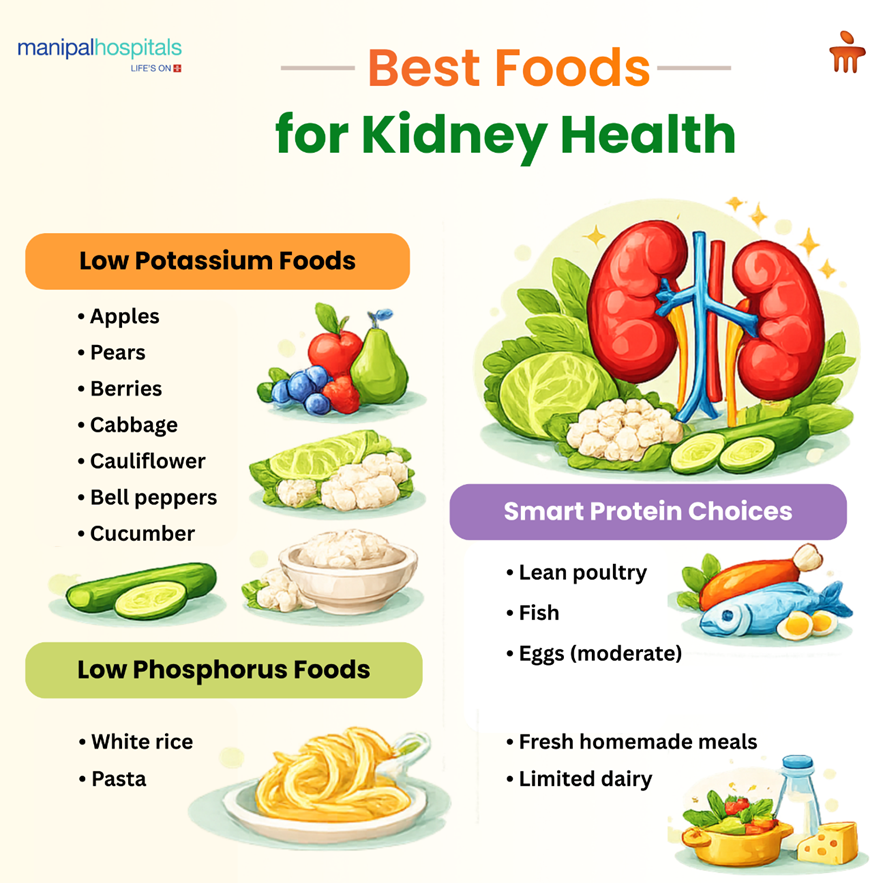
Sustainable swaps are usually more effective and practical than strict elimination plans.
Warning Signs Your Diet May Be Affecting Your Kidneys
Diet-related kidney stress can develop gradually. Early symptoms are sometimes subtle, but recognising them allows timely evaluation and prevention of progression.
-
Changes in urine frequency or quantity
-
Swelling in the feet, ankles, or around the eyes
-
Persistent fatigue or reduced stamina
-
Nausea or poor appetite
-
Unexplained back or flank discomfort
-
Foamy or unusually coloured urine
Medical assessment is essential if these signs appear.
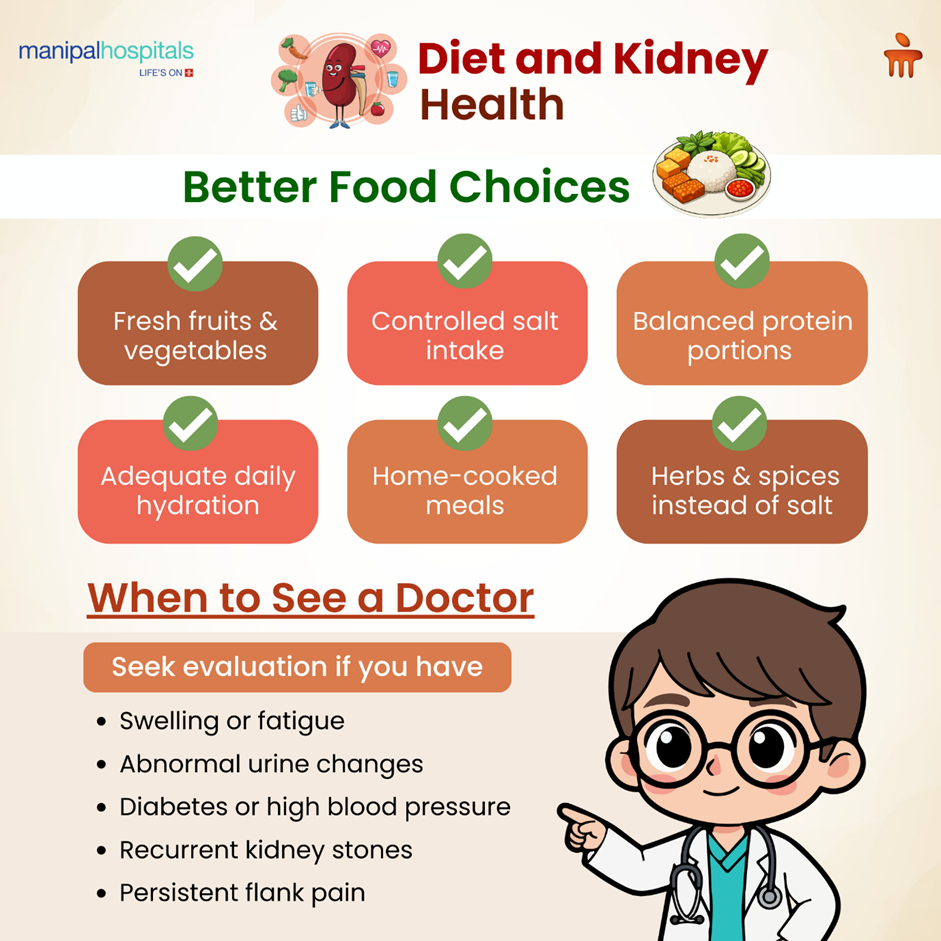
When Should You See a Doctor?
Although dietary modifications can play a significant role in protecting kidney function, they may not be sufficient when symptoms or established risk factors are present. Kidney disease often progresses silently, and early medical evaluation allows detection of reversible problems, timely treatment, and prevention of long-term damage.
You should seek medical attention if you notice:
-
Swelling involving the face, ankles, feet, or around the eyes
-
Ongoing fatigue, low energy, or unexplained weakness
-
Changes in urination pattern, including frequency, volume, or appearance
-
A known history of diabetes or high blood pressure
-
Recurrent kidney stones or previous kidney abnormalities
-
Persistent back or flank discomfort
Early consultation with kidney specialists can help identify dietary contributors, evaluate renal function, and provide customised kidney-friendly diet advice for safer, long-term management.
Conclusion
Your kidneys work hard to keep your body healthy, and the foods you eat can help or hurt their function. Our nephrology specialists at Manipal Hospital Mysuru offer comprehensive evaluations, personalised nutrition counselling, and complete kidney care. Visit Manipal Hospitals Mysore Nephrology Department today!
FAQ's
Foods high in sodium, sugar, unhealthy fats, and large amounts of animal protein can be harmful to your kidneys. Processed food and aerated beverages are bad for your kidneys.
Excess potassium may be dangerous for people with kidney disease, but it is usually safe when consumed in moderation by individuals who have normal kidney function.
Eating a moderate amount of spicy food is generally safe. However, excess spicy food can cause dehydration or stomach problems for some people, which might indirectly affect kidney health.
A kidney-friendly diet focuses on low-salt foods, balanced protein, adequate hydration, and fewer processed items. Seeking kidney-friendly diet advice in Mysuru helps tailor plans to individual needs.
A balanced diet low in processed foods and rich in fresh, natural choices can significantly reduce the risk of kidney disease and help maintain healthy kidney function over time.
Share this article on:


.webp "Discomfort While Eating: Causes, Symptoms & Dysphagia Treatment")