8 Min Read
A brain blockage, medically referred to as an ischaemic stroke, is a serious medical emergency that occurs when blood flow to a part of the brain is obstructed. This interruption prevents nutrients and oxygen from reaching brain tissue, leading to rapid damage to brain cells. If untreated, a brain blockage can cause permanent disability or even death. Among all types of strokes, ischaemic strokes account for nearly 80–85% of cases worldwide. The condition occurs when a blood clot blocks an artery supplying blood to the brain. Understanding the ischaemic stroke causes, identifying blockage in brain symptoms, and seeking immediate care are crucial steps in preventing long-term complications.
Prompt medical attention plays a decisive role in recovery. When treated quickly, specialised ischaemic stroke treatment can restore blood flow and reduce brain damage. Early recognition of symptoms and access to stroke emergency treatment in Mysore or any nearby emergency with a stroke care facility can dramatically improve survival and recovery outcomes.
This blog, by an experienced neurologist in Mysuru, explains how to recognise a brain blockage, explores the ischaemic stroke reasons, discusses treatment approaches, and outlines why early intervention is critical.
Synopsis
What Is a Brain Blockage?
A brain blockage occurs when a blood clot blocks an artery that supplies blood to a part of the brain. When the brain does not receive enough oxygen-rich blood, brain cells may begin to die within minutes. Ischaemic stroke is the most common type of stroke worldwide.
Two main types of blockages can cause an ischaemic stroke:
-
Thrombotic stroke: A thrombotic stroke happens when a blood forms with in a artery that supply to brain
-
Embolic stroke: This happens when a clot forms somewhere else in the body, usually in the heart, and moves through the bloodstream until it blocks a brain artery.
Both types can produce sudden in brain symptoms, such as weakness on one side of the body or difficulty speaking. Immediate medical intervention and appropriate ischemic stroke treatment are critical to restore blood flow and limit neurological damage.
Stroke Symptoms
Recognising Stroke Symptoms early can make a life-saving difference. Stroke symptoms often appear suddenly and worsen rapidly.
Some of the most common signs include:
-
Sudden weakness or numbness: One side of the body may become weak or paralysed, especially the face, arm, or leg.
-
Difficulty speaking or understanding speech: A person may have trouble saying things clearly or understanding what other people are saying.
-
Vision disturbances: You may have blurry or double vision, or you may lose vision in one or both eyes.
-
Severe headache: Although more common in haemorrhagic strokes, some people with a brain blockage may experience a sudden headache.
-
Loss of balance or coordination: Walking may become difficult due to dizziness or instability.
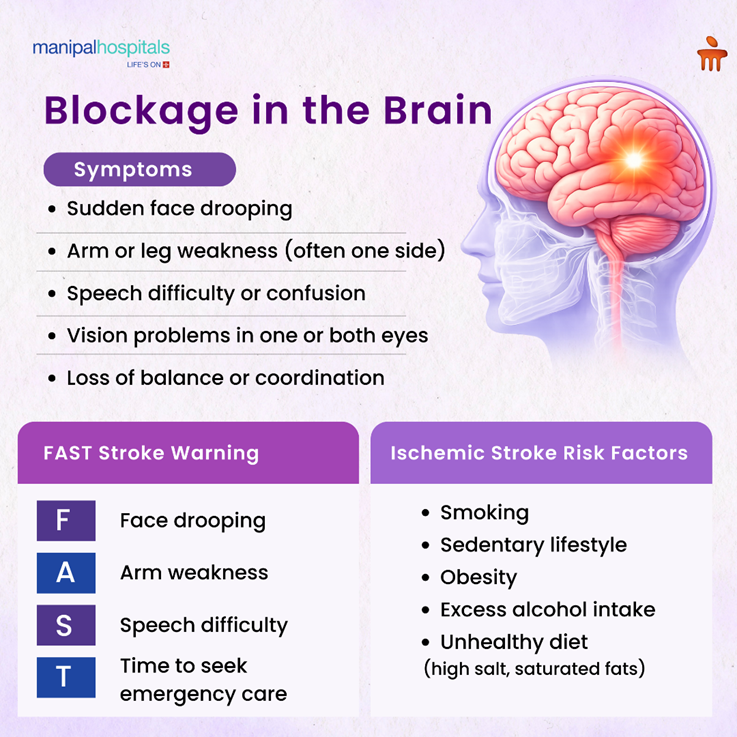
Healthcare professionals often use the FAST method to recognise stroke symptoms:
-
F – Face drooping
-
A – Arm weakness
-
S – Speech difficulty
-
T – Time to seek medical help
Any appearance of these Stroke Symptoms requires immediate medical attention and urgent Stroke emergency treatment in Mysore or the nearest hospital with stroke care facility.
Ischemic Stroke Causes
Understanding ischemic stroke causes helps identify individuals at higher risk and allows early preventive care. Several medical conditions contribute to the formation of clots that lead to a brain blockage.
-
Atherosclerosis: Fatty deposits can build up in the arteries over time. These plaques narrow the blood vessels and increase the chance of blood clot formation.
-
Heart Conditions: Atrial fibrillation and certain heart problems can disrupt normal blood flow and lead to clot formation. These clots may travel to the brain and block an artery.
-
High Blood Pressure: Hypertension damages blood vessels over time and significantly increases the risk of stroke.
-
Diabetes: high blood sugar damages blood vessels and accelerates plaque build-up.
-
High Cholesterol: Excess cholesterol contributes to plaque build-up in the arteries, which is one of the major ischemic stroke causes.
Managing these health conditions plays very important role in reducing the risk of brain blockage.
Ischemic Stroke Reasons
While medical conditions play major role, lifestyle habits also contribute to the ischemic stroke reasons seen in many patients.
-
Smoking: Smoking impairs blood vessels and boosts the likelihood of blood clots.
-
Sedentary Lifestyle: Not getting enough exercise on a regular basis can lead to obesity, high blood pressure, and heart disease.
-
Obesity: Being overweight raises the chances of having high blood pressure, diabetes, and high cholesterol.
-
Unhealthy Diet: Diets high in salt, saturated fats, and processed foods are associated with several ischemic stroke causes.
-
Excessive Alcohol Consumption: Heavy alcohol intake raises blood pressure and increases the risk of stroke.
These lifestyle-related ischemic stroke reasons can often be modified through preventive measures and healthier habits.
Ischemic Stroke Treatment
Effective ischemic stroke treatment depends heavily on how quickly medical care is provided. Brain cells start to die within minutes after blood flow stops, so immediate intervention is critical.
-
Clot-Dissolving Medication: One of the main treatments is receiving drugs that break up blood clots. You have to receive these medicines within a specific time window after symptoms start for them to work.
-
Mechanical Thrombectomy: In certain cases, doctors may perform a procedure called mechanical thrombectomy, where specialised instruments are used to physically extract the clot from the blocked artery.
-
Supportive Medical Care: Patients often require monitoring in specialised stroke units. Blood pressure, oxygen levels, and heart function are carefully managed to prevent complications.
Rehabilitation
Recovery after a brain blockage often requires rehabilitation. Therapy may include:
-
Physiotherapy to regain strength and mobility
-
Speech therapy to improve communication
-
Occupational therapy to assist with daily activities
Early and appropriate ischaemic stroke treatment greatly improves the chances of recovery.
When Should You Seek Emergency Medical Help?
A brain blockage is a medical emergency and requires immediate treatment. Seek urgent medical care if you notice:
-
Sudden weakness or numbness in the face, arm, or leg
-
Difficulty speaking or understanding speech
-
Sudden vision problems in one or both eyes
-
Sudden severe headache with no known cause
-
Sudden onset difficulty in walking
If any of these symptoms appear, seek emergency medical help immediately or go to the nearest hospital. Quick access to stroke emergency treatment in Mysore can help reduce brain damage and improve recovery outcomes.
Conclusion
A brain blockage or ischaemic stroke is a life-threatening condition that requires immediate medical attention. Recognising Stroke Symptoms understanding ischemic stroke causes, and addressing the ischemic stroke reasons linked to lifestyle and medical conditions are essential steps in prevention. Timely ischemic stroke treatment can restore blood flow to the brain and significantly improve recovery outcomes. Access to specialised care, including Stroke emergency treatment in Mysore, plays a critical role in ensuring rapid diagnosis and intervention.
If you notice any signs of stroke in yourself or someone else, seek emergency medical care immediately. For expert neurological evaluation, advanced diagnostic services, and comprehensive stroke management, consult our best neurology specialists at Manipal Hospital Mysore.
FAQ's
When a blood clot blocks an artery supplying the brain, it interrupts blood flow and can cause an ischaemic stroke.
Some early symptoms of blockage in brain are sudden weakness on one side of the body, trouble speaking, vision problems, severe dizziness, and loss of balance.
Ischemic stroke treatment may involve clot-dissolving medicines or procedures like thrombectomy to remove the blockage and restore blood circulation to the brain.
Stroke is a time-sensitive condition. Getting immediate stroke emergency treatment in Mysore or at any nearby medical facility can help prevent permanent brain damage and improve survival chances.
Many cases can be prevented by managing risk factors like hypertension, diabetes, and high cholesterol. Adopting a healthy lifestyle is equally important.
Share this article on:


.webp "Discomfort While Eating: Causes, Symptoms & Dysphagia Treatment")