5 Min Read
Did you know that a random episode of dehydration or infection could suddenly affect your kidney health?
Any factors that cause a sudden decline in kidney function, typically over a few hours to days, are medically called acute kidney injury. This can happen to anyone, regardless of age. Every year, almost 13 million people around the world get acute kidney injury due to increased infections, chronic diseases, ageing populations, and medication-related kidney injury. Since kidneys help remove waste, balance electrolytes, and keep fluids in check, when they do not function properly, harmful toxins can build up and threaten your health.
Through this blog, a top kidney expert in Mysuru explains the causes of acute kidney injury, its types, symptoms, warning signs, how it is diagnosed and treated, and when to get help.
Synopsis
What is Acute Kidney Injury?
Acute kidney injury (AKI) is a clinical syndrome characterised by a sudden decline in kidney function. It arises from diverse conditions that reduce renal blood flow, directly damage kidney tissue, or obstruct urinary outflow. The kidneys are highly sensitive to changes in blood flow, oxygen levels, and toxins in the body. When these are disrupted, kidney cells can become injured quickly.
Clinically, AKI is classified into three major categories:
-
Pre-renal AKI: results from reduced blood supply to the kidneys, commonly due to dehydration, blood loss, or heart failure.
-
Intrinsic (renal) AKI: occurs when infections, toxins, drugs, or inflammation injure the kidney parenchyma.
-
Post-renal AKI: develops when urinary flow is blocked, for example, by stones, strictures, or prostatic enlargement.
Understanding the nature of acute kidney injury highlights the urgency of early medical evaluation to prevent complications and potential long-term renal impairment.
Causes and Risk Factors of Acute Kidney Injury
Acute kidney injury can develop from a variety of conditions that compromise renal perfusion, directly damage kidney tissue, or obstruct urinary drainage. Important causes and contributing factors include:
-
Severe dehydration, often resulting from vomiting, diarrhoea, or inadequate fluid intake
-
Sepsis and systemic infections, which impair blood supply and trigger inflammatory injury
-
Uncontrolled diabetes or hypertension, leading to chronic vascular damage
-
Nephrotoxic medications, including non-steroidal anti-inflammatory drugs, certain antibiotics, and radiographic contrast agents
-
Major surgery or trauma, which may reduce oxygen delivery to the kidneys
-
Urinary tract obstruction, such as calculi or prostatic enlargement
-
Chronic systemic illnesses that compromise effective circulation
Individuals at particularly high risk include older adults, critically ill patients, and those with pre-existing kidney disease. Recognising these factors enables earlier prevention, timely diagnosis, and more effective management of acute kidney injury.
Early Signs and Symptoms of Acute Kidney Injury
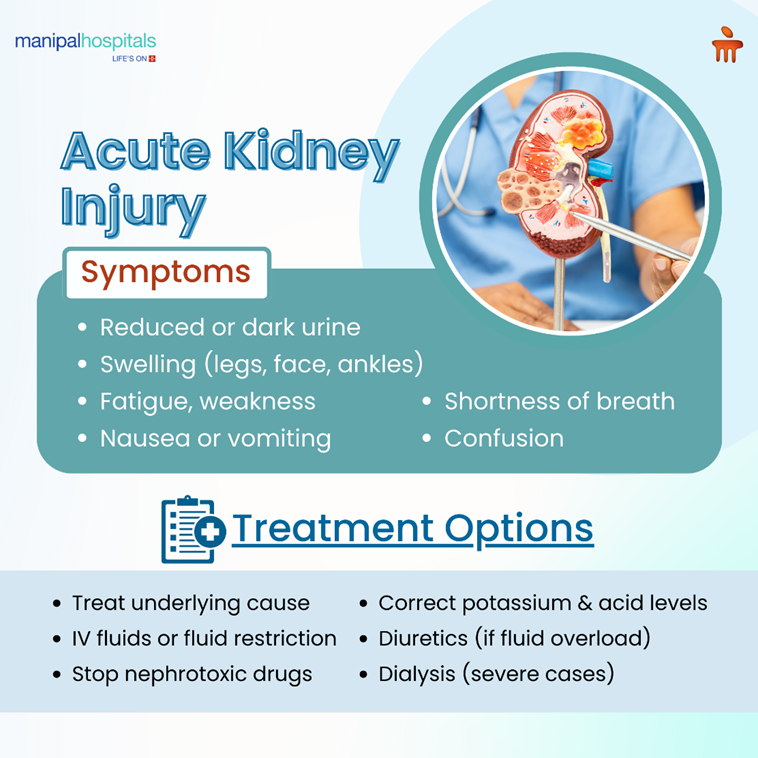
Early manifestations of acute kidney injury may be subtle, and diagnosis is often delayed until kidney function declines significantly. Common symptoms include:
-
Reduced or dark-coloured urine
-
Swelling of the legs, ankles, or face
-
Chest discomfort or flank pain
-
Persistent fatigue or weakness
-
Nausea, vomiting, or poor appetite
-
Shortness of breath
-
Confusion or difficulty concentrating
In advanced or severe cases, patients may develop seizures or altered consciousness.
Some individuals, particularly those who are hospitalised or critically ill, may not show obvious symptoms in the early stages. For this reason, regular blood and urine testing plays a vital role in the timely detection and prevention of complications.
How is Acute Kidney Injury Diagnosed?
AKI is diagnosed by combining your symptoms with a few easy tests that may include:
-
Blood and urine tests - to determine the creatinine levels in blood and the presence of proteins and other substances in the urine, which helps assess if the kidneys are filtering properly
-
Ultrasound and other imaging scans - to check for any obstructions or structural issues in the kidneys and urinary tract.
-
Electrolyte test - to assess sodium and potassium levels
How is Acute Kidney Injury Treated?
Acute kidney injury is treated by addressing the cause. The treatment is aimed at restoring blood flow to the kidneys, preventing further injury to the kidneys, and maintaining the overall balance of the body. The standard therapeutic approaches include:
-
Identifying and treating the cause
-
Treating the infections if any
-
Maintaining blood pressure and electrolyte levels
-
Clearing up urinary obstructions
-
Cessation or substitution of any medications contributing to AKI
-
Dialysis if the kidneys are severely affected and temporarily not able to function completely
-
Dietary care
When to Seek Medical Attention
You must seek urgent care if you experience any of the following:
-
A marked decrease in urine.
-
Swelling of your legs, ankles, or face.
-
Nausea, confusion, and/or shortness of breath that persists.
-
A recent severe infection/dehydration/major surgery.
Early medical evaluation can lead to a prompt diagnosis of acute kidney injury and initiation of appropriate medical treatment, increasing your chance for a full recovery.
Conclusion
Acute kidney injury needs prompt medical care to avert serious complications. Our Nephrology specialists at Manipal Hospital Mysore deliver evidence-based strategies, advanced AKI diagnosis, and care in Mysore.
FAQ's
Some of the early warning signs of acute kidney injury include difficulty breathing or dyspnoea, restlessness or anxiety, nausea, oedema, reduced urine production, and tiredness.
AKI is mostly diagnosed by detailed assessment of the symptoms and some blood tests to assess electrolytes, creatinine, and urea; urine tests to evaluate protein leakage; and ultrasound imaging to identify blockage or structural change.
Acute kidney injury treatment includes intravenous fluids, stopping nephrotoxic drugs, prompt infection control, and electrolyte correction. Severe cases may need dialysis, guided by the underlying cause and stage.
When AKI is detected early and treated appropriately, it is possible to reverse the condition.
Specialised nephrology hospitals in Mysore, such as Manipal Hospital Mysore, provide comprehensive acute kidney injury care, including advanced diagnostics, dialysis, and multidisciplinary expertise.
Share this article on: