6 Min Read
Winter is finally here—a festive season for some, and a dreaded flu season for others. While the cold months bring joy and celebrations, they also demand extra attention to winter health care. Well, it isn’t called ‘sweater weather’ without reason. The rhinovirus and influenza virus, which cause common cold and the flu, thrive in cold temperatures. So, if you consider stepping out without properly covering up, it would likely have you swapping your vacation plans for antihistamines and lots of bed rest. Following healthy tips for winter can go a long way in protecting your body during this season.
Synopsis
Types of winter-related illnesses
Dropping temperatures often make you more susceptible to infections, making winter care especially important. The most common infections and respiratory issues include:
-
Common cold: Characterized by symptoms such as a runny or clogged nose, sneezing, sore throat, cough, chest congestion, dull headache and low-grade fever, the common cold caused mainly by the rhinovirus, is one of the most frequent illnesses to strike during winter months. Although not as severe as the flu, the common cold, caused by the rhinovirus requires plenty of rest to recover. Without medication, they usually go away on their own in about a week. However, keeping yourself well-hydrated by drinking plenty of fluids, using saline rinses, decongestants, antihistamines and humidifiers are practical health tips for winter season that help relieve symptoms.
-
Flu: Caused by the influenza virus, the flu has similar symptoms to the common cold but typically harsher, often including fever, chills and body aches. Immunocompromised individuals living with chronic illnesses are often the most affected, as well as children under 5, pregnant women, obese individuals and those who are over 65 years old. While most people recover within 10 days even without medication, following healthy tips for winter such as home care, rest and hydration can speed recovery. Getting an annual flu vaccine is one of the best ways to prevent influenza and its complications, although individuals can be affected even after the vaccine, but with less severe symptoms.
-
Sinusitis: This occurs when the tissues lining the sinuses in your face get inflamed due to allergies and bacterial or viral infections. This causes them to fill up with fluid and get blocked, resulting in symptoms such as nasal congestion, post-nasal drip, cough, headache and pressure or pain in the teeth and face. Depending on its cause and duration, sinusitis can either be acute, subacute or chronic. Sinusitis is usually treated with over-the-counter cold and allergy medications, decongestants and nasal saline rinses. However, doctors often prescribe antibiotics or nasal sprays if symptoms get worse or refuse to go away even after 10 days.
-
Ear infection: Middle ear infections are common during the winter months due to the eustachian tubes becoming blocked and swollen, in turn causing mucus to accumulate and become infected. The most common symptoms include pain or pressure in the ear often accompanied by fever, headache, loss of hearing and balance as well as fluid leakage from the ear. While most ear infections don’t cause complications, repeated infections can be serious as they can significantly damage the eardrum or other portions of the middle ear, making preventive winter health care essential. People who are allergic to pollution, dust or pollen should avoid smoking, keep their nose and mouth covered in polluted environments and manage nasal congestion to reduce risk of ear infections.
-
Strep throat: Although strep throat is a bacterial infection that mostly affects children, it can also impact adults. It tends to circulate mostly in the winter and spring months with most common symptoms including a fever, accompanied by tender, swollen lymph nodes and a sore throat that refuses to go away even with antibiotics. Strep throat is caused by the bacterium Streptococcus pyogenes, which is highly contagious and is usually transmitted through infected cough and sneeze droplets or through shared food or drinks. Washing or sanitizing your hands thoroughly, keeping your nose and mouth covered while sneezing, and not sharing food and utensils are good ways to prevent a strep throat infection.
-
Joint pains: Winter joint pains commonly affect people with pre-existing joint conditions or arthritis as cold weather often causes blood vessels to constrict, reducing blood flow to the extremities, resulting in stiffness, swelling and pain. For quick and effective relief, it is important to keep yourself warm and stay active with regular exercise. If you have arthritis, it is essential to eat a balanced diet rich in anti-inflammatory food and stay well hydrated throughout the day.
-
Asthma: If you are already struggling with asthma, the cold winter air can inflame your airways and cause breathing difficulty. By triggering the production of a chemical called histamine, cold air exacerbates asthma symptoms such as wheezing, coughing, shortness of breath and pain or tightness in the chest. Due to increased mucus production in winters, your body also becomes more susceptible to infections like common cold. This is why it is very important for asthma patients to prioritize winter health care by carrying an inhaler on them at all times, keep thoroughly hydrated and try to stay indoors during the cold months.
-
Bronchitis: Acute bronchitis is more common in the winter months and is caused by viral infections like common cold, respiratory syncytial virus (RSV) and the influenza virus. Dry air tends to worsen throat and nose inflammation, while also damaging the fine, hair-like structures in your nasal passage called cilia. These structures protect your body by keeping out pollutants and viruses. However, when damaged, they no longer work in their full capacity, making your body more vulnerable to virus attacks. The most common symptoms of bronchitis include wheezing, sneezing, wet cough, fatigue, muscle aches, a sore throat and chills. Some preventive measures include staying hygienic, drinking hot beverages and getting plenty of rest.
-
Pneumonia: This is an acute lung infection caused by bacteria and viruses that are highly contagious and can be easily transmitted in close-contact environments through coughing, sneezing or talking. Cold climates also tend to significantly weaken your respiratory defenses causing people to become more susceptible to pneumonia during the winter months. Symptoms are similar but vary by intensity among adults and children. Common ones include fever, sweating, extreme fatigue, persistent cough, chest pain and shortness of breath. Maintaining a healthy lifestyle, practicing good hygiene, taking your annual flu shot, pneumococcal and COVID-19 vaccines are measures that can help prevent you from catching pneumonia.
Tips to boost your immunity during the cold months
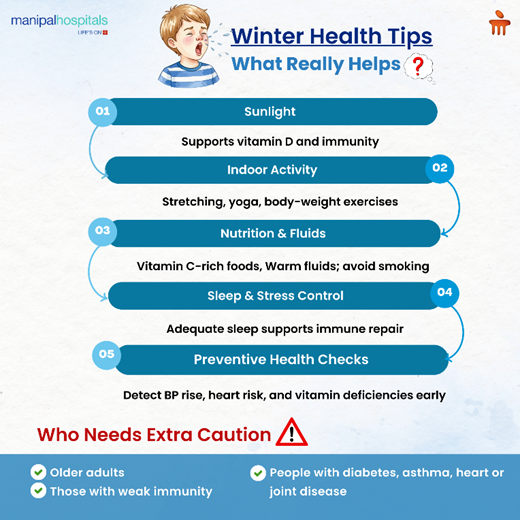
Following some simple precautions can help you enjoy a safe winter with minimum effort. This is also the season to help your body develop immunity that can keep infections at bay.
-
Soak up some sun: Although being cooped up at home might seem like a comfortable option, it would also deprive you of the vitamin D that is essential for maintaining immunity. So, it would be a good idea to go outdoors and soak up some sun, while at the same time keeping yourself warm with woollen clothes.
-
Practice workouts indoors: Being physically active through simple indoor workouts are a great way to build and boost your immunity. Exercises like pushups, planks and lunges can be performed in the comfort of your home without the need of any equipment. Moreover, starting your day with simple stretches followed by yoga and pilates ensures that your body loosens up, while maintaining balance and flexibility.
-
Nutrition and hydration: Avoiding smoking, keeping yourself hydrated and eating a balanced meal rich in vitamin C greatly helps boost your immunity to infections.
-
Mood regulation: Lack of sunlight can also lead to loneliness and seasonal depression, commonly referred to as the ‘winter blues’. Keeping yourself active by climbing stairs, using a skipping rope or dancing can not only boost your calories, but also improve your mood. Getting enough hours of restful sleep is also essential as it helps eliminate the stress hormone cortisol, burns calories and keeps the body’s immune system in good shape. Simple activities like going for walks, journaling, practicing meditation, and spending quality time with friends and family can significantly boost your mental health.
-
Skin and Hair care: Dry, itchy and flaky skin is common during the winter months. Cold air and low humidity can also make your hair very dull and brittle. Adopting a good skin and haircare routine by using coconut, almond and olive oil is essential to keep your skin and hair well-nourished and hydrated. At the same time, avoiding very hot showers is important as it can worsen dryness by stripping your hair and body of essential oils.
-
Preventive health checkups: Since heart attacks are common during winter months, preventive health checkups are the best way to detect any abnormal changes in blood pressure and avoid any unnecessary heart-related complications.
Conclusion
Winter doesn’t have to be a season of illness, and with guidance from the best Multispeciality Hospital in Millers Road, Bangalore, adopting proactive winter care, following health tips for the winter season, and prioritising preventive health can help you protect yourself and your loved ones while enjoying everything winter has to offer.
FAQ's
Germs tend to survive better in cold, dry climates. When dry air enters the nose and throat, it makes people more vulnerable, paving way for viruses to enter the body. Moreover, being cooped up within your home significantly weakens immunity and increases your likelihood of catching infections.
By staying physically active, keeping yourself well hydrated, eating balanced meals, exposing yourself to adequate sunlight and managing stress through adequate sleep and rest, you can effectively support your immunity during winter.
To avoid potential flare ups, people with poor immunity and certain chronic ailments like diabetes, arthritis, heart and lung conditions should ensure to undergo preventive health checkups during winter months.
The strain on one’s heart is often higher in winters as cold temperatures cause blood vessels to constrict, in turn increasing blood pressure. Dietary changes combined with physical inactivity also worsens blood sugar and joint-related issues.
Some issues like high blood pressure, cholesterol imbalances, and vitamin D deficiencies can sneak up on you with no apparent symptoms. Severe respiratory problems are also often confused with mild coughs related to common cold. Attending regular health screenings will help address these issues before they go out of hand.
Share this article on:


10.png)