8 Min Read
What does it feel like when nasal blockage, facial heaviness, and a pressure-filled headache interrupt daily life? Understanding what is sinus puts those symptoms in context. Sinuses are air-filled spaces that can become inflamed or blocked, causing pain, congestion, and disturbed sleep. Sinus problems are common but treatable; knowing the causes, recognising a sinus headache, trying safe home remedies for sinus, and seeking medical care when needed gives a clear path back to comfort. This article explains what a sinus is, how sinus infections are classified, the practical steps for diagnosis, and non-surgical and surgical sinus treatment in Millers Road.
Synopsis
- What is Sinus?
- Types of Sinus Infections
- Causes of Sinus Problems
- Common Symptoms of Sinus
- Understanding Sinus Headache
- How is Sinus Diagnosed?
- Home Remedies For Sinus Relief
- Medical Sinus Treatment Options
- When is Surgery Required?
- Can Sinus be Cured Permanently?
- Preventing Sinus Problems
- When Should You See a Doctor?
- Conclusion
What is Sinus?
Sinuses are air-filled cavities inside the facial bones that open into the nasal passages. The main sinuses are the maxillary (cheek), frontal (forehead), ethmoid (between the eyes), and sphenoid (behind the nose). These spaces help humidify inhaled air, contribute to speech resonance, and provide a small degree of defense by trapping particles in mucus.
Sinus problems happen when those cavities get inflamed or blocked; the condition is called sinusitis. Blockage traps mucus and makes it harder for the sinuses to drain, so germs or irritants can create infection or long-term inflammation. Understanding what is sinus helps you avoid confusion: a sinus refers to the cavities themselves, while sinusitis is the condition that causes symptoms.
Types of Sinus Infections
Sinus disease is described by the time course and recurrence pattern. Clear classification helps decide treatment.
|
Type of Sinus Infection |
How Long It Lasts |
What Usually Causes It |
What You May Notice / How It’s Managed |
|
Acute Sinusitis |
Usually up to 4 weeks |
Most often starts after a common cold or viral infection; sometimes becomes bacterial |
You may have nasal blockage, thick discharge, facial pressure, and sometimes fever. Most cases improve with medications and home care. |
|
Subacute Sinusitis |
About 4 to 12 weeks |
Often develops when an acute sinus infection doesn’t fully settle |
Symptoms last longer and may need extended treatment and follow-up with a doctor. |
|
Chronic Sinusitis |
More than 12 weeks |
Long-term inflammation, nasal polyps, or structural nasal issues |
Persistent congestion, facial heaviness, and reduced smell. Usually needs long-term medical treatment and sometimes surgery. |
|
Recurrent Sinusitis |
Several episodes in a year with normal periods in between |
Often linked to allergies, immune issues, or nasal structural blockage |
Repeated sinus infections. Doctors usually look for underlying triggers and focus on prevention. |
Causes of Sinus Problems
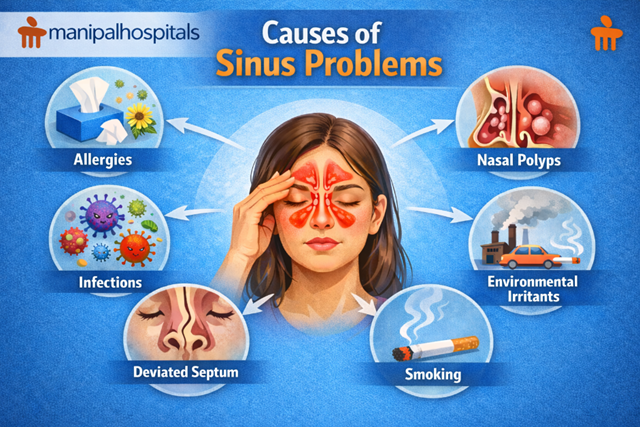
Sinus inflammation occurs when normal drainage and ventilation are impaired or when the mucosal lining becomes irritated.
-
Viral Infections: Most common trigger; a common cold can lead to temporary sinus blockage.
-
Bacterial Infections: Secondary bacterial infections may arise when mucus stasis persists.
-
Allergies: Allergic rhinitis causes mucosal swelling, promoting sinus blockage and sinusitis.
-
Nasal Polyps: Benign mucosal growths that obstruct sinus openings and promote chronic disease.
-
Deviated Nasal Septum: Structural drift of the septum narrows sinus drainage pathways.
-
Pollution and Environmental Irritants: Smoke, dust, and pollutants increase mucosal inflammation.
-
Weakened Immunity: Recurrent or atypical infections occur in immunocompromised states.
Common Symptoms of Sinus
Recognising these signs will help evaluate whether it is best to continue with home care or seek further evaluation by a healthcare provider.
-
Nasal Blockage or Congestion
-
Facial pressure or fullness on the cheeks, forehead, or around the eyes.
-
Thick yellow or green nasal discharge.
-
Hyposmia/Anosmia – loss or absence of the sense
-
Post-nasal drip and throat clearing.
-
Cough, fatigue, and sometimes fever if an infectious agent is involved.
If symptoms persist beyond 10 days or worsen after improving initially, medical advice should be sought.
Understanding Sinus Headache
A sinus headache usually causes a continuing dull pressure sensation located over the affected sinus areas, which are common in the forehead, cheeks, and behind the eyes. Pain tends to be heightened when bending forward, upon awakening in the morning, and with changes in atmospheric pressure.
Symptoms that help you differentiate a sinus headache from a migraine:
-
Sinus pains are associated with nasal congestion and thick discharge.
-
Migraines often include light sensitivity, nausea, and throbbing pain and can occur without nasal symptoms.
-
If uncertainty exists, clinical assessment helps differentiate causes so that treatment suits the underlying problem.
How is Sinus Diagnosed?
Diagnosis combines careful clinical assessment with targeted investigations when required.
-
Clinical Examination: Nose and throat inspection, palpation for sinus tenderness, and review of symptom duration and pattern.
-
Nasal Endoscopy: Direct visualisation of nasal passages and sinuses to detect polyps, pus, or anatomic blockages.
-
CT Scan Sinus: The best imaging test for chronic or complicated cases; provides a detailed map for treatment planning.
-
Allergy Testing: Helps identify allergic triggers that perpetuate sinus disease.
-
Microbiology: In selected cases, cultures from sinus aspirates guide antibiotic choices.
Accurate diagnosis is essential before considering procedures or long-term medications.
Home Remedies For Sinus Relief
Trying simple home remedies for sinus offers symptom relief and can speed recovery for mild cases. Begin with an intro sentence. Use these safe measures regularly while monitoring symptoms:
-
Steam Inhalation: Warm steam loosens mucus and eases nasal congestion.
-
Saline Nasal Rinse: A plain saline rinse or nasal irrigation clears mucus and reduces microbial load.
-
Hydration: Sufficient fluids thin secretions and support mucociliary function.
-
Rest: Allow recovery time during acute infections.
-
Avoid Allergens and Smoke: Reducing exposure lowers mucosal irritation and swelling.
Home measures are supportive. If symptoms persist or worsen despite these steps, medical assessment is required.
Medical Sinus Treatment Options
Medications
-
Nasal Steroid Sprays reduce mucosal inflammation and are first-line for chronic symptoms and polyps.
-
Oral Decongestants and Antihistamines offer short-term relief, particularly for allergy-related congestion.
-
Antibiotics are reserved for probable bacterial sinusitis (prolonged symptoms, high fever, or worsening after initial improvement).
-
Short Courses of Oral Steroids may be used for severe inflammatory disease or nasal polyps under specialist guidance.
Allergy Management
-
Allergen avoidance, pharmacotherapy, and immunotherapy (allergy shots) reduce recurrence in allergic sinus disease.
Clinical follow-up ensures that medications are effective and safe.
When is Surgery Required?
Surgery is indicated when anatomy and disease are beyond the control of medicine.
Indications of sinus surgery include:
-
Chronic sinusitis that does not respond to optimised medical treatment.
-
Structural obstructions (severe septal deviation and large polyps).
-
Recurring infections affect the quality of life or result in complications.
Endoscopic Sinus Surgery: This kind of surgical procedure for ENT problems, such as sinusitis, is less invasive and aims to improve sinus drainage by enlarging the channels of your natural sinuses. Modern techniques for this procedure aim to make corrections, heal quickly, and protect natural mucosa.
Can Sinus be Cured Permanently?
Questions such as how to cure sinus permanently are quite common. The ideal cure for sinus depends on the cause:
-
Single episodes of symptoms following a cold usually resolve with conservative management.
-
For sinusitis brought on by allergies, the only way to truly control the condition in the long run is to deal with the allergies and regularly clean the nasal passages, and surgery might help alleviate the condition, but it never guarantees a long-term cure.
-
For anatomical blockages, surgery may bring long-term relief with minimal recurrence.
Long-term remission is achievable in many cases with combined medical, surgical, and preventative strategies. An absolute permanent cure cannot be guaranteed for everyone, especially when multiple triggers (allergy, pollution, and anatomy) coexist.
Preventing Sinus Problems
Prevention reduces recurrence and improves daily comfort.
-
Control allergies through avoidance and treatment.
-
Maintain nasal hygiene with saline rinses during high-risk seasons.
-
Avoid smoking and limit exposure to pollution.
-
Treat colds promptly and rest adequately.
-
Use humidifiers in dry environments to maintain mucosal moisture.
Consistent preventive habits reduce the frequency and severity of sinus episodes.
When Should You See a Doctor?
Seek prompt medical attention for any of the following:
-
Symptoms lasting more than 10 days without improvement.
-
Recurrent or frequent sinus infections.Severe sinus headache, vision changes, facial swelling, or high fever.
-
Signs of complications such as spreading infection or severe systemic illness.
Early specialist review is important when standard measures fail or when symptoms suggest complications.
Conclusion
A clear diagnosis and a stepwise treatment plan make sinus problems manageable. For persistent, recurrent, or severe sinus disease, specialised evaluation and targeted sinus treatment in Millers Road, Bangalore, can provide effective relief and reduce recurrence. Contact Manipal Hospitals Millers Road for expert sinus assessment and personalised treatment.
FAQ's
Saline rinses often provide noticeable relief within days by clearing mucus and reducing congestion; use twice daily during acute symptoms for best effect.
Yes. Allergic inflammation can block sinus drainage and produce pressure-type pain consistent with a sinus headache; treating the allergy reduces recurrence.
No. Acute cases, in the great majority, are viral and show improvement with supportive care. The indications for the use of antibiotics are in cases that are suspected of a bacterial infection or are severe and of a more protracted nature.
Many patients find that their symptoms improve within weeks, with further improvements over several months as the mucosa heals. Follow-up treatment and nasal sprays support this healing process.
Medical treatment and prevention can achieve long-term control if the symptoms are driven mainly by infection or transient triggers. In structural problems, surgery provides the best chance of lasting relief; overall success depends on addressing all contributing factors.
Share this article on: