7 Min Read
More and more people are getting prediabetes, especially adults who don't move around much, eat poorly, or have a family history of diabetes. The problem is that a lot of people don't know they have it because the symptoms can be mild or not present at all. Understanding prediabetes and when to see a doctor can help you avoid long-term health problems. If you catch prediabetes early and manage it well, you can often prevent it from becoming diabetes. In this blog, you will learn about prediabetes in simple terms, list warning signs, and learn when to see a doctor.
Synopsis
- What is Prediabetes?
- Prediabetes Range: Understanding Blood Sugar Levels
- Symptoms of Prediabetes
- Who is at Risk of Prediabetes?
- Early Warning Signs You Should Not Ignore
- Prediabetes Diagnosis
- Prediabetes Treatment Options
- Importance of Early Medical Care
- Check Your Blood Sugar at Home
- When to Consult a Doctor?
- Conclusion
What is Prediabetes?
Prediabetes is a stage when blood sugar levels are higher than normal but not high enough to be called diabetes. Usually, when we eat, our bodies turn carbohydrates into glucose, which enters the blood. The pancreas then makes insulin, a hormone that helps move glucose into our cells for energy. In prediabetes, the body does not respond to insulin as well, so more glucose stays in the blood and sugar levels rise.
This shows the body is having trouble managing blood sugar. Prediabetes does not always lead to diabetes, but it is an important warning sign. The good news is that with healthy changes like regular exercise, balanced meals, and keeping a healthy weight, many people can reverse prediabetes and lower their risk of future health problems.
Prediabetes Range: Understanding Blood Sugar Levels
Doctors use blood tests to find out if someone has prediabetes. These tests check your long-term blood sugar control or your fasting glucose levels. Common tests for prediabetes include:
|
Test |
Normal Range |
Prediabetes Range |
Diabetes Range |
|
Fasting Blood Sugar |
Less than 100 mg/dL |
100–125 mg/dL |
126 mg/dL or higher |
|
HbA1c Test |
Below 5.7% |
5.7% – 6.4% |
6.5% or higher |
|
Oral Glucose Tolerance Test |
Less than 140 mg/dL |
140–199 mg/dL |
200 mg/dL or higher |
Doctors suggest lifestyle changes and monitoring if your results show prediabetes to prevent progression.
Symptoms of Prediabetes
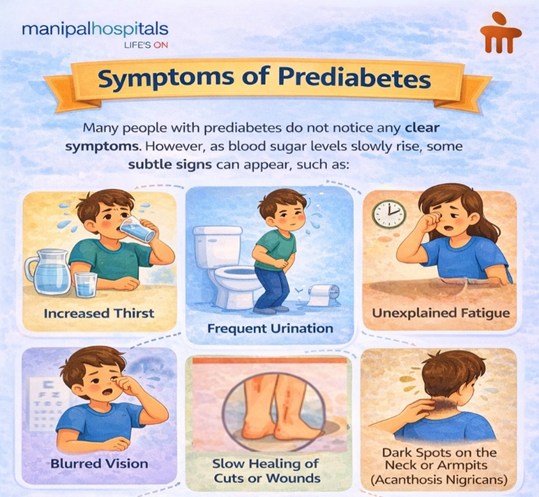
Many people with prediabetes do not notice any clear symptoms. However, as blood sugar levels slowly rise, some subtle signs can appear, such as:
-
Increased thirst
-
Unexplained fatigue
-
Blurred vision
-
Slow healing of cuts or wounds
-
Increased hunger
-
Dark spots on the neck or armpits (acanthosis nigricans)
Some people with insulin resistance may notice early warning signs such as fatigue, increased thirst, or darkened skin patches.
Who is at Risk of Prediabetes?
Certain people are more likely to develop prediabetes due to their lifestyle or health conditions.
Common Risk Factors
-
Being overweight or obese
-
Age above 35 years
-
Family history of diabetes
-
Sedentary lifestyle
-
High cholesterol levels
-
History of gestational diabetes
-
Polycystic ovary syndrome (PCOS)
People with these risk factors should get their blood sugar checked regularly, even if they do not have symptoms.
Early Warning Signs You Should Not Ignore
Even when symptoms seem mild, certain warning signs can suggest that it is time to consult a doctor. These include the following:
-
Feeling tired all the time, despite adequate sleep
-
Sudden rise in thirst or hunger
-
Frequent urination at night
-
Skin darkening around the neck or elbows
These early signs of prediabetes occur when insulin resistance worsens, and blood glucose starts rising further.
Prediabetes Diagnosis
Prediabetes often develops quietly, which is why proper testing plays an important role in identifying it early. Doctors usually begin with a review of a person’s medical history and a routine physical examination. Some of the most commonly used diagnostic tests include:
|
Test |
Purpose |
|
Fasting Blood Sugar Test |
Checks blood sugar levels after overnight fasting |
|
HbA1c Test |
Shows average blood sugar levels over the past 3 months |
|
Oral Glucose Tolerance Test |
Checks the body’s response to sugar intake |
These results help doctors figure out if the blood sugar levels are in the prediabetes range.
Prediabetes Treatment Options
The goal of treating prediabetes is to prevent or delay the onset of type 2 diabetes.
Treatment Strategies
1. Lifestyle Changes
The most effective approach is to introduce changes to your lifestyle, like eating a balanced, fibre-rich diet; reducing sugary and processed foods; increasing physical activity; and maintaining a healthy body weight. Research shows that losing 5 to 7 per cent of your body weight can greatly reduce your risk of diabetes.
2. Regular Physical Activity
Exercise keeps insulin levels in check. Some recommended exercises include brisk walking, cycling, swimming, yoga, and strength training. Doctors usually recommend 150 minutes of moderate physical activity per week.
3. Medical Management
Medical management helps control blood sugar when lifestyle changes are not enough. Doctors might prescribe medicines such as metformin that improve insulin sensitivity, lower liver glucose, or delay diabetes in high-risk people. These work best with healthy eating, regular exercise, and maintaining a healthy weight. Combining medication with good habits helps keep blood sugar steady and lowers the risk of diabetes complications.
Importance of Early Medical Care
If you ignore the signs of prediabetes, your blood sugar levels may worsen over time. Without the right care, prediabetes can get worse and lead to:
-
Type 2 diabetes
-
Heart disease
-
Nerve damage
-
Vision problems
If prediabetes progresses to diabetes, these complications may develop.
Check Your Blood Sugar at Home
People with prediabetes can monitor their health by following a few simple steps:
-
Check your blood sugar levels with your doctor.
-
Stick to a healthy meal plan.
-
Keep an eye on your weight.
-
Stick to a daily schedule of activities.
-
Follow your doctor’s advice.
These simple steps help people take charge of their health.
When to Consult a Doctor?
Knowing when to see a doctor can help stop prediabetes from progressing to type 2 diabetes. Early medical guidance can help control blood sugar levels and lower the risk of future health problems. Seek medical advice if you notice:
-
Multiple prediabetes symptoms appear together
-
Persistent fatigue or weakness
-
A family history of diabetes
-
Blood sugar levels within the prediabetes range
-
Unexplained weight changes
-
Slow healing of cuts or wounds
Consulting a doctor early allows proper evaluation, lifestyle guidance, and timely treatment to help prevent diabetes.
Conclusion
Prediabetes often develops quietly, with only mild or unnoticed symptoms at first. Knowing the warning signs and prediabetes range helps people take action before diabetes develops. Making small lifestyle changes, getting regular screenings, and receiving the right treatment for prediabetes can greatly lower your risk of complications. Reaching out to healthcare professionals early ensures you get the right evaluation and personalised advice. If you require medical guidance, you can reach out to Manipal Hospitals specialists for consultations. We also offer effective prediabetes care in Millers Road, Bangalore, to help patients stay healthy and reduce their risk of diabetes.
FAQ's
Some signs of prediabetes are extreme thirst, frequent urination at night, fatigue, blurry vision, slow healing of wounds, and dark patches around the neck or armpits.
Fasting blood sugar levels between 100 and 125 mg/dL, HbA1c levels between 5.7% and 6.4%, and glucose tolerance test values between 140 and 199 mg/dL are all signs of prediabetes.
Yes, lifestyle changes like managing your weight, getting regular exercise, eating a balanced diet, and getting prompt medical advice can often reverse prediabetes.
If risk factors like being overweight or having a family history of diabetes are present, or if blood tests show levels in the prediabetes range, you should see a doctor.
People in Millers Road, Bangalore, who need prediabetes care can see specialists at Manipal Hospitals, Millers Road for blood sugar tests, lifestyle tips, early treatment plans, and personalised monitoring.
Share this article on: