6 Min Read
As you prepare to welcome a new life, ensuring the best possible health for both you and your baby becomes the utmost priority during pregnancy. This is where comprehensive antenatal care becomes important. Effective antenatal care for mothers is not just about medical check-ups; it is a holistic approach that encompasses physical, emotional, and psychological well-being.
Synopsis
Understanding Antenatal Care
Antenatal care refers to the care you get from conception until the birth of your baby. It involves a series of regular medical examinations, screenings, and educational sessions designed to monitor the health of both the mother and the developing foetus. The primary objectives of antenatal care include:
-
Early Detection and Management: To identify and address potential health problems or risks early in the pregnancy, preventing complications.
-
Promoting Maternal Health: To ensure the mother's optimal health throughout pregnancy, labour, and delivery.
-
Fetal Well-being: To monitor the baby's growth and development, ensuring they are thriving.
-
Education and Support: To provide expecting parents with vital information about pregnancy, childbirth, and newborn care, fostering confidence and reducing anxiety.
-
Nutritional Guidance: To advise on healthy eating habits essential for both mother and baby.
Studies show that women receiving adequate antenatal care are significantly less likely to experience severe complications during pregnancy and childbirth. In fact, comprehensive antenatal programs are associated with an over 95% success rate in achieving healthy full-term births and have been shown to reduce the risk of maternal and infant mortality by up to 50% in many regions.
Your Antenatal Care Journey: A Trimester-by-Trimester Guide
Your antenatal care schedule will typically be structured around your trimesters, with increasing frequency of visits as your due date approaches. Each trimester brings unique developments and focuses for your healthcare team.
First Trimester (Weeks 1-12)
During this period, there is rapid development of the baby's major organs. Your initial antenatal appointment is usually the most comprehensive, which includes:
-
A pregnancy test and an early ultrasound scan confirm the pregnancy and determine your estimated due date.
-
Our doctors will take a detailed medical history, including any pre-existing conditions, previous pregnancies, and family history.
-
Screenings for blood group, Rh factor, anaemia, infections (like rubella, hepatitis B, HIV, syphilis), and thyroid function.
-
Advice on nutrition, prenatal vitamins (especially folic acid), exercise, and avoiding harmful substances.
Second Trimester (Weeks 13-27)
The baby grows significantly during the second trimester, and oftentimes starts moving, which can be felt by the mother. Regular visits focus on:
-
Monitoring of blood pressure, weight gain, and urine for protein and sugar.
-
Your doctor will listen to your baby's heartbeat at each visit.
-
Usually performed between 18-22 weeks, a detailed ultrasound examines your baby's anatomy for any structural abnormalities.
-
A test for gestational diabetes, glucose screening is done between 24 and 28 weeks.
-
You will be advised on how to track your baby's movements.
Consistent monitoring during this phase helps identify and address potential growth concerns.
Third Trimester (Weeks 28-40+)
As your due date approaches, visits become more frequent, focusing on birth preparation and identifying any late-stage complications.
-
Visits may become bi-weekly, then weekly, as you near term.
-
Your doctor will check the baby's position in the womb, especially as you approach full term.
-
A swab test is typically done around 35-37 weeks to check for Group B Streptococcus bacterial infection.
-
Discussing your preferences for labour and delivery.
-
Monitoring for Complications such as signs of pre-eclampsia, preterm labour, or other concerns.
Regular monitoring helps reduce the risk of preterm birth and ensures that mothers are well-prepared for a safe delivery. The support and education received during this time significantly contribute to a positive birth experience.
Key Components of Comprehensive Antenatal Care
Every visit during the antenatal period should be thorough and reassuring, focusing on the following aspects:
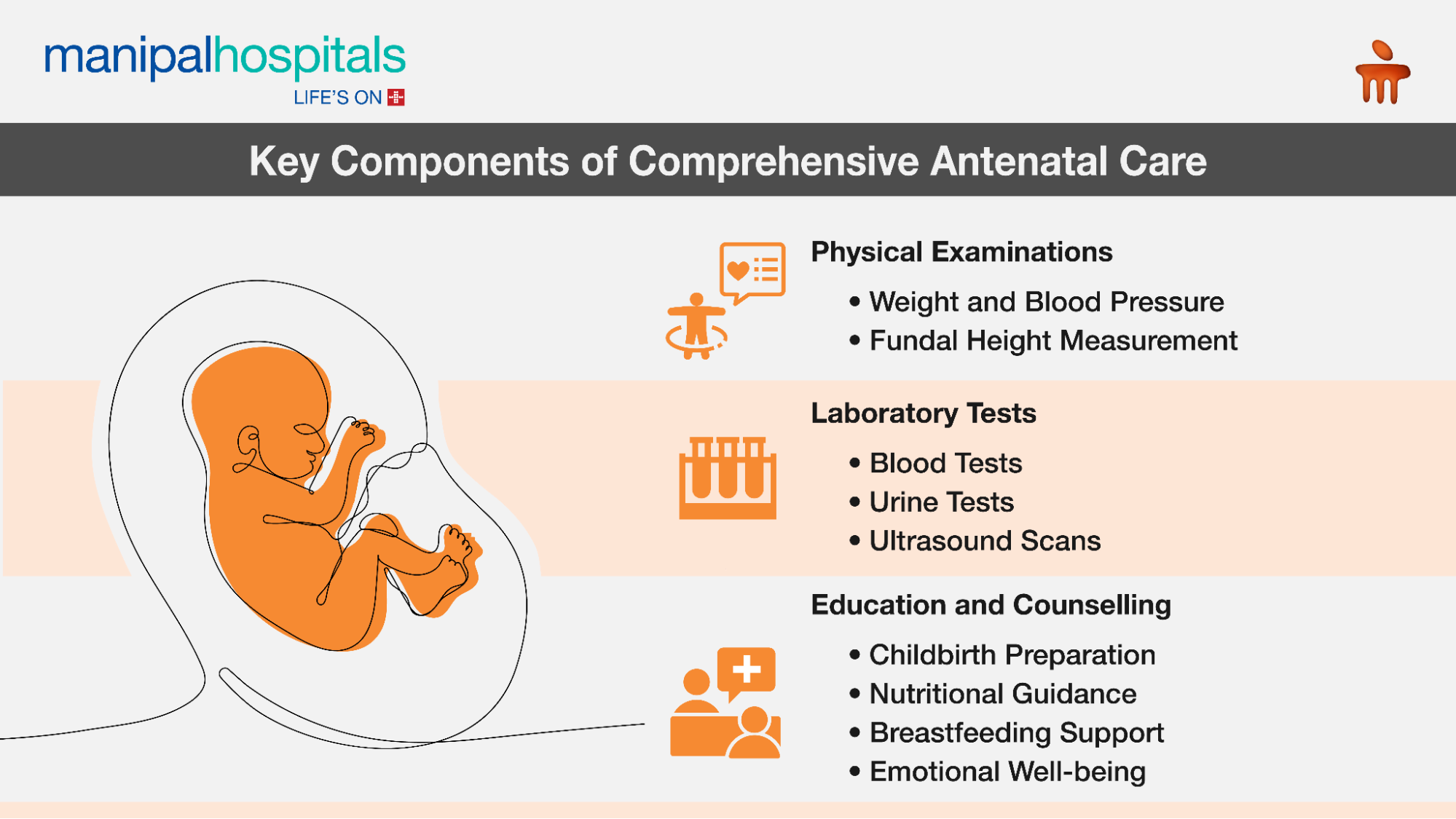
Physical Examinations:
-
Weight and Blood Pressure: Monitored to track healthy progression and detect issues like pre-eclampsia.
-
Fundal Height Measurement: Measures the size of the uterus to assess fetal growth.
Laboratory Tests:
-
Blood Tests: Repeated screenings for anaemia, blood sugar, and other indicators.
-
Urine Tests: Checked for signs of infection, protein (pre-eclampsia), and sugar (gestational diabetes).
-
Ultrasound Scans: Provide visual insights into foetal growth and development by evaluating positioning, amniotic fluid colour, and blood flow through Doppler studies
-
Nutritional Guidance: Personalised diet plans to meet increased nutritional needs, including iron, calcium, and essential vitamins.
Education and Counselling:
-
Childbirth Preparation: Classes on labour, delivery techniques, pain management, and newborn care.
-
Breastfeeding Support: Information and resources for successful breastfeeding.
-
Emotional Well-being: Addressing anxiety, depression, and mood changes, offering support and resources.
Conclusion
The journey of pregnancy is a unique and precious one. By prioritising comprehensive antenatal care, you are taking the best possible steps to ensure a healthy outcome for both you and your baby. At Manipal Hospitals, our team of dedicated obstetricians, gynaecologists, and support staff is committed to providing you with expert, compassionate care every step of the way.
If you are expecting or planning a pregnancy, it's crucial to seek timely medical advice and establish a robust antenatal care plan. Book an appointment with our expert obstetrics and gynaecology specialists at Manipal Hospitals today.
FAQ's
Ideally, you should start as soon as you confirm your pregnancy, preferably within the first 8-10 weeks. Early registration ensures you receive timely screenings and advice.
The number of visits can vary, but typically, a healthy first-time mother might have 10-12 visits. For subsequent pregnancies or those with specific risk factors, more frequent visits may be recommended by your doctor.
A typical visit includes checking your blood pressure and weight, measuring your fundal height, listening to the baby's heartbeat, and discussing any concerns or symptoms you might have. You'll also receive guidance on diet, lifestyle, and upcoming screenings.
While most tests are highly recommended for the health and safety of both mother and baby, your doctor will discuss each test with you, explaining its purpose and any alternatives. You always have the right to make informed decisions about your care.
Absolutely! We encourage partners to attend antenatal appointments. It's a wonderful opportunity for them to be involved, ask questions, and share in the journey.
If you have a high-risk pregnancy (e.g., due to age, pre-existing conditions, or previous complications), your antenatal care will be tailored to your specific needs, often involving more frequent visits and specialised monitoring by a multidisciplinary team.
Share this article on: