




 6 Min Read
Uterine fibroids are a common, non-cancerous growth in the uterus that can significantly impact a woman's quality of life. Research indicates that up to 80% of women may develop fibroids by the age of 50. This blog provides comprehensive and clear insights into uterine fibroids symptoms, diagnosis, and the effective treatments available, to help you understand your health and make informed decisions for proactive health management.
Synopsis
What are ‘Uterine Fibroids’?
Uterine fibroids, also known as leiomyomas or myomas, are benign muscular tumours that grow in the wall of the uterus. They are very common. These tumours can vary in size from tiny nodules to bulky masses. Though, in most cases, uterine fibroids do not cause any problems, a few women may experience a range of uncomfortable or debilitating uterine fibroids symptoms that may impact their daily lives and overall well-being.
Understanding ‘what are uterine fibroids’ makes it significant to identify the different types of uterine fibroids. These fibroids can be classified into:
-
Intramural fibroids: These grow within the muscular wall of the uterus and are the most common types of uterine fibroids.
-
Subserosal fibroids: These form on the outer surface of the uterus and can sometimes grow on a stalk.
-
Submucosal fibroids: These protrude into the uterine cavity, often causing significant bleeding and fertility issues. Though less common, they are typically the most symptomatic.
What causes Uterine Fibroids?
What causes uterine fibroids is not completely understood yet. Although several factors may play a significant role in triggering them:
-
Hormones- Estrogen and progesterone can promote the growth of fibroids, though they tend to shrink after menopause.
-
Genetics- Genetic predisposition often plays a role, like if your mother or sister had fibroids, you are at a higher risk.
-
Growth factors- Insulin-like growth factor (IGF) and other substances may also contribute to developing this condition.
-
Obesity and diet- Studies suggest a link between obesity, a diet high in red meat, and a higher risk of uterine fibroids.
Uterine Fibroids symptoms
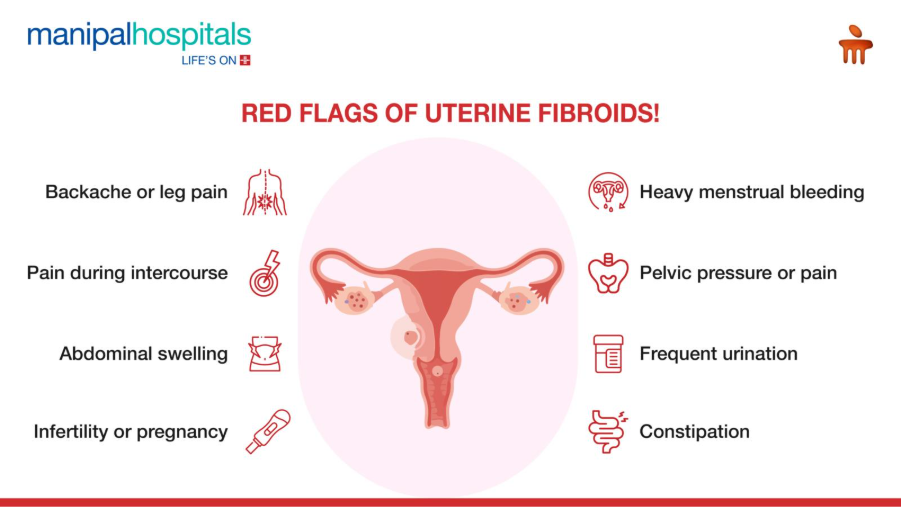
While many women do not experience any symptoms, some may have a profound impact on their day-to-day life, caused by uterine fibroids. The specific uterine fibroids symptoms depend on the size, number, and location of the fibroids. Recognising these signs is crucial for timely intervention. These may include:
-
Heavy menstrual bleeding- This is one of the most common symptoms of uterine fibroids that leads to prolonged periods, large blood clots, and sometimes anaemia.
-
Pelvic pressure or pain- A feeling of fullness or pressure in the lower abdomen, that feels like a dull ache.
-
Frequent urination- Large fibroids can create pressure by pressing on the bladder, leading to a constant urge to urinate.
-
Constipation- Fibroids can press on the rectum, causing difficulty with bowel movements.
-
Backache or leg pain- If fibroids press on nerves in the back, they can cause pain in the legs or lower back.
-
Pain during intercourse- Deep pelvic pain during sexual activity can be another uncomfortable symptom.
-
Abdominal swelling- In some cases, fibroids can grow large enough to cause noticeable enlargement of the abdomen.
-
Infertility or pregnancy - related complications- Submucosal fibroids can interfere with implantation or lead to recurrent miscarriages.
How are Uterine Fibroids diagnosed?
Experiencing any of the above-mentioned symptoms of uterine fibroids calls for an accurate diagnosis as the first step towards effective management. This typically involves:
-
Pelvic Exam- A physical exam may help your doctor feel irregularities in the shape of your uterus.
-
Ultrasound- The most common diagnostic measure, providing images of the uterus and fibroids.
-
MRI (Magnetic Resonance Imaging)- This imaging test offers a detailed view for more complex cases.
-
Hysteroscopy- A scope is inserted into the uterus to visualise submucosal fibroids.
-
Laparoscopy- This is a minimally invasive surgical procedure that can diagnose and sometimes treat fibroids.
Uterine Fibroids Treatment Options
Uterine fibroids treatment depends on several factors, including the severity of symptoms, size and location of the fibroids, age, overall health, and the desire for future pregnancies. The different modalities are:
-
Watchful waiting- For asymptomatic or mildly symptomatic fibroids, careful monitoring on a regular basis may be recommended.
-
Medications- Different types of medicines may be prescribed as per the requirement:
-
Mifepristone can shrink size but only cause bleed for three months continuously provided LFT (Liver Function Test) normal.
-
GnRH agonists that help shrink fibroids temporarily by blocking estrogen, provided LFT normal for six months only.
-
Non-steroidal anti-inflammatory drugs (NSAIDs) can be useful in managing pain.
-
Hormonal birth control can help control heavy bleeding.
- Minimally invasive procedures- There are several options of keyhole surgeries available:
-
Uterine Artery Embolisation (UAE) / Uterine Fibroid Embolisation (UFE) helps in blocking the blood supply to fibroids, thereby causing them to shrink.
-
Myomectomy is the surgical procedure that removes fibroids while preserving the uterus, often preferred for women wishing to retain fertility, But can recure again.
-
Radiofrequency Ablation (RFA) uses heat to destroy fibroid tissue.
Hysterectomy- This involves the surgical removal of the uterus. This provides a definitive solution for fibroids in women with severe symptoms (post completion of childbearing).
Conclusion
If you or someone you know experiences any of the uterine fibroid symptoms, do not wait and suffer alone. Because timely detection paves the way for better prognosis and healthier outcomes. Talk to our experts at the Department of Obstetrics and Gynaecology in Manipal Hospitals Mukundapur for the right care.
At Manipal Hospitals, our commitment is to provide a comprehensive range of advanced treatment options, tailored to individual needs and served with compassionate care
FAQ's
Yes sometimes. While many women with fibroids have normal pregnancies, some fibroids, particularly submucosal ones, can increase the risk of infertility, miscarriage, or complications during pregnancy and delivery.
Not necessarily. If you have no uterine fibroids symptoms or very mild ones, your doctor may recommend watchful waiting with regular monitoring. Treatment is typically considered when symptoms significantly impact your quality of life.
It can happen after procedures like myomectomy, where new fibroids can sometimes grow, or existing small ones can enlarge. Hysterectomy is the only definitive cure that prevents fibroid recurrence.
Recovery varies greatly depending on the type of uterine fibroids treatment. Minimally invasive procedures like UFE or hysteroscopic myomectomy may have recovery times of a few days to a week, while abdominal myomectomy or hysterectomy can require several weeks.
There is no guaranteed way to prevent fibroids, but maintaining a healthy weight, eating a balanced diet, and engaging in regular physical activity may help reduce your risk.
Share this article on:





