6 Min Read
Do your knees feel stiff, achy, or difficult to move as winter sets in? This is a common issue that affects many people as the temperature drops. Although uncomfortable, it is often manageable with the right care and treatment. Understanding the causes and recognising symptoms early can help relieve discomfort and maintain mobility throughout the year.
This blog focuses on the common causes of winter-knee-stiffness, the symptoms to watch for, and proven strategies to keep your joints healthy and pain-free, even in the colder months.
Synopsis
Why do knees get stiffer in winter?
The sensation of a stiff knee in winter has several physiological reasons behind it, as the cold weather can affect your body's musculoskeletal system in different ways. Knowing about the causes of knee stiffness can help largely avoid them:
Changes in barometric pressure: The atmospheric (barometric) pressure often drops before and during cold, damp weather. This causes a slight expansion in the tissues, muscles, and tendons around the knee joints. As a result, pressure on the joint increases, causing pain and stiffness.
Thickening of synovial fluid: A substance called ‘synovial fluid’ provides lubrication to the knee joints. Since the consistency of this fluid is similar to egg whites, it tends to become more viscous (thicker) in cold temperatures. This reduces its ability to flow freely and cushion the joint, leading to stiffness.
Reduced blood circulation: Blood vessels tend to constrict in cold weather to conserve body heat and redirect blood flow to the vital organs, such as the heart and lungs. This leads to reduced blood flow to the extremities, including the knees, resulting in stiffer muscles and joints.
Decreased Physical Activity: Though movement is important for joint health, most of us become less active in the cold months. This prolonged inactivity and sitting can affect the muscles, causing the knees to tighten and the joints to stiffen.
Underlying Conditions: Cold can worsen the symptoms of pre-existing joint conditions like osteoarthritis. More than180 million people in India are affected by arthritis, with most of them complaining about intensified symptoms in the winter.
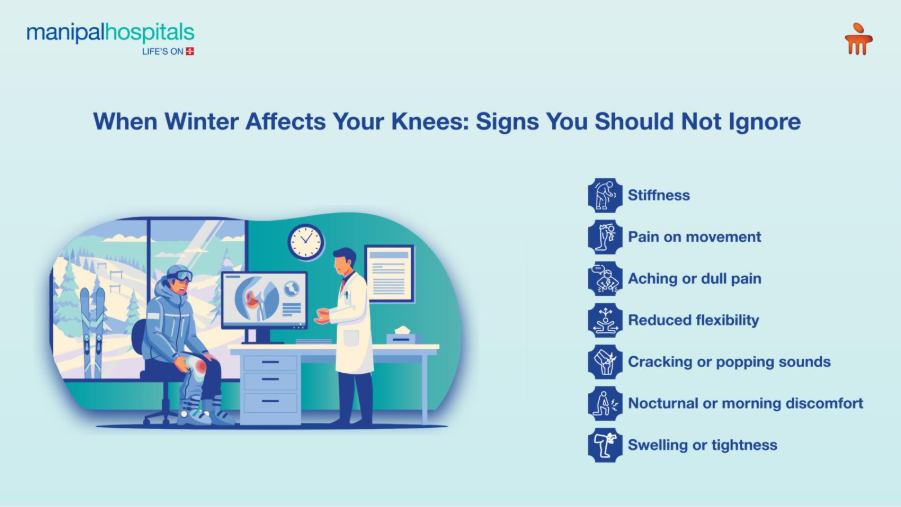
Recognising the symptoms of winter knee stiffness
While the primary symptom is a feeling of tightness, knee stiffness or knee joint pain in winter can manifest in several ways. You may notice stiff knee symptoms, including:
-
Persistent, dull pain deep within the knee joint
-
Stiffness (in the morning or after sitting for long)
-
Your knee feels tight when bending completely
-
A grinding, clicking, or popping sound (known as crepitus) when moving the knee
-
Severe pain with activities like climbing up the stairs, squatting, or standing up
Effective strategies for relief and management
It is possible to combat winter knee stiffness with simple lifestyle changes and exercises. Studies show that low-impact exercise can reduce arthritis-related knee pain by over 40%. You can consider:
1. Staying warm
Keeping your body and knees warm can help improve blood circulation and keep the synovial fluid less viscous. While dressing in layers and using woollen or thermal clothes can provide warmth, wearing elasticated knee sleeves or warmers can provide targeted insulation and support. Additionally, A warm bath or shower can ease stiffness, and adding Epsom salts to bathwater may help relax muscles.
2. Doing gentle exercise
Low-impact activities can lubricate the joint without stressing it. Yoga poses and gentle stretches like hamstrings, quadriceps, and calf muscles can improve flexibility. Swimming (especially in a heated pool) can help support your body weight, facilitating pain-free movement and strength. Also, indoor cycling can provide excellent non-weight-bearing movement for the knees, while a short 15–20-minute walk can make a significant difference for the overall body.
3. Maintaining healthy weight
Maintaining a healthy weight can ensure long-term knee health. Every additional pound of body weight (above your BMI) is believed to exert four pounds of extra pressure on the knees. Research shows that losing just 10% of their body weight can help overweight patients with knee arthritis reduce their pain to half.
When to consult an orthopaedic specialist
An orthopaedic specialist can accurately diagnose the cause and recommend a personalised plan for stiff knee treatment. Latest diagnostic tools and treatment strategies have a high success rate, with more than 95% of patients experiencing significant pain relief and improved joint function. Most winter knee stiffness can be managed at home, but seeking medical advice becomes crucial if you experience any of the following:
-
Severe or persistent pain that doesn't improve with self-care
-
Swelling, redness, or warmth around the knee/s
-
A ‘locking’ sensation in the knee/s
-
Stiffness or pain that is debilitating enough to interfere with your daily activities
Do's and don'ts of joint care
|
Do's |
Don'ts |
|
Stay active by adopting low-impact exercises |
Remain sedentary for long periods; get up and move around every half an hour |
|
Stretch your leg muscles before and after any physical activity |
Ignore knee pain that is persistent or worsening over time |
|
Dress to keep yourself warm and protect your knees from the cold |
Engage in high-impact activities if you have pain |
|
Take warm compression or warm bath to ease morning stiffness |
Forget to hydrate, as it is essential for joint health |
|
Maintain a healthy weight to reduce stress on your knee joints |
|
Conclusion
Winter knee stiffness can be uncomfortable, but it doesn’t have to limit your mobility or quality of life. Adopting simple habits like staying warm, remaining gently active, managing your weight, and listening to your body’s warning signs can help protect you from knee pain in cold weather. Likewise, timely medical care for persistent or worsening symptoms can prevent further joint damage and help you stay pain-free all year round. If your symptoms persist or cause you concern, reach out to the expert orthopaedic team at Manipal Hospitals Kolkata, who can help you get back on your feet, pain-free.
FAQ's
Ambient cold (weather) causes blood vessels to constrict and muscles to tighten, leading to stiffness. A targeted ice pack for an injury, however, is used for a short duration to reduce inflammation and numb acute pain, which is a different physiological response.
Yes. An anti-inflammatory diet rich in omega-3 fatty acids (found in fish and walnuts), antioxidants (found in berries and leafy greens), and vitamin D can help support joint health and reduce overall inflammation.
Yes, a compression sleeve or a neoprene knee brace can be beneficial. They provide warmth, gentle support, and proprioceptive feedback (improving your sense of joint position), which can make the knee feel more stable and less stiff.
For general stiffness without acute injury or swelling, heat is generally more effective. A warm compress or heating pad can help relax tight muscles and improve blood flow. Cold packs are best for acute injuries with swelling and inflammation.
If your stiffness is persistent (lasts more than 30 minutes in the morning), is accompanied by pain and swelling, and doesn't improve with simple measures, it could be a sign of underlying arthritis. A consultation with your doctor is recommended.
Share this article on: