




 6 Min Read
The liver is one of the most vital organs of the body, and it is responsible for detoxification, digestion, and metabolism. It is also the only organ of the body that regenerates by itself. When the liver is affected, certain warning signs appear that indicate liver disease. Recognising the signs of liver disease can facilitate timely treatment and prevent complications. This blog compiles a list of different signs of liver disease to help you know when to seek medical care.
Synopsis
What is Liver Disease?
Liver disease refers to any condition that damages the liver and prevents it from functioning normally. It is often identified through signs and symptoms of liver disease, such as jaundice, abdominal swelling, chronic fatigue and digestive issues.
Types of Liver Disease
There are several types of liver disease, each with different causes and treatment approaches:
-
Infectious Liver Disease: Infectious liver disease, such as hepatitis and liver abscess, are one of the most common types of liver disease. Hepatitis is usually caused by virus, whereas bacteria are usually responsible for liver abscesses.
-
Fatty Liver Disease: Among the most common types of liver disease is fatty liver disease, which affects people worldwide. Alcohol is mainly responsible for this disease. However, genetics and lifestyle habits often cause fatty liver in people who do not drink alcohol.
-
Cirrhosis: Cirrhosis is a type of liver disease that causes permanent scarring of the liver. It generally progresses from chronic fatty liver, infectious liver disease or other hepatic ailments.
-
Genetic liver disease: Two of the most common types of genetic liver disease are Wilson’s disease, caused by excess copper accumulation, and hematochromatosis, which causes excess iron concentration in the liver.
-
Autoimmune diseases: When the body's immune system attacks liver cells, it causes autoimmune liver diseases. Autoimmune hepatitis and primary biliary cholangitis are some types of autoimmune liver disease.
-
Acute liver failure: Unregulated use of paracetamol or viral infections can lead to liver failure.
-
Liver cancer: Chronic hepatitis or liver cirrhosis can progress to liver cancer.
Functions of the Liver
Some of the important functions performed by the liver are:
-
Detoxification: The liver removes toxins, metabolites, and harmful chemicals from the blood. It also prevents infections by filtering out bacteria from the bloodstream.
-
Producing essential nutrients: The liver produces nutrients like amino acids, albumin, and bile. Albumin transports hormones, enzymes, and vitamins throughout the body and maintains fluid balance. Bile aids digestion, and amino acids help produce proteins.
-
Regulates blood sugar: The liver absorbs excess glucose from the blood and stores it as glycogen. It gets converted to glucose when necessary.
-
Storage: The liver stores essential nutrients like vitamins A, D, K, E, and B12, and minerals like copper and iron.
-
Manages blood clotting: Vitamin K produces a blood coagulant that can only be absorbed by bile.
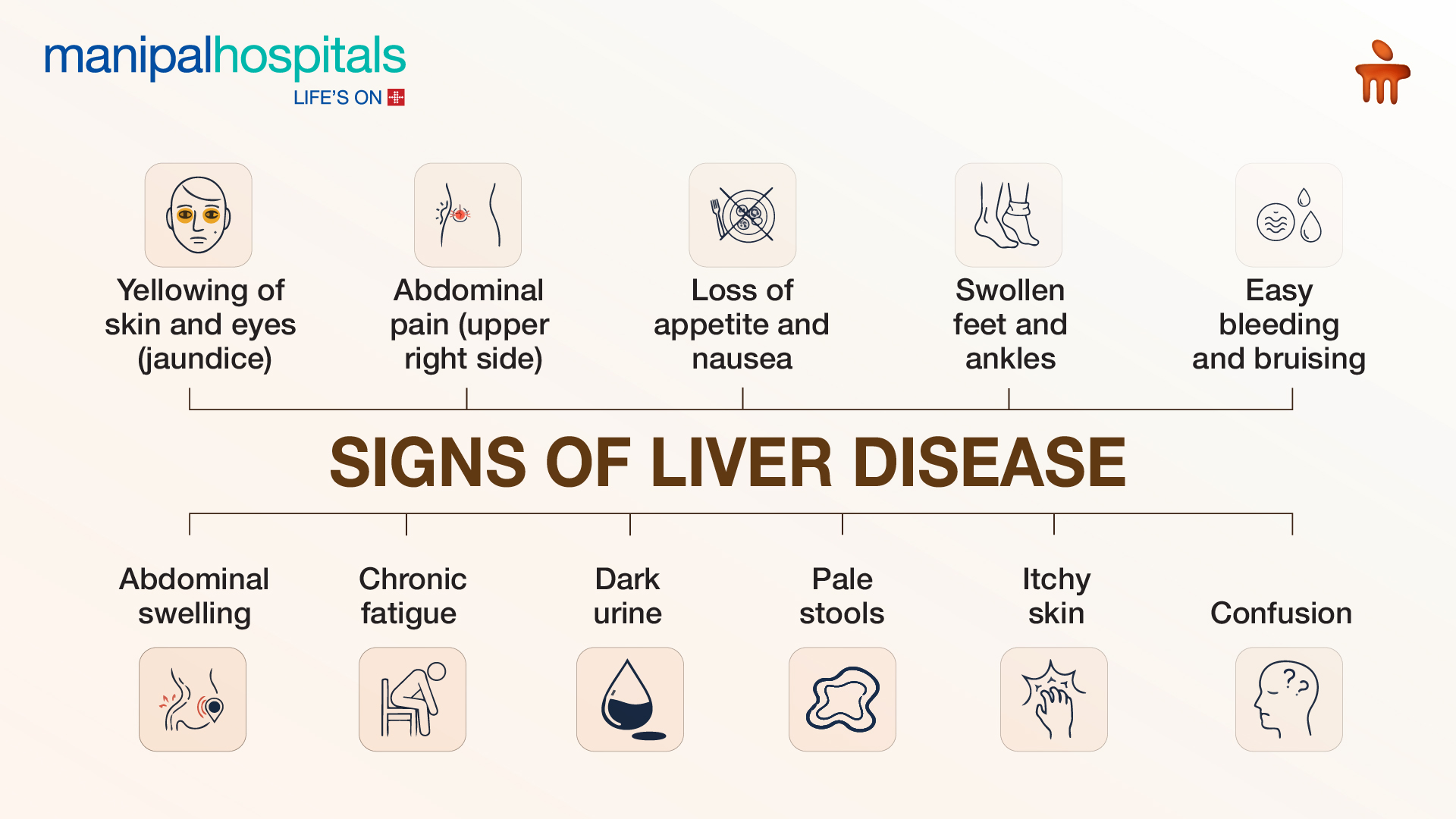
Warning Signs of Liver Disease
Liver disease can lead to serious complications if not treated promptly. Here are some signs of symptoms of liver disease to watch out for:
-
Jaundice: This is one of the most common signs of liver disease. Excess bilirubin concentration in blood causes yellowing of eyes and skin.
-
Dark urine: Excess bilirubin in blood gives urine a dark yellow or brown colour.
-
Pale stools: Pale stools due to reduced bile in the intestines are signs of liver disease.
-
Fatigue: Excess fatigue is a sign of liver disease due to reduced filtering and toxin build-up.
-
Nausea and loss of appetite: Toxin build-up can reduce appetite and cause nausea.
-
Abdominal pain: Pain in the upper right side of the stomach can be a sign of liver disease.
-
Ascites: Abdominal swelling or ascites is one of the most prominent signs of liver disease. It happens due to poor liver function or portal hypertension.
-
Swollen ankle and feet: Swollen feet and ankles can be signs of liver disease. Low albumin levels cause fluid build-up, which leads to swelling.
-
Itchy skin: Accumulation of bile salts leads to persistently itchy skin, which is one of the lesser known signs of liver disease.
-
Easily bleeding or bruising: Liver disease disrupts blood clotting function of the liver, leading to easy bleeding and bruising.
-
Confusion: Chronic liver disease can lead to toxin build-up in the brain, leading to a condition called hepatic encephalopathy.
Ways to Prevent Liver Disease
While it is essential to recognise signs of liver disease to prevent complications, there are certain preventative measures you can take to aid liver health and maintain general wellbeing:
-
A balanced diet: Diet low in trans-fat and fructose, and high in fibre, protein and other essential nutrients will help keep your liver healthy.
-
Drink coffee: Recent studies have shown that coffee is beneficial for liver. It prevents fat deposition, fights oxidative stress and slows progression of liver disease.
-
Regular exercise: Exercising regularly can do wonders for your liver. It facilitates production of liver enzymes and limits fat build-up.
-
Stop smoking: Smoking is detrimental for liver health. It increases risk of cirrhosis and liver cancer. When you quit, risk of these diseases reduces significantly.
-
Limit alcohol consumption: Alcohol is one of the leading causes of liver disease. Quitting or limiting alcohol consumption can help reduce this risk.
-
Regulated medication: Excess use of paracetamols can cause liver failure, so avoid using them unless prescribed by a doctor.
Conclusion
Liver disease can lead to fatal consequences if left untreated for long. Recognising early signs of liver disease is essential for recovery and preventing relapse. At Manipal Hospitals, experts at the department of Medical Gastro are adept at providing accurate diagnosis based on your symptoms, and curate personalised treatment plans fit for your needs. If you notice any of the above mentioned signs of liver disease, do not delay! Visit your nearest Manipal Hospitals unit for prompt, comprehensive hepatobiliary care.
FAQ's
Pain is a symptom of liver disease but it is not always present, which is why many early cases may go unnoticed for years.
Stress does not directly cause liver disease, but it can encourage adopting unhealthy lifestyle habits, like smoking and drinking. These habits can lead to liver disease.
Liver disease can cause hormonal imbalance, which can make smaller blood vessels look wider, giving a spidery appearance. This condition is known as spider angioma.
Skin darkening is a lesser known symptom of liver disease. Increased melanin or iron concentration in the liver can cause skin darkening.
Chronic fatty liver can flare up during pregnancy. In some cases, pregnancy may lead to liver disease.
Share this article on:





