




 6 Min Read
Root Canal Treatment, commonly known as RCT, is a tooth-saving procedure. In this procedure, an infected or inflamed pulp of a tooth is removed. This helps in retaining the decayed or damaged tooth, while reducing pain and preventing further infection. The history of this common yet effective treatment dates back to 1838, when the American dentist Edwin Maynard made the first root canal instrument from a watch-spring.
This blog discusses all the essential details about this one-of-a-kind procedure and attempts to debunk the common misconceptions.
Synopsis
What is Root Canal Treatment?
Root Canal Treatment is a procedure done in several steps. This involves:-
-
numbing the area around the affected tooth
-
drilling a small opening to clean out the infected or inflamed pulp,
-
disinfecting the inside of the opening and the root canals of the tooth
-
filling them up with a special material, and
-
finally, sealing them. A crown is often fixed on the treated tooth to prevent it from breaking
Doctors mostly advise this procedure if there is infection, decay, inflammation, trauma or crack in the tooth. Oftentimes, an infection of the tooth’s pulp causes inflammation, pain, swelling and tenderness in the gums. It could also lead to sensitivity in temperature and discolouration of the tooth. This calls for prompt treatment to resolve the problem and preserve the otherwise decayed or ‘dead’ tooth.
Root Canal: Step by Step
The entire procedure involves a series of steps that the endodontist performs over a few sessions. The root canal treatment steps are:
-
Diagnosis- The dentist examines the tooth and/or gum to identify an infection, reviews X-rays and other necessary tests to determine the need for the procedure.
-
Anaesthesia- Before starting the procedure, the dentist administers local anaesthesia to numb the tooth and the surrounding area to eliminate the chances of any discomfort during the process.
-
Isolation- The tooth is isolated to keep it dry and saliva-free with the help of a rubber dam to prevent reinfection during the procedure.
-
Opening Access- An access opening to the crown is created, which provides an entrance into the pulp chamber and root canals.
-
Tissue Degeneration- The diseased or injured pulp is removed from the pulp chamber using special files. The infected material is cleaned from inside, and the canal is shaped.
-
Cleaning & Disinfecting- The inner chambers are cleaned and disinfected after the extraction of the infected tissue, so that no bacteria or residual material is left behind to cause reinfection.
-
Canal Filling- The empty canals are then filled with bio-compatible Gutta-Percha.
-
Sealing- The access is sealed with a filling material.
-
Crown Placing- Most teeth, after a root canal treatment, are covered with a crown for additional strength and protection of the brittle tooth.
What are the benefits of Root Canal Treatment?
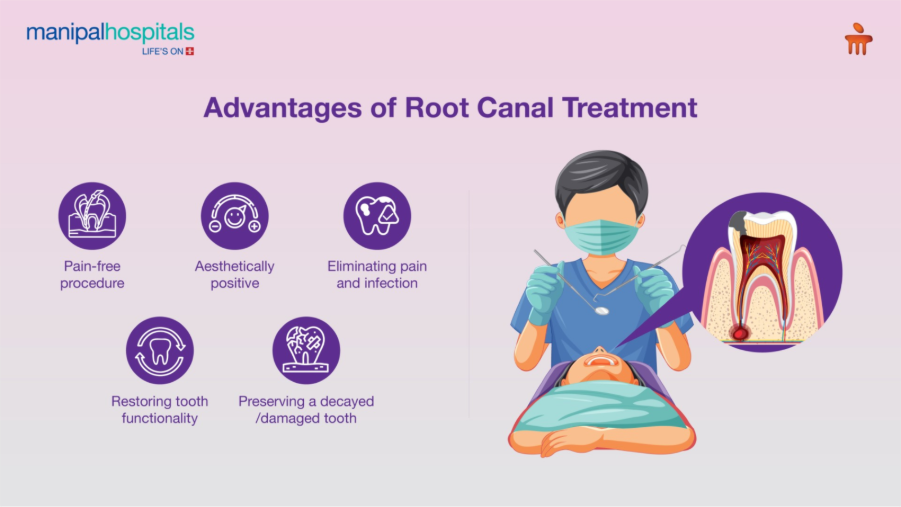
Root canal treatment offers several benefits over conventional treatments like filling or extraction:
-
Relieving pain- Removal of the infected/inflamed pulp eliminates the pain.
-
Preventing infection- It prevents the infection from spreading to the surrounding teeth, jawbone or the bloodstream.
-
Saving the natural tooth- This procedure helps to restore the natural tooth instead of resorting to extraction or bridges, or implants.
-
Restoring function- After the treatment, a tooth regains its functions like chewing, biting, or speaking.
-
Pain-free- It is usually a painless procedure, apart from a minute prick of the anaesthesia.
-
Maintaining aesthetics- The treated tooth is provided with a filling or crown of the closest natural shade to enhance the smile and boost confidence.
-
Long-lasting- A successful root canal treatment followed by a permanent restoration like a crown can last for years.
Myths and Facts about Root Canal Treatment
Though common, there are several misconceptions about the root canal treatment procedure. Here are some of the common myths debunked:
1. Myth- Root Canal Treatment is excruciatingly painful
Fact- The use of anaesthesia makes it pain-free
2. Myth- Extracting a tooth is a better option compared to a root canal treatment
Fact- Preserving the natural tooth is always a superior choice
3. Myth- Root canal treatment is unsafe and can cause diseases like cancer
Fact- The procedure is completely safe with almost no side effects
4. Myth- The tooth treated with RCT does not last for long
Fact- A properly done RCT, followed by a crown placement on the tooth, can preserve it for many years
5. Myth- Root canal treatment cannot be done during an infection
Fact- It is better to get a root canal procedure when the tooth pulp gets infected and inflamed
What are the side effects of Root Canal Treatment?
Since it is a safe and convenient procedure, root canal treatment side effects are mild and temporary, including:
-
Tenderness, sensitivity, or discomfort following the procedure
-
Tooth discolouration
-
Treated tooth becoming brittle
-
Re-infection (rare complication)
Aftercare for Root Canal Treatment
To ensure proper healing of a tooth after the root canal treatment, it is advisable to practise caution and take special care. Some tips include:
-
Taking medicines or pain-relievers, as directed by the dentist
-
Rinsing with warm saline water
-
Not chewing on the treated tooth for a few days
-
Avoiding hard, crunchy, or sticky foods
-
Eating soft food for a few days
-
Brushing gently twice daily to maintain oral hygiene
-
Flossing every night
-
Abstaining from the use of tobacco and alcohol for optimum healing
Conclusion
A root canal treatment is a safe, effective, and tooth-saving procedure that helps relieve pain, prevent further infection, and preserve the tooth without the need of an implant. By understanding what root canal treatment is, the steps involved, and the possible side effects, patients can feel more confident and prepared. With timely care and good oral hygiene, protecting the natural teeth and maintaining long-term dental health is possible.
Visit the advanced department of Dental Care at Manipal Hospitals Kolkata for any problem relating to the tooth and the gum. The state-of-the-art equipment and the expert specialists treat oral conditions effectively and take care of the patients’ aesthetic needs.
FAQ's
A root canal treatment usually takes 1–2 sessions, each lasting about 45–90 minutes, depending on the tooth and severity of infection.
A crown is required in most cases. But it is almost mandatory for the back teeth, as a crown strengthens and protects the treated tooth.
With proper care and a crown, a tooth that is preserved with the help of root canal treatment can last many years often a lifetime.
It’s rare, but possible if the tooth wasn't restored properly or if new decay occurs. Regular check-ups help prevent this.
Most patients can resume normal routines the same day, but care should be taken to avoid chewing hard foods until the final crown is placed.
Share this article on:





