7 Min Read
A stroke is a medical emergency that requires urgent care as soon as symptoms appear. According to the World Stroke Organization, one person suffers a stroke every 5 seconds, and around 14 million people experience a stroke each year worldwide. Out of these, nearly 5.5 million lose their lives. What makes stroke even more concerning is that many do not recognise the symptoms when they first appear. Most strokes happen suddenly, giving little time to react. Yet, early treatment can save brain cells, prevent disability, and improve recovery.
This is why awareness matters. Knowing the signs of a stroke helps people act fast, support loved ones and possibly save a life. In this blog, we will walk through the early signs, subtle symptoms, and the steps to take during a stroke emergency. We will also discuss the signs of recovery from stroke, so you know what progress may look like in the weeks and months that follow.
If you or a loved one notice any stroke symptoms, consult the best Neurologist in Kolkata, immediately for expert diagnosis and timely treatment.
Synopsis
Understanding Stroke: What Happens in the Body?
Every stroke begins with a sudden change in blood flow to the brain. Our brain works properly only when it receives a steady flow of oxygen-filled blood. When this flow is blocked or interrupted, brain cells start to die within minutes. This damage can affect a person’s ability to move, speak, think, or see.
There are three main types of strokes:
-
Transient Ischaemic Stroke:
This is also known as mini stroke, and it happens when blood flow to the brain gets blocked temporarily. Its symptoms are like a stroke, and they resolve on their own in a few minutes. But it is a major warning sign towards future stroke attacks and should be evaluated immediately.
-
Ischaemic Stroke:
This is the most common type. This type of stroke occurs when a clot prevents blood from moving through one of the brain’s vessels. Conditions like high blood pressure, high cholesterol, diabetes, and smoking increase the risk.
-
Hemorrhagic Stroke:
This occurs when a weak blood vessel breaks and leads to bleeding inside the brain. It can be linked to uncontrolled blood pressure, trauma, or weak blood vessels.
Even though the causes might differ, the signs and symptoms of stroke appear quickly in both cases, making it important to recognise them early.
What are the Early Warning Signs of a Stroke?
Stroke symptoms often start without warning. They may be mild at first or seem confusing. But even a slight change can be a serious signal. Below are some early warning signs that often appear when a stroke begins:
-
Facial Drooping
The person’s face may suddenly feel numb or appear to droop on one side. When the person smiles, the smile may look uneven or lopsided. This symptom usually appears early and is often easy to spot.
-
Sudden Numbness or Weakness
The weakness usually affects one side of the body. A person may have difficulty lifting an arm, gripping objects, or walking steadily.
-
Speech Problems
Speech becomes unclear or slurred. The person might struggle to form words or understand simple questions.
-
Vision Changes
Some people experience changes in sight, such as blurriness, double vision, or sudden vision loss in one or both eyes.
-
Sudden Severe Headache
This headache is often intense and unusual. It may appear with vomiting, dizziness, or confusion.
-
Loss of Balance or Coordination
A person may have trouble walking, feel dizzy, or lose control of their movements.
These symptoms should never be ignored, even if they go away after a few minutes. This could indicate a Transient Ischaemic Attack (TIA), often called a “mini stroke”, which is a major warning sign of a future stroke.
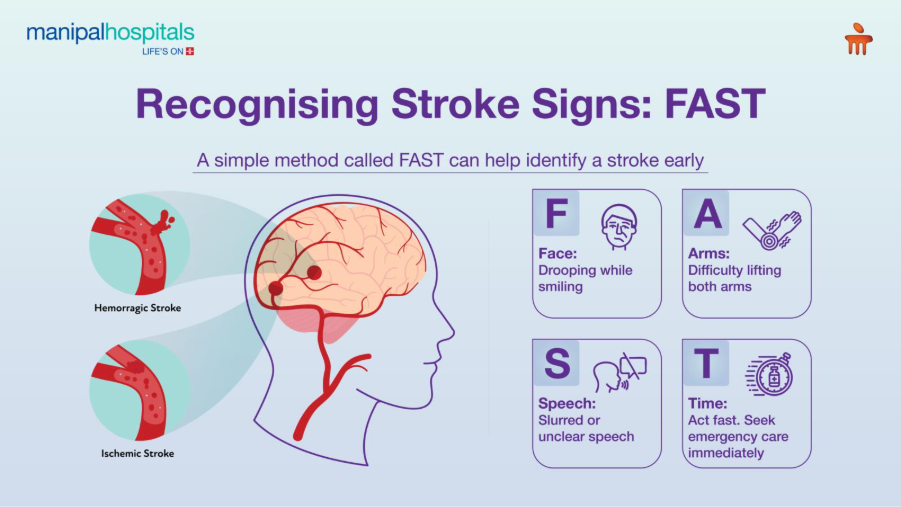
The FAST Method: A Simple Tool to Identify Stroke Symptoms
During an emergency, remembering every symptom can be difficult. The FAST test helps you identify key signs quickly:
-
F - Face: Ask the person to smile. Is one side drooping?
-
A - Arms: Ask them to raise both arms. Does one arm fall?
-
S - Speech: Check if the person has trouble speaking or speech sounds slurred/ strange.
-
T - Time: If these symptoms appear, seek medical emergency immediately.
FAST is easy to remember and helps people act quickly. The faster the treatment, the better the outcome.
Additional Signs and Symptoms of Stroke
Some symptoms are less obvious but still important. These may include:
-
Trouble Swallowing: Swallowing may feel difficult or painful, increasing the risk of choking.
-
Sudden Confusion: The person may feel disoriented, forget simple things, or have difficulty staying alert.
-
Behaviour or Mood Changes: Some people become unusually irritable, anxious, or emotional.
-
Nausea and Vomiting: This is more common in haemorrhagic strokes, especially when the pressure in the brain increases.
-
Fainting or Sudden Collapse: Loss of consciousness, though less common, is a serious sign and needs urgent medical help.
What To Do in a Stroke Emergency
A quick response can protect the brain and improve survival. Here is what you should do if you notice stroke symptoms:
-
Call for emergency help immediately: Do not wait to "see if symptoms improve". Every minute lost increases brain damage.
-
Keep the person calm and comfortable: Help them sit or lie down safely. Support the head slightly raised.
-
Do not give food, water, or medicine: Swallowing may be affected, increasing the risk of choking.
-
Note the time symptoms started: Doctors use this information to decide the best treatment, especially if clot-busting medicine is needed.
-
Monitor their breathing and movement: If the person becomes unconscious, make sure the airway is clear.
Every minute saved can protect mote brain cells and leads to better results and smoother recovery.
Signs of Recovery from Stroke
Every recovery journey is different, but many people show encouraging signs within days or weeks. These improvements help doctors understand how well the brain is healing.
-
Return of Strength and Movement: Weak limbs may become easier to move. Some people begin walking short distances with support.
-
Better Speech and Communication: Speech becomes clearer. The person may slowly regain the ability to express thoughts or understand conversations.
-
Improved Balance and Coordination: Activities like standing, turning, or walking become more stable.
-
More Control Over Daily Activities: The person may begin eating, dressing, and performing simple tasks with less help.
-
Emotional and Cognitive Improvements: Memory, attention, and mood often show gradual progress with therapy and support.
Recognising these signs of recovery from stroke offers hope and motivation for patients and families.
Conclusion
Stroke is sudden, serious, and often silent until symptoms appear. But with the right knowledge, we can act quickly and protect lives. Learning the signs of a stroke, spotting early warning signals, and responding without delay can make a life-changing difference. Recovery may take time, but early treatment gives the best chance of regaining strength and independence.
If you or a loved one ever notices these symptoms, do not wait. Seek immediate medical care at your nearest emergency department in Manipal Hospitals. Early treatment can save life and function. Residents across Kolkata can access timely stroke and emergency services at Manipal Hospitals in Salt Lake, Broadway, Dhakuria, Mukundapur, and EM Bypass. Each unit is equipped to provide prompt assessment and specialised care when every second counts.
FAQ's
No, early signs of a stroke are often painless. Most people feel weakness, numbness or confusion without any pain. The only painful symptom may be sudden severe headache, usually linked to bleeding in the brain.
Yes, strokes can occur during sleep. This is called a wake-up stroke. The person may wake with slurred speech, facial drooping, weakness, or difficulty standing. If you notice these symptoms, treat it as a medical emergency even if you don’t know when the stroke started.
Women may experience some additional or less obvious symptoms such as shortness of breath, sudden fatigue, nausea, hiccups, or chest discomfort. These are often mistaken for other conditions, causing delays in treatment. Awareness helps identify stroke early in women of all ages.
Treatment is most effective when given within the first 3 to 4 hours of symptom onset. This period is known as the “golden window”. Immediate medical care can restore blood flow and reduce disability. If you notice symptoms, even briefly, seek medical emergency helo without waiting.
Yes. After experiencing early symptoms or a mini-stroke (TIA), lifestyle changes such as managing blood pressure, controlling diabetes, quitting smoking, reducing salt intake, staying active, and maintaining a healthy weight can significantly lower the risk of a future stroke.
Share this article on: