




 5 Min Read
For individuals facing the challenges of a slow or irregular heartbeat, chances are they need a pacemaker. This device is life-changing for many, literally setting a new rhythm for a brighter future. Thanks to advancements in technology, new-generation pacemakers pose much lower risk than traditional pacemakers. However, some measures are necessary to be taken by those who underwent implantation to avoid risks and complications. The advancement in modern pacemaker technology has transformed patient outcomes, offering unprecedented reliability and comfort.
Synopsis
What is a Pacemaker?
It is natural to ask - what is a pacemaker?
A pacemaker is a small, implantable device that sends electrical signals to regulate your heart’s rhythm. It is an essential treatment for various cardiac conditions where the heart beats too slowly (bradycardia) or irregularly (arrhythmia), to ensure that the heart maintains a steady, effective pace to pump blood throughout your body.
Understanding the Need for a Pacemaker
Cardiac arrhythmias are disorders that affect the heart's natural electrical system. Because of these, the heart either beats too slowly, too fast, or irregularly. Symptoms often include fatigue, dizziness, shortness of breath and fainting. When the heart beats too slowly, it cannot pump enough blood, which leads to significant health issues. A pacemaker ensures your heart maintains a healthy rhythm, alleviating symptoms and significantly reducing the risk of serious complications.
What heart conditions require a pacemaker?
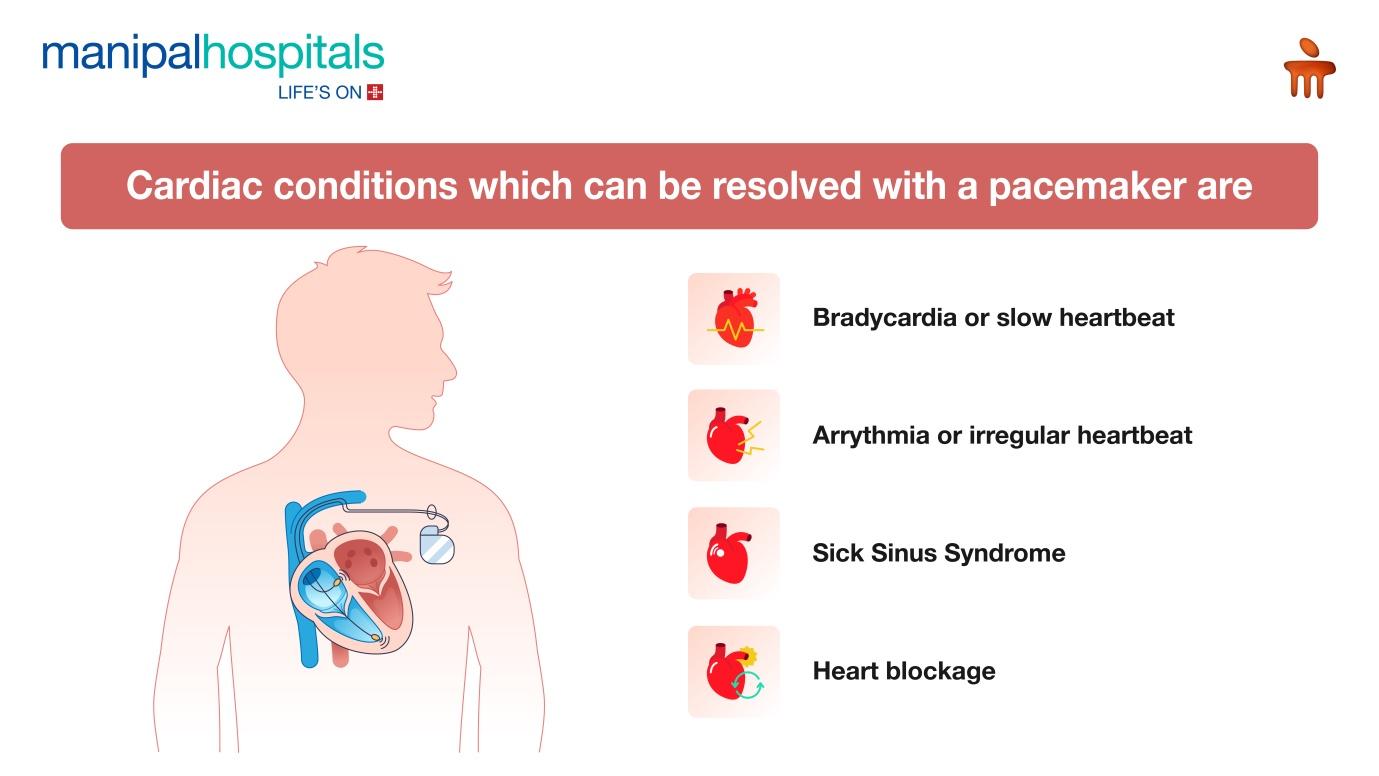
There are certain heart conditions which warrant need for a pacemaker implantation. These include:
-
Bradycardia: The most common reason for a pacemaker implantation, where the heart beats too slowly (typically less than 60 beats per minute), causing insufficient blood flow.
-
Heart Block: A condition where electrical signals that tell the heart to beat are partially or completely blocked.
-
Sick Sinus Syndrome: A malfunction of the heart's natural pacemaker, leading to erratic heart rates.
Leadless Pacemaker
Leadless pacemaker is a small cardiac device designed to treat bradycardia, or slow heart rate. Unlike traditional pacemakers which contain a pulse generator and leads connecting with the heart, leadless pacemakers are a small device placed directly into the right ventricle of the heart. This reduces the risk of wires and dislodged lead particles, ensuring safety and precision. Other than patients with bradycardia, this pacemaker is also suitable for patients for whom traditional pacemaker implantation may pose a risk.
There are several benefits of leadless pacemakers, such as:
-
Minimally invasive: Leadless pacemaker implantation is an advanced, minimally invasive procedure. It is performed by inserting a catheter through a vein in the leg, bypassing the need for chest incisions.
-
Lesser complications: Leadless pacemakers do not need external batteries or leads, so there is no risk of broken lead fragments. Risk of infections, excess blood loss and other related complications are also avoided.
-
No visible scars: as the device is placed underneath the heart, no visible scars or bumps are present. This aids cosmetic appeal.
-
Longer battery life: Leadless pacemakers often last a lot longer than traditional pacemakers, often going over 12 years.
Life after Pacemaker Implantation
Modern pacemaker technology has improved significantly. These devices are smaller and more sophisticated, offering better optimization of heart function. These include advanced sensors that adjust heart rate to activity levels, with battery life often extending up to 15 years. Some pacemakers, like the dual chamber pacemaker, can stimulate both the atrium and ventricle to mimic the heart's natural rhythm more closely. Many pacemakers are now MRI-safe, meaning pacemaker patients can undergo MRI without complications.
Undergoing a pacemaker implantation is a common and safe procedure. Most patients experience a quick recovery and return to regular activities, often feeling more energized.
-
Faster Recovery: A short hospital stay (typically 24-48 hours) for monitoring and ensuring correct pacemaker function.
-
Gradual Return to Activities: Light activities are encouraged as the patient heals from surgery. It is advised to avoid heavy lifting or strenuous arm movements on the implantation side for a few weeks to allow healing.
-
Improved Quality of Life: Patients report a dramatic decrease in symptoms like fatigue and dizziness. Over 85% of pacemaker recipients report significant improvement in physical activity levels within six months, resuming hobbies, sports, and travel.
Care Essentials: Do's and Don'ts of Pacemaker Implantation
Some simple yet essential tips should be followed to avoid risks and ensure the best quality of life after pacemaker implantation.
Do's:
-
Attend all follow-up appointments after surgery.
-
Carry your pacemaker identification card while going for doctor visit or tests.
-
Inform all healthcare providers about your pacemaker.
-
Be mindful of electromagnetic fields (e.g., keep cell phones 6 inches away).
-
Stay active within limits, as cleared by your doctor.
Don'ts:
-
Avoid direct impact over the pacemaker site.
-
Don't ignore symptoms like dizziness or palpitations; inform your doctor immediately.
-
Don't undergo certain medical procedures (e.g., non-MRI compatible MRI, lithotripsy) without cardiologist clearance.
-
Don't allow magnets near your pacemaker.
For modern-day, advanced pacemakers, there are no specific “don’t’s” that have to be maintained.
Conclusion
A pacemaker is truly a new lease on life. It enables individuals to overcome heart rhythm limitations and embrace a future filled with vitality. Most patients who underwent pacemaker implantation report high satisfaction, enjoying significant improvements in energy, exercise tolerance, and overall quality of life. Experts at Manipal Hospitals provide state-of-the-art cardiac care, guiding you through every step of your pacemaker implantation journey – from diagnosis to long-term follow-up. If you are experiencing symptoms of an irregular heartbeat or have concerns, it is crucial to seek timely medical advice. Book an appointment with our expert cardiologists at Manipal Hospitals today to discuss your options and embark on a path towards a healthier heart.
FAQ's
Modern pacemakers typically have a battery life of 10 to 15 years; replacement is a minor procedure.
Yes, but hold it to the ear opposite your pacemaker and avoid carrying it in a shirt pocket directly over the device.
It is possible, so inform security and show your ID card; they will likely use a hand-held wand.
After initial recovery, most are encouraged to exercise. Your doctor will provide specific guidelines.
Many modern pacemakers are MRI-compatible. Always confirm with your cardiologist and technician before any scan.
Share this article on:


.webp "Comprehensive healthcare services at the best hospital in Kolkata")





