7 Min Read
Kidney problems in children are not very common. However, when they occur, they need early attention. The kidneys play an important role in a child’s growth and overall health. They remove waste, balance fluids, and control blood pressure.
When the kidneys do not work properly, it can affect the whole body. Knowing the kidney disease symptoms early can help parents seek timely medical care and prevent complications.
Synopsis
- Understanding Kidney Disease in Children
- Early Signs of Kidney Disease in Children
- Kidney Disease Symptoms in Children
- Causes of Kidney Disease in Children
- What is Chronic Kidney Disease in Children?
- How is Kidney Disease Diagnosed?
- Kidney Disease Treatment in Children
- Can Kidney Disease Be Prevented?
- When Should Parents See a Doctor?
- Conclusion:
Understanding Kidney Disease in Children
Kidney disease happens when the kidneys lose their ability to function normally. It may be temporary or long term. Some children are born with kidney problems, while others develop them later due to infections or other medical conditions.
There are different types of kidney disease in children. These include:
-
Acute kidney injury
-
Chronic kidney disease
-
Nephrotic syndrome
-
Glomerulonephritis
-
Congenital kidney abnormalities
-
Urinary tract obstruction
Some conditions are mild and improve with treatment. Others may require long-term care and monitoring.
Early Signs of Kidney Disease in Children
Kidney problems in children may not always show clear symptoms at the start. Many early signs are mild and easy to miss. That is why parents should pay attention to small changes.
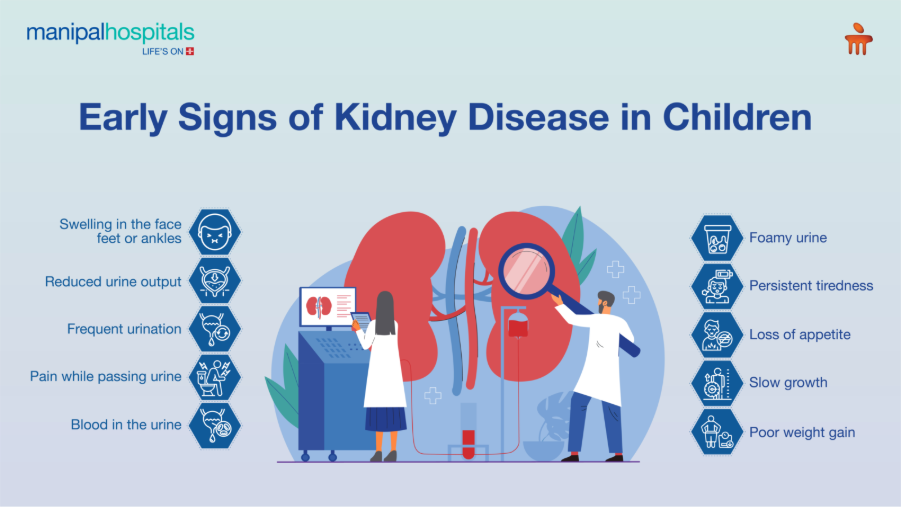
The early signs of kidney disease may include:
-
Swelling around the eyes, face, feet or ankles
-
Reduced urine output
-
Frequent urination, especially at night
-
Pain or burning while passing urine
-
Blood in the urine
-
Foamy urine
-
Persistent tiredness
-
Loss of appetite
-
Slow growth
-
Poor weight gain
In some cases, children may also develop high blood pressure. If these symptoms continue for several days, it is important to consult a doctor.
Kidney Disease Symptoms in Children
As the condition progresses, the kidney disease symptoms may become more noticeable. These symptoms can vary depending on the cause and severity.
Common symptoms include:
-
Persistent swelling in the body
-
Pale skin
-
Headaches
-
Nausea or vomiting
-
Difficulty concentrating
-
Irritability
-
Dry and itchy skin
-
Muscle cramps
In severe cases, children may feel extremely weak or confused. Some may experience seizures if the condition becomes serious. Immediate medical care is needed in such situations.
Causes of Kidney Disease in Children
Kidney disease in children can occur due to several reasons. Understanding the cause helps in choosing the right treatment.
1. Congenital Conditions: Some children are born with abnormal kidney structure. This can affect how the kidneys function. Conditions like blocked urine flow or missing kidney tissue fall into this category.
2. Infections: Repeated urinary tract infections can damage the kidneys over time. Severe kidney infections may also lead to complications.
3. Immune System Disorders: In some children, the immune system attacks the kidneys. This can cause inflammation and damage.
4. Genetic Disorders: Certain kidney conditions run in families. Polycystic kidney disease is one such example.
5. Chronic Illnesses: Long-term conditions like diabetes or high blood pressure can lead to chronic kidney disease. Though rare in young children, it may occur in older children and teenagers.
6. Dehydration or Severe Illness: Severe dehydration, major infections or shock can cause acute kidney injury.
What is Chronic Kidney Disease in Children?
Chronic kidney disease is a long-term condition where the kidneys gradually lose their function over time. It develops slowly and may not show clear symptoms in the beginning.
Children with chronic kidney disease may experience:
-
Delayed growth
-
Bone weakness
-
Learning difficulties
-
Anaemia
-
Poor appetite
Early diagnosis is important. With proper management, many children can lead active and healthy lives.
How is Kidney Disease Diagnosed?
Doctors use several tests to diagnose kidney problems. These tests help identify the type and severity of the condition.
Common tests include:
-
Urine tests to check for protein or blood
-
Blood tests to measure kidney function
-
Blood pressure monitoring
-
Ultrasound of the kidneys
-
Special imaging tests
-
Kidney biopsy in selected cases
Early detection allows timely intervention and reduces the risk of long-term damage.
Kidney Disease Treatment in Children
The goal of kidney disease treatment is to manage symptoms, treat the underlying cause, and prevent complications. The treatment plan depends on the type and stage of the disease.
1. Medicines
Doctors may prescribe medicines to:
-
Control blood pressure
-
Reduce swelling
-
Treat infections
-
Manage anaemia
-
Reduce protein loss in urine
2. Dietary Changes
Children with kidney problems may need a special diet. This may include:
-
Limiting salt intake
-
Controlling protein consumption
-
Managing potassium and phosphorus levels
-
Ensuring proper calorie intake for growth
-
A paediatric dietitian can guide parents on proper meal planning.
3. Fluid Management
In some cases, fluid intake may need to be adjusted. This helps prevent swelling and fluid overload.
4. Dialysis
If the kidneys fail to function properly, dialysis may be needed. Dialysis removes waste and excess fluid from the blood. It can be temporary or long term.
5. Kidney Transplant
For severe cases of kidney failure, a kidney transplant may be recommended. Many children who undergo transplant can return to school and normal activities after recovery.
Early and appropriate kidney disease treatment can greatly improve a child’s quality of life.
Can Kidney Disease Be Prevented?
Not all kidney diseases can be prevented. However, certain steps can reduce the risk:
-
Encourage children to drink enough water
-
Treat urinary infections early
-
Maintain good hygiene
-
Ensure regular medical check-ups for children with chronic conditions
-
Monitor blood pressure in high-risk children
-
Follow the doctor’s advice if there is a family history of kidney problems
-
Awareness of kidney disease symptoms is the first step towards prevention.
When Should Parents See a Doctor?
Parents should consult a doctor if they notice:
-
Persistent swelling
-
Blood in urine
-
Severe abdominal or back pain
-
Reduced urine output
-
Ongoing fatigue
-
High blood pressure
Do not ignore symptoms that last for more than a few days. Early evaluation can prevent serious complications.
Conclusion:
A diagnosis of kidney disease can feel overwhelming for any parent. However, with the right medical support, many children manage the condition well and lead active lives. Early recognition of kidney disease symptoms makes a real difference. Timely care helps prevent complications and supports healthy growth. At Manipal Hospitals, Kolkata, our paediatric specialist provides comprehensive care for children with kidney problems. From advanced diagnostics to personalised kidney disease treatment plans, every child receives focused attention.
Our team closely monitors growth, nutrition and overall development to ensure the best possible outcomes.
FAQ's
The most common kidney disease symptoms include swelling around the eyes or feet, changes in urination, tiredness and poor appetite. Some children may have blood or foam in their urine. These signs should not be ignored, especially if they persist for several days.
The early signs of kidney disease may be mild and easy to miss. They include frequent urination at night, mild swelling, reduced urine output and fatigue. Slow growth or poor weight gain can also be early indicators of a kidney problem in children.
There are several types of kidney disease in children. These include acute kidney injury, chronic kidney disease, nephrotic syndrome and congenital kidney abnormalities. Some are temporary and treatable, while others require long term care and monitoring.
Chronic kidney disease is a long-term condition that develops slowly over time. Unlike sudden kidney injury, it gradually reduces kidney function. Children with this condition may need regular follow up, medicines and dietary changes to manage symptoms and prevent complications.
Kidney disease treatment depends on the cause and severity. It may include medicines, dietary changes, fluid control and regular monitoring. In advanced cases, dialysis or kidney transplant may be required. Early treatment improves outcomes and supports normal growth.
Yes, many children with kidney disease can live active and fulfilling lives. Early diagnosis and proper treatment are important. Regular medical care, healthy eating and emotional support help children manage their condition and continue with school and daily activities.
Share this article on: