6 Min Read
.webp "Nipah virus transmission from animals to humans")
Nipah virus is a rare but highly dangerous infection that spreads from animals to humans. In some cases, it also spreads from one person to another. Over the years, several outbreaks have been reported in South Asia, including India. Recent nipah virus updates have shown that early awareness and prevention are the only strong defences against this infection.
To protect yourself and your family, it is important to understand nipah virus transmission and how it moves from animals into human communities.
Synopsis
- What is Nipah Virus?
- Role of Fruit Bats in Nipah Virus Transmission
- Transmission Through Contaminated Fruits
- Transmission Through Date Palm Sap
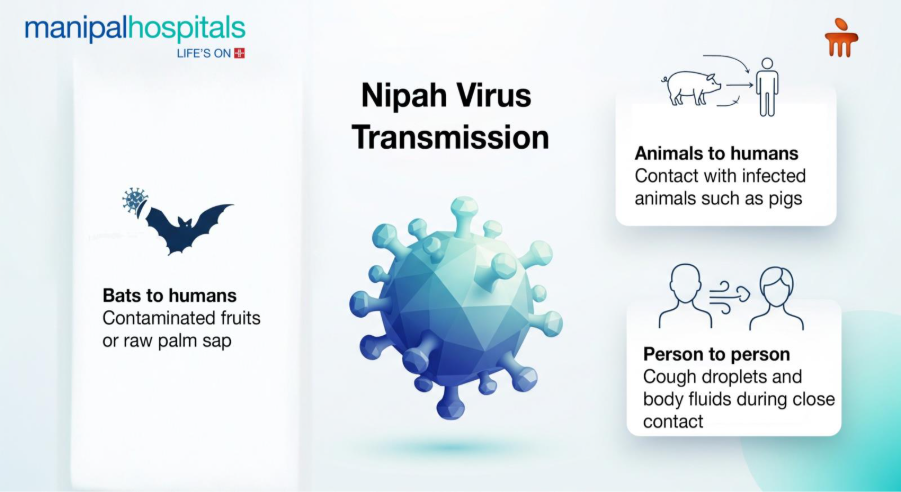
- Transmission From Animals to Humans
- Human to Human Transmission
- How nipah virus spread between people
- What is the First Symptoms of Nipah Virus?
- Why Nipah Virus Transmission is Hard to Detect Early
- Risk Factors That Increase the Chances of Infection
- Prevention Measures That Can Stop Transmission
- Conclusion
What is Nipah Virus?
Before understanding how the virus spreads, it is important to know what is nipah virus and why it is considered a serious public health concern.
Nipah virus is a zoonotic virus. This means it naturally lives in animals and can pass to humans. It belongs to a group of viruses that affect the respiratory and nervous systems. The infection can lead to brain inflammation, breathing problems, and in many cases, death.
Fruit bats are the natural carriers of this virus. They do not fall sick but they can spread the virus through their saliva, urine, and droppings. Humans and animals become infected when they come into contact with these contaminated sources.
Role of Fruit Bats in Nipah Virus Transmission
Fruit bats play a central role in nipah virus transmission. Understanding their role helps explain why outbreaks often happen in specific regions.
These bats feed on fruits and often live near farms and human settlements. When they bite fruits or sit on them, their saliva or urine can contaminate the surface. If people consume these fruits without washing them properly, the virus can enter the body. This indirect contact is one of the most common reasons for the spread of infection.
Transmission Through Contaminated Fruits
One major route of nipah virus transmission is through fruits that bats have touched or eaten.
In many rural and semi urban areas, fruits are collected from the ground or directly from trees. If these fruits are contaminated by bats, the virus remains on the surface. People may not realise the risk and may eat them raw.
This has been repeatedly noted in nipah virus updates from affected regions. Washing fruits properly and avoiding damaged fruits can greatly reduce the risk.
Transmission Through Date Palm Sap
In certain regions, people consume fresh date palm sap as a traditional drink. This practice has been linked to Nipah outbreaks. This is one of the most common nipah virus transmission routes in South Asia.
How it happens
-
Bats bite into fruit and drop it.
-
Bats lick date-palm sap collecting pots at night.
-
The virus remains on these surfaces.
-
Humans consume the contaminated food or drink.
Prevention
-
Wash and peel fruits.
-
Avoid fruits found on the ground or with bite marks.
-
Do not drink raw date-palm sap.
Transmission From Animals to Humans
Animals such as pigs can become infected after contact with bats. Humans then get infected through:
-
Handling sick animals
-
Cleaning animal waste
-
Slaughtering or butchering infected animals
This form of transmission was first observed during the initial outbreak in Malaysia. Farmers and animal handlers were among the first people to get infected. Close contact with sick animals without protective measures increases the risk.
Human to Human Transmission
Nipah virus transmission is not limited to animals. It can also spread between people, especially in close settings like homes and hospitals.
How nipah virus spread between people
-
Cough droplets
-
Saliva and nasal secretions
-
Blood or other body fluids
-
Contaminated surfaces during care
Caregivers and healthcare workers face higher risk without strict infection control.
What is the First Symptoms of Nipah Virus?
Recognising early symptoms is important because the infection progresses quickly. The first symptoms of nipah virus often look like a common viral fever. People may experience:
Because these signs are mild, many people ignore them. Within a few days, the condition can worsen. The patient may develop confusion, drowsiness, seizures, and breathing difficulty. This stage indicates brain involvement and requires urgent medical care.
Why Nipah Virus Transmission is Hard to Detect Early
In the early stage, there are no unique symptoms that clearly indicate Nipah infection. This makes early diagnosis difficult.
People may continue their normal activities, unknowingly spreading the virus to others. By the time serious symptoms appear, the infection may have already spread within the household or healthcare setting. This silent spread makes awareness very important.
Risk Factors That Increase the Chances of Infection
Certain habits and environments increase the chances of nipah virus transmission.
-
Eating unwashed fruits
-
drinking raw date palm sap
-
living near bat habitats
-
handling animals without protection
-
caring for infected patients without safety measures
Prevention Measures That Can Stop Transmission
Prevention focuses on avoiding contact with contaminated sources.
Washing fruits thoroughly, avoiding damaged fruits, not consuming raw date palm sap, and maintaining hygiene while caring for sick individuals can prevent infection.
Hospitals must follow strict infection control practices to stop human to human spread.
Conclusion
Nipah virus transmission follows clear and preventable routes, from contaminated fruits and sap to animal and human contact. Understanding what is Nipah virus and recognising what is the first symptoms of Nipah virus allows early action and reduces risk. If exposure or symptoms are suspected, prompt medical evaluation is vital. Early assessment can protect both individual health and the wider community.
FAQ's
No, Nipah spreads through close contact with body fluids and droplets, not through long-distance airborne transmission like influenza or COVID-19.
Direct contact with bats or surfaces contaminated by their saliva or urine can transmit the virus, especially if it enters through cuts or the mouth.
No, cooking destroys the virus. Risk comes from raw or unwashed fruits and uncooked palm sap contaminated by bats.
People are most infectious when symptoms like fever and cough begin, especially during the first days before diagnosis and isolation.
Share this article on: