




 5 Min Read
Child vaccination is one of the most important preventive measures for protecting a child's health. Vaccines protect them from serious and life-threatening infectious diseases. They strengthen the immune system to fight infections safely and effectively. Following the recommended vaccinations for India for children helps reduce complications, hospitalisation, and disease outbreaks. This blog intends to update parents about the list of essential vaccines. Staying informed and following recommended guidelines can help parents to make the right decisions while safeguarding the long-term health and well-being of their child.
Synopsis
Child vaccination and its significance
‘Child vaccination’ refers to introducing vaccines into a child’s body that enable their immune system to recognise and fight specific infections. But what is a ‘vaccine’? A vaccine contains the parts of the specific germ that are either inactive or weakened. These can safely stimulate the body to produce antibodies against them without causing illness. The protective shield thus created extends beyond the individual through herd immunity. Thereupon, widespread vaccination can not only help reduce disease spread but also protect vulnerable children who cannot be vaccinated.
There are several advantages of vaccination, including fewer infections, prevention of large outbreaks, and reduced healthcare costs. Therefore, in densely populated countries like India, there is an enhanced risk of exposure with a faster spread of infectious diseases. This makes vaccination much more critical.
Mandatory vaccinations for children in India
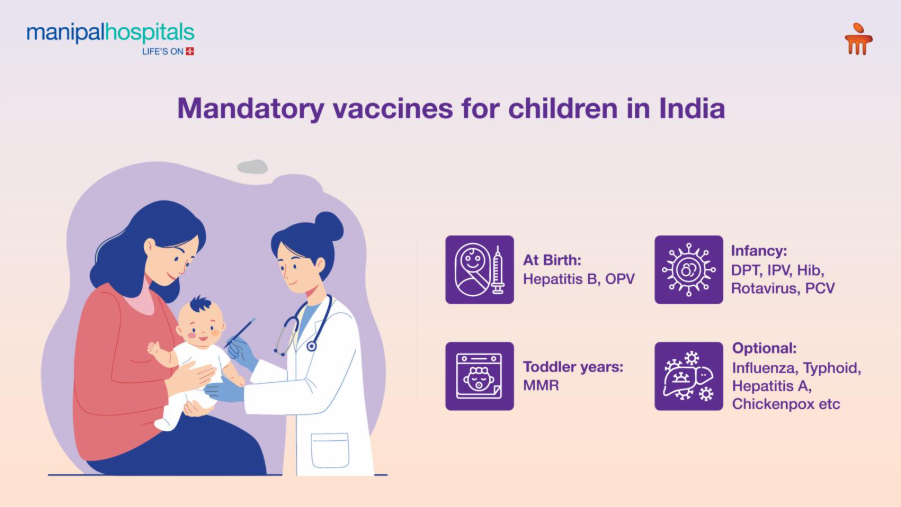
The National Immunisation Schedule (NIS) is followed in India. It helps protect children from life-threatening infectious diseases and ensures healthy growth and development. The NIS guidelines include vaccines as per age groups:
-
At Birth - BCG (tuberculosis), Hepatitis B (liver infection), OPV (polio)
-
Infancy - DPT (diphtheria, pertussis, and tetanus), IPV (polio), Hib (meningitis and pneumonia), Rotavirus (severe diarrhoea), and PCV (pneumonia and blood infections)
-
Toddler Years (along with essential booster doses) - MMR (measles, mumps, and rubella)
-
Optional (but recommended) - Influenza, Typhoid, Hepatitis A, Chickenpox, and Japanese Encephalitis
5-year child vaccination: What parents should know
The 5-year child vaccination plays an important role before school entry. This helps in building strong and prolonged immunity. Since immunity can weaken over time, vaccine boosters help ensure continued protection against common childhood infections during the school-going years.
These boosters usually include vaccines like DTaP/DPT (diphtheria, tetanus, pertussis) and polio (OPV/IPV), along with MMR (measles, mumps, rubella) and varicella (chickenpox).
The efficacy of a vaccine may vastly decrease if the booster is not administered on time. This may leave children vulnerable to diseases that are otherwise preventable with vaccines. Therefore, parents should review their child’s vaccination card for any missed doses before school admission. In case of a miss, it becomes essential to consult a paediatrician and complete the missed vaccination at the earliest.
Anti-rabies vaccine
Though 100% fatal once symptoms appear, rabies can be completely prevented with timely vaccination. Hence, it is crucial to seek medical care immediately after any animal bite or scratch.
The anti-rabies vaccine dose in a child works as a shield after being bitten or scratched by a dog, cat, or any potentially rabid animal. Even a lick on broken skin may cause this deadly disease. Thus, it is imperative to wash the affected area thoroughly with soap under running water immediately after exposure. This should be followed by a prompt medical evaluation.
Following the exposure, vaccination should start as soon as possible. This is usually administered in multiple doses over a few weeks. In case of severe bites, rabies immunoglobulin may also be required.
Child vaccination: safety, side effects, and common myths
Vaccination is the best possible way to prevent serious and life-threatening infections in children. Understanding the safety of vaccines and the potential side effects can help parents make informed, confident decisions.
-
Vaccine safety: Vaccines for children are approved only after rigorous research, clinical trials, and regulatory review. Ongoing safety and effectiveness are ensured through continuous monitoring, even after licensing.
-
Common side effects: Side effects include mild fever, fussiness, pain, redness, or swelling at the injection site. These reactions are normal and short-lived. They appear as the sign of protection or immunity being built up by the child’s immune system.
-
Severe side effects: Serious reactions are rare and minimal. When compared, the benefits of vaccines heavily outweigh the dangers of vaccine-preventable diseases.
-
Myths and facts: The common misconception about the probability of vaccines causing autism or delayed development has already been debunked by scientific studies.
-
Importance of vaccination: Timely vaccination can protect children from dreadful infections and promote herd immunity, thereby safeguarding the health of the wider community.
Conclusion
Child vaccination is a vital investment in your child’s present and future health. By protecting against serious, life-threatening infections, vaccines help build strong immunity, reduce complications, and prevent disease outbreaks—especially in densely populated countries like India. Staying updated with the National Immunisation Schedule and recommended boosters ensures complete and lasting protection. When parents are informed, they can make confident choices for their child’s well-being. For personalised guidance, missed doses, or vaccination planning, consult experienced paediatricians at Manipal Hospitals, Kolkata. Schedule your child’s vaccination appointment today to ensure a safer, healthier tomorrow.
FAQ's
Missing a dose can reduce protection, but it is rarely too late to catch up. Parents should consult a paediatrician, who can advise a catch-up schedule to ensure complete and effective immunisation.
Optional vaccines protect against additional infections like influenza, typhoid, and chickenpox. While not part of the national schedule, they are recommended by doctors based on the child’s health, exposure risk, and environment.
Parents should seek medical advice if a child develops a persistent high fever, unusual crying, breathing difficulty, or any severe reaction. Such events are rare, but prompt evaluation ensures timely care and reassurance.
Yes, children with mild illnesses such as cough, cold, or low-grade fever can usually be vaccinated safely. However, in cases of moderate or severe illness, doctors may advise postponing vaccination temporarily.
Yes, giving multiple vaccines in one visit is safe and effective. It does not overload the immune system and helps ensure timely protection while reducing the number of clinic visits for parents and children.
Share this article on:





