6 Min Read
Turning 30 is a subtle milestone; nothing dramatic happens overnight, but your body’s risk profile quietly begins to shift. What worked as “check only when something’s wrong” in your 20s becomes unreliable once you pass that mark. An annual health check is not about finding something to worry about; it’s about catching small issues early, steering lifestyle choices, and preventing problems that are much harder to fix later.
Think of an annual full-body health checkup as a yearly tune-up. It helps you understand where you are today and gives you a clear plan for staying healthy tomorrow. The checks and screenings included are guided by decades of data showing that early detection lowers the chance of complications and improves treatment outcomes.
Synopsis
- Annual Full Body Check After Age 30
- What A Typical Annual Full Body Check Includes
- The Most Important Tests After 30 - And Why They Matter
- How Regular Checkups Change Outcomes?
- Choosing The Right Package: What to Look For
- How Often Should You Get a Full Body Health Checkup?
- Lifestyle Changes is the Key to Good Health
- Conclusion
Annual Full Body Check After Age 30
By 30, several slow-burning risks start to show patterns: blood pressure trends, weight-related metabolic changes, cholesterol shifts, and, in some families, early signs of diabetes. These don’t always cause symptoms at first, which is precisely why you need objective tests. Routine screening helps you spot trends before they become diseases.
Annual checks also give you a baseline. When you compare year to year, small rises or falls in numbers become meaningful and actionable rather than sudden health emergencies.
What A Typical Annual Full Body Check Includes
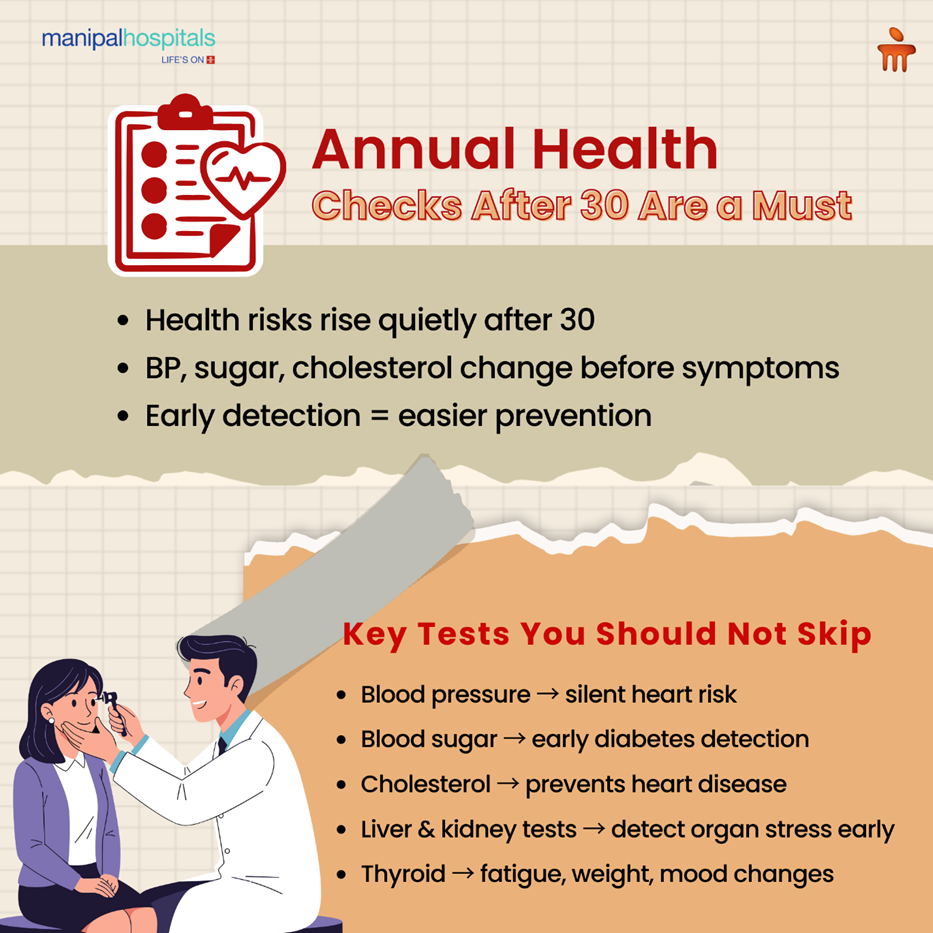
A full body checkup commonly groups together blood tests, simple imaging, and targeted screenings. While different hospitals and health checkup packages vary, most packages cover a core set of tests designed to screen for the common, silent conditions adults face after 30. Typical components include:
-
Blood pressure and pulse, measured at rest
-
Blood tests: CBC, fasting blood sugar and HbA1c, lipid profile, liver and kidney function tests, thyroid profile
-
Urine analysis to screen for infections or kidney issues
-
Electrocardiogram (ECG) to assess basic heart rhythm and signs of strain
-
Chest X-ray and/or abdominal ultrasound if indicated by history or symptoms
-
Vitamin D and basic nutrient screens were appropriate
-
For women: cervical screening (Pap or HPV testing) and clinical breast exam as per guidelines.
-
For men: clinical assessment and specific investigations if family history or symptoms exist.
-
All of the above can be packaged as a single body checkup or bundled into tiered health checkup packages (basic, advanced, executive), depending on the depth you want.
The Most Important Tests After 30 - And Why They Matter
You don’t need every possible test every year. But some checks become more important once you’re in your 30s:
|
Blood pressure check |
Hypertension often has no symptoms, but it increases the risk for heart disease and stroke. Regular checks let you notice a trend early. |
|
Blood sugar (FBS) and HbA1c |
Insulin resistance and prediabetes can start quietly. Detecting them early lets you reverse the trend with lifestyle changes. |
|
Lipid profile |
High cholesterol has no symptoms but drives heart disease over the years; knowing your numbers helps target diet, exercise, or medication. |
|
Liver and kidney function tests |
These screens identify organ stress early, often before symptoms appear. |
|
Thyroid profile |
Thyroid problems affect energy, weight, and mood; they’re common and treatable. |
|
Screenings relevant to your sex and risk |
Cervical cancer screening (Pap/HPV) for women and age-appropriate cancer checks as guided by authoritative recommendations. These screenings follow evidence-based intervals and can prevent advanced disease if followed. |
How Regular Checkups Change Outcomes?
When you catch elevated blood sugar before it becomes diabetes, you can delay or prevent the disease with nutrition, exercise, and small, sustainable changes. When you identify rising cholesterol, you can manage it before plaque builds up in the arteries. Early detection of cancers through the right screenings improves the chances of curative treatment.
These are not hypothetical benefits; they are backed by screening guidelines and decades of public-health data showing that routine, targeted screening reduces complications and saves lives when paired with timely follow-up.
Choosing The Right Package: What to Look For
Not all full-body checkup packages are created equal. When you pick a package or clinic, look for:
-
Clear lists of what tests are included.
-
Options to add tests relevant to your family history.
-
A clinician's review of results (not just a lab report).
-
Follow-up plans: advice, referrals, and an action plan if something is off.
-
Convenient options: single-visit packages or home collection if you prefer.
-
If cost is a concern, start with a basic health check and add targeted tests based on findings.
How Often Should You Get a Full Body Health Checkup?
“Annual” is a practical default for most people after 30. If you have no risk factors and consistently normal results, your doctor may suggest spacing some tests out (for example, lipid checks every 2–3 years). If you have risk factors, family history of heart disease, diabetes, smoking, or prior test abnormalities, annual or even more frequent review is sensible.
The key is to use the annual appointment as a chance to review trends and agree on a personalised interval with your clinician.
Lifestyle Changes is the Key to Good Health
An annual body check-up is a tool, not a replacement for daily habits. Use the results as a roadmap: if your lipid panel nudges up, change your diet; if your blood sugar shows an early rise, prioritise activity and sleep. The power of a yearly checkup is that it turns abstract risk into concrete numbers you can act on.
Conclusion
After 30, an annual health check is a simple, high-impact habit. It gives you a yearly reality check, helps catch silent problems early, and gives you a personalised roadmap for staying well. Use full body health checkup results to inform small, consistent lifestyle changes — those moves pay off more than any single test.
If you’re ready to start, check the health checkup packages at Manipal Hospital Jayanagar. Make prevention your priority: the smartest health move you can make is often the one you plan for today.
FAQ's
Aim for an annual health check as a general rule. Your doctor may lengthen or shorten the interval based on risk factors and previous results.
Yes. Health checkup packages are bundled for screening common conditions and often include a doctor’s review. A GP may order targeted tests based on symptoms or history; a package is useful as a systematic, preventive snapshot.
Start with the basics: blood pressure, fasting blood sugar, lipid profile, and a basic metabolic panel. A focused body checkup can still catch many early risks and guide next steps.
No test guarantees perfect health, but regular screening meaningfully reduces the odds of late-stage disease by catching problems early when they’re easiest to treat. For personalised guidance, review your results with a clinician.
Share this article on:


--Symptoms-and-Septoplasty-Recovery.webp "Deviated Nasal Septum (DNS): Symptoms and Septoplasty Recovery")