6 Min Read
Ever felt an indigestion-like discomfort or fatigue that stays for a long time? People associate a heart attack with sudden chest pain, sweating, or fainting. However, not every heart attack is obvious. Some occur without clear warning signs. These are called silent heart attacks, and they are more common than many realize.
Unfortunately, waiting too long to recognize a problem can increase the risk of heart failure, irregular heart rhythms, or a major heart attack later on. In this blog, we will understand what a silent heart attack is, why it happens, who is at risk, and how early diagnosis can save lives.
Synopsis
What Does a Silent Heart Attack Mean?
A silent heart attack (silent myocardial infarction) happens when typical symptoms are absent or unclear. It occurs when a blood clot restricts blood flow to the heart muscle. The main difference is that people are often unaware that it is happening. Someone with a silent heart attack may feel little chest pain or ignore the signs.
People often mistake their mild symptoms for other health concerns, like gastric issues, muscle strain, or fatigue. Routine tests like an ECG, echocardiogram, or cardiac imaging may reveal any previous heart damage. Even though it is called "silent," the effects on the heart are real and can be serious.
Signs of a Silent Heart Attack
Silent heart attack symptoms can be hard to notice because they are often mild.
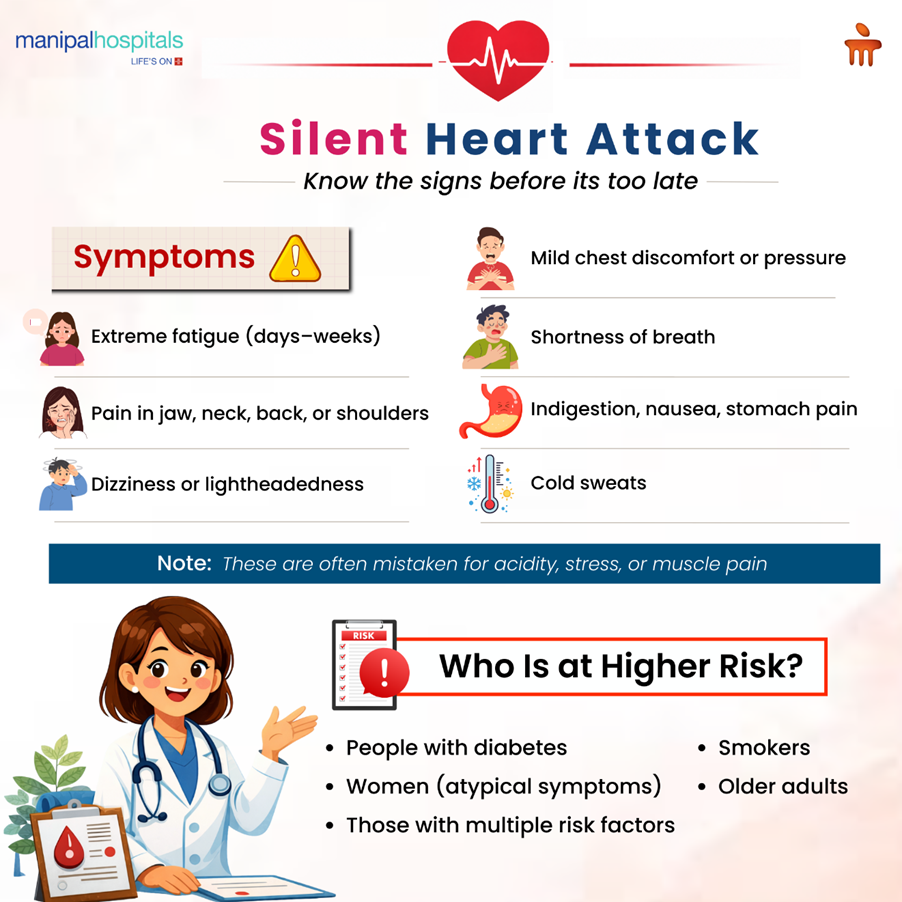
Common signs of a silent heart attack include:
-
Mild chest pain or discomfort
-
Fatigue lasting for days or weeks at a time
-
Stomach pain, nausea, or indigestion
-
Pain in the upper back, neck, shoulders, or jaw
-
Feeling lightheaded or dizzy
-
Cold sweats
What Causes Silent Heart Attacks?
Silent heart attacks happen when blood flow to the heart is reduced or blocked, but the warning signs are mild, unusual, or completely unnoticed. Many people mistake symptoms for tiredness, acidity, or muscle strain, which is why silent heart attacks often remain undiagnosed until later tests reveal heart damage.
The following are some of the common causes:
-
Atherosclerotic plaque build-up: Fat, cholesterol, and calcium slowly collect inside arteries, narrowing them and reducing blood flow to the heart over time.
-
Reduced pain sensation: People with diabetes or nerve damage may not feel typical chest pain. This can hide the usual signs of a silent heart attack.
-
Unusual or confusing symptoms: Instead of chest discomfort, people may feel pain or heaviness in the jaw, neck, back, or stomach, along with tiredness, nausea, or breathlessness.
-
Slowly developing blockages: When arteries narrow gradually, the body sometimes adapts, which can reduce obvious warning signs.
-
High blood pressure and long-term stress: Both strain the heart and increase the chances of artery damage and heart attacks.
-
Lifestyle-related risks: Lack of physical activity, smoking, unhealthy eating habits, and excess alcohol intake increase cardiovascular risk over time.
-
Existing health conditions: Diabetes, high cholesterol, and obesity significantly increase the likelihood of silent heart attacks.
-
Family history and age: Risk rises if heart disease runs in the family, particularly in men above 45 and women above 55.
People with multiple risk factors should consider regular heart screenings even if they feel perfectly healthy, as early detection can prevent serious complications.
Diagnosis of Silent Heart Attack
In many cases, the diagnosis is made incidentally or while evaluating for another condition because the symptoms may be silent.
The tests that are commonly used to make the diagnosis:
|
Test |
Description |
|
Electrocardiogram (ECG) |
Records the electrical activity of the heart and may show evidence of previous or current damage to the heart. |
|
Echocardiogram |
Uses ultrasound waves to study the heart and assess how well the heart muscle is pumping blood. |
|
Blood Tests |
Measure proteins that are released into the bloodstream when there is damage to the heart muscle cells. |
|
Stress Tests |
Assess blood flow to the heart during physical activity or simulated exercise. |
|
CT Scan or Coronary Angiography |
Provide images of the heart arteries and help detect blockages or narrowing. |
Regular screening is an important part of diagnosis, especially in people who have risk factors or are experiencing symptoms.
Preventing a Heart Attack
When it comes to the prevention of heart attack, the emphasis should be on lifestyle changes and consulting your healthcare provider to develop a medical plan that suits you best.
The most effective ways to prevent a heart attack include:
-
Stop smoking and avoid passive smoking: Smoking can cause damage to blood vessels and enhance clotting.
-
Limit alcohol intake: Excess drinking raises blood pressure and adds strain to the heart.
-
Monitor blood sugar and blood pressure regularly: Keeping these under control lowers heart risk.
-
Manage cholesterol levels: A balanced diet, exercise, and medication when prescribed help prevent artery blockages.
-
Maintain a healthy body weight: Reduces strain on the heart and improves overall metabolism.
-
Stay physically active: Regular moderate exercise supports circulation and strengthens the heart muscle.
-
Follow a heart-friendly diet: Focus on fruits, vegetables, whole grains, lean proteins, and healthy fats.
-
Manage stress effectively: Relaxation techniques, hobbies, and adequate breaks help reduce heart strain.
-
Maintain a healthy sleep routine: Proper sleep supports blood pressure control and overall cardiovascular health.
-
Take medications exactly as prescribed: Skipping medicines can increase risk and reduce treatment effectiveness.
What to do After a Silent Heart Attack?
After a diagnosis, the goal of treatment is to prevent further damage and reduce the risk of another heart attack.
Some ways to treat a silent heart attack are:
-
Antiplatelet drugs: Used to stop blood clots from forming.
-
Statins: Help lower cholesterol levels and reduce artery plaque buildup.
-
Medications to control blood pressure: Help reduce strain on the heart.
-
Managing blood sugar: Essential for people with diabetes to prevent further heart damage.
-
Lifestyle modifications: Including healthy diet, regular exercise, quitting smoking, and stress management.
-
Cardiac rehabilitation programs: Structured programs that support recovery and strengthen heart health.
Sometimes, procedures such as angioplasty or bypass surgery are needed. At Manipal Hospitals, Jayanagar, getting timely treatment improves the chances of survival and supports long-term heart health.
Conclusion
A silent heart attack may not cause obvious symptoms, but it can have serious effects if it goes undetected. Learning the signs, understanding the risk factors, and following preventive measures are essential steps to protect your heart health.
At Manipal Hospitals, we provide comprehensive heart attack treatment in Jayanagar, helping patients receive timely care and improving outcomes during crucial moments.
FAQ's
Researchers believe that many heart attacks, especially in older adults and people with diabetes, occur without any symptoms at first.
Yes. Women are more likely to have unusual or mild symptoms, which increases the chance of a silent heart attack.
A silent heart attack damages the heart muscle without causing severe chest pain, so symptoms are easy to miss, and diagnosis often requires medical tests.
Yes. A silent heart attack can happen while you are resting or sleeping, especially if you have diabetes, high blood pressure, or other risk factors.
Lifestyle changes are important, but they are usually combined with medication and regular checkups to lower the risk of complications and another heart attack.
Share this article on:


--Symptoms-and-Septoplasty-Recovery.webp "Deviated Nasal Septum (DNS): Symptoms and Septoplasty Recovery")