7 Min Read
Your digestive system is a finely tuned system of wires that works day and night to make you feel comfortable and nourished. However, occasionally, minor imbalances can lead to major issues. One such issue is gallstones, little hardened spots that develop in your gall bladder and may induce debilitating pain and discomfort.
Though gallstones are prevalent, they're usually ignored until signs can no longer be ignored. In this blog, we will discuss everything you need to know about gallstones. Knowing what they are, why they occur, and how they can be managed is vital to maintaining your digestive health and avoiding long-term ramifications.
Synopsis
What Exactly Are Gallstones?
The gall bladder is a small pear-shaped organ placed just below your liver. It has one main function, which is to store and release bile, a digestive fluid that facilitates fat breakdown. If the bile contains excessive cholesterol, bile salts, or waste, then it crystallises and causes stones to form, which are referred to as gallstones.
Gallstones come in all sizes. Some are as small as a grain of sand, and others are as big as a golf ball. You may have one stone, or several simultaneously. In fact, quite a few people have gallstones and don't even know it, as not all stones cause symptoms. Symptoms of gallstones generally start when a stone blocks the bile from flowing, causing pain that comes on suddenly and severely.
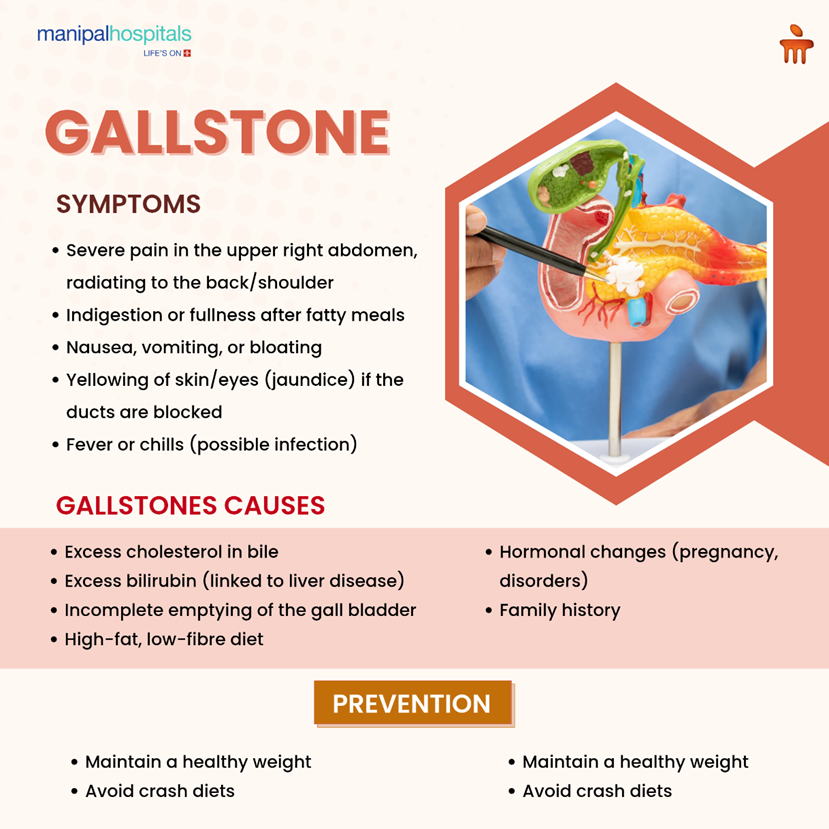
Recognising Gallstone Symptoms
Though gallstones often go silent at times, there are unmistakable warning signs when they start obstructing digestion. Paying attention to these gallstone symptoms will enable you to get medical help on time.
-
Upper abdominal pain on the right side, below the ribs, and radiates to your shoulder blade or back.
-
Gastrointestinal distress usually occurs with gallbladder issues.
-
You might be excessively full or uncomfortable after consuming fatty or heavy foods.
-
Although not necessarily associated with acid reflux, the pain can occasionally be confused with it.
-
When a gallstone obstructs the bile duct, yellowing of the skin and eyes may follow.
Gallstones can sometimes cause severe infections or complications and need prompt medical attention.
What Causes Gallstones?
Gallstones do not develop overnight. They evolve over time as a result of an imbalance in the constituents that form bile. Several gallstone causes can predispose you to developing gallstones:
|
Gallstones Causes |
|
|
Too much cholesterol in the bile |
If your bile has too much cholesterol, it can crystallise and develop into stones. |
|
Too much bilirubin |
It is a chemical that is made when red blood cells are broken down. Too much, which is commonly associated with liver disease, can cause gallstones. |
|
Poor emptying of the gall bladder |
When the gall bladder does not empty completely, bile will be concentrated, increasing the possibility of a stone forming. |
|
Unhealthy diet |
Fat-rich and fibre-poor diets increase your chances of gallstone trouble. |
|
Hormonal changes |
Pregnancy and some hormonal disorders may change the composition of bile. |
|
Family history |
Genetics also comes into play; if there is a family history of gallstones, your risk increases. |
Are You at Risk of Developing Gallstones?
Some are more susceptible to gallstones than others. Risk factors are:
-
Women, particularly over 40
-
Being overweight or obese
-
Sudden weight loss due to crash diets
-
Some health conditions, such as diabetes
-
History of gallstones in the family
-
Lack of exercise
Awareness of these risk factors can enable you to take preventive measures, like consuming a balanced diet, exercising regularly, and attending regular health check-ups.
When to See a Doctor?
A light stomach pain after a big meal is not necessarily something to worry about, but if you have ongoing or sharp belly pain, do not assume it is something minor. You should see a physician if you have:
-
Severe pain that can last for hours
-
Recurring nausea or vomiting
-
Yellow skin or eyes (jaundice)
-
Fever or shivering with belly pain
These symptoms may signify complications such as gallbladder inflammation, infection, or bile duct blockage, each of which needs immediate medical care.
How are gallstones diagnosed?
If your physician suspects gallstones, they will most often request imaging tests. The most frequent one is an ultrasound scan, which easily demonstrates the presence of stones in the gall bladder.
Other tests might include:
-
CT scans or MRI scans for detailed images
-
Blood work to test for infection, inflammation, or jaundice
-
Endoscopic tests are performed if stones in the bile ducts are suspected
-
Precise diagnosis is important, as gallstone pain at times can resemble other illnesses such as acid reflux, peptic ulcers, or even heart issues.
Treatment of Gallstones
Not every gallstone needs treatment. If they're not symptomatic, your physician might recommend keeping them under observation rather than immediate treatment. But if you have recurrent discomfort or complications, treatment is needed.
Non-surgical Therapies
In some instances, gallstones can be dissolved by medication, but this is a process that takes months or years, and stones can recur. Non-surgical techniques are generally reserved for patients who are not good candidates for surgery.
Surgical Treatments
The best treatment for symptomatic gallstones is surgery, i.e., cholecystectomy, removal of the gall bladder.
-
Laparoscopic cholecystectomy: This is a minimal surgical procedure with small cuts and a faster recovery. Most patients are able to go home within a day or two.
-
Open cholecystectomy: If laparoscopy is not feasible, a bigger cut is performed. The recovery is prolonged, but the surgery is just as good.
It's worth mentioning that you'll be able to lead a healthy life without your gallbladder. The liver still manufactures bile, and this goes directly into the intestine.
Life After Gallbladder Surgery
Most individuals are concerned with the way life is different after gall bladder removal. Digestion feels slightly different at first, but most individuals adjust very well.
-
You might have to take smaller, lighter meals for several weeks
-
Your body gets used to it gradually, and you will be back to a normal diet
-
It is better to avoid very greasy or fatty foods since these induce discomfort
Over time, the majority of patients are relieved of their former symptoms and have improved digestive health.
Prevention of Gallstones
While it is not possible to prevent every instance of gallstones, living a healthy lifestyle goes a long way in avoiding gallstones. Simple actions such as watching your weight, not going on crash diets, exercising regularly, and consuming a fibre-rich diet can do much to safeguard your gall bladder health.
Conclusion
Gallstones are small, but their effect on your life can be enormous. By identifying the symptoms of gallstones, knowing the reasons behind gallstones, and availing timely treatment, you can prevent severe complications.
If you have persistent abdominal pain, don't wait; talk to a specialist at Manipal Hospital Jayangar and discuss the appropriate treatment options.
FAQ's
Gallstones do not tend to disappear on their own. In a few instances, they might cause no symptoms, but when they cause pain or complications, one has to undergo treatment.
It's always better to reduce fatty, greasy, and fried foods since these may exacerbate symptoms. A fibre-rich diet of vegetables and fruits is kinder to your digestive system.
Surgery is the quickest and most definitive cure, particularly for persistent symptoms. There are other ways, but these are less effective and not for all.
Recovery from laparoscopic surgery typically is a week to two weeks. Open surgery may require up to six weeks, depending on overall health.
Yes, you can. The liver continues to produce bile for digestion. Although you might have to modify your diet temporarily, most individuals live very healthy lives without long-term problems.
Share this article on:


--Symptoms-and-Septoplasty-Recovery.webp "Deviated Nasal Septum (DNS): Symptoms and Septoplasty Recovery")